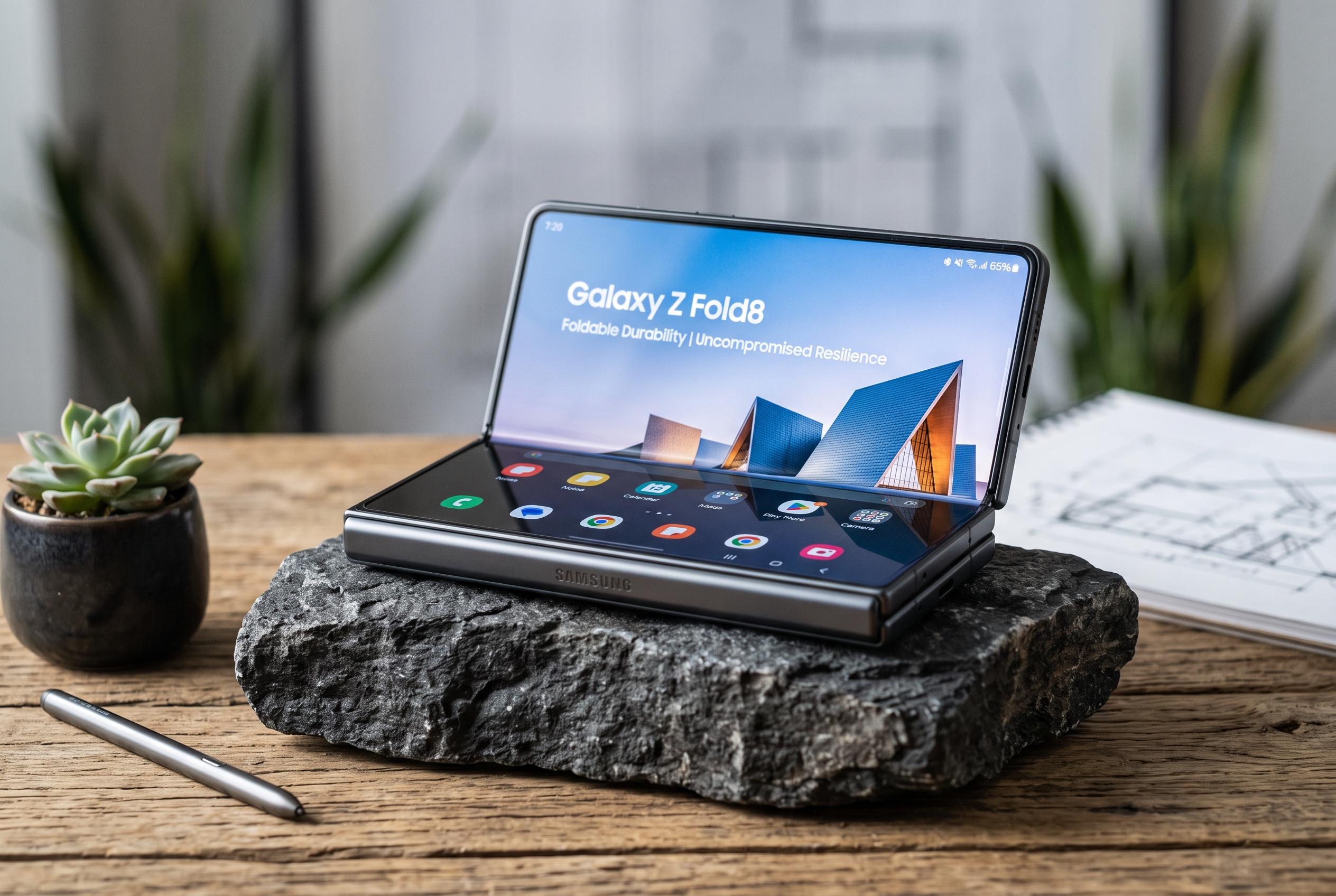

Samsung’s latest Galaxy Z Fold8 has passed rigorous abuse tests, demonstrating improved structural resilience and readiness for mainstream adoption amidst ongoing challenges with foldable technology durability.
Samsung’s latest book-style foldable has survived a familiar battery of abuse tests with a result that may matter more than any launch-stage slogan: it still appears hard to break in the way that counts. In a durability test by Zack Nelson of JerryRigEverything, the Galaxy Z Fold8 endured scratches, dust, heat and a reverse bend without suffering the kind of catastrophic failure that has long haunted large folding phones. The device did not fold back on itself permanently, and after the test it still closed, powered on and kept its hinge intact.
The outer screen is protected by Gorilla Glass Ceramic 3 and begins to mark at Mohs level 6, which is broadly in line with current premium phones. The inner flexible panel is still a softer plastic surface and shows damage much earlier, at around level 2, so keys, coins and fingernails can leave visible traces. Samsung says the inner screen protector will be replaced free once a year, then for $19.99, but the underlying display remains vulnerable in the way all current foldables are.
Build details suggest Samsung has tried to strengthen the chassis without making the phone bulky. According to Samsung’s product page, the Fold8 uses Advanced Armor Aluminium, carries an IP48 rating for dust and water resistance and has a 7.6-inch inner display paired with a 5.5-inch cover screen. SamMobile reported that the company is also using a titanium backplate in the display stack and claims a hinge rated for 500,000 folds, while noting that the newer hinge design makes the crease less obvious in everyday use.
Nelson’s test also highlighted one odd change: the rear camera housing on this model uses plastic around the lenses rather than the more familiar metal trim. Dust resistance looked adequate in the test, with most grit staying out of the mechanism, although some collected near the magnetic points. Heat remained a weak spot, with both displays failing under a lighter after only seconds of exposure. Even so, the most significant outcome was structural. When bent in the wrong direction, the phone flexed, the back glass lifted slightly, then settled back into place once the pressure stopped. For Samsung’s book-style line, that is a meaningful sign of progress.
Disclaimer: This content is intended for informational purposes only. Readers are advised to exercise their own judgement, conduct due diligence, or consult a qualified expert before acting on any information provided.