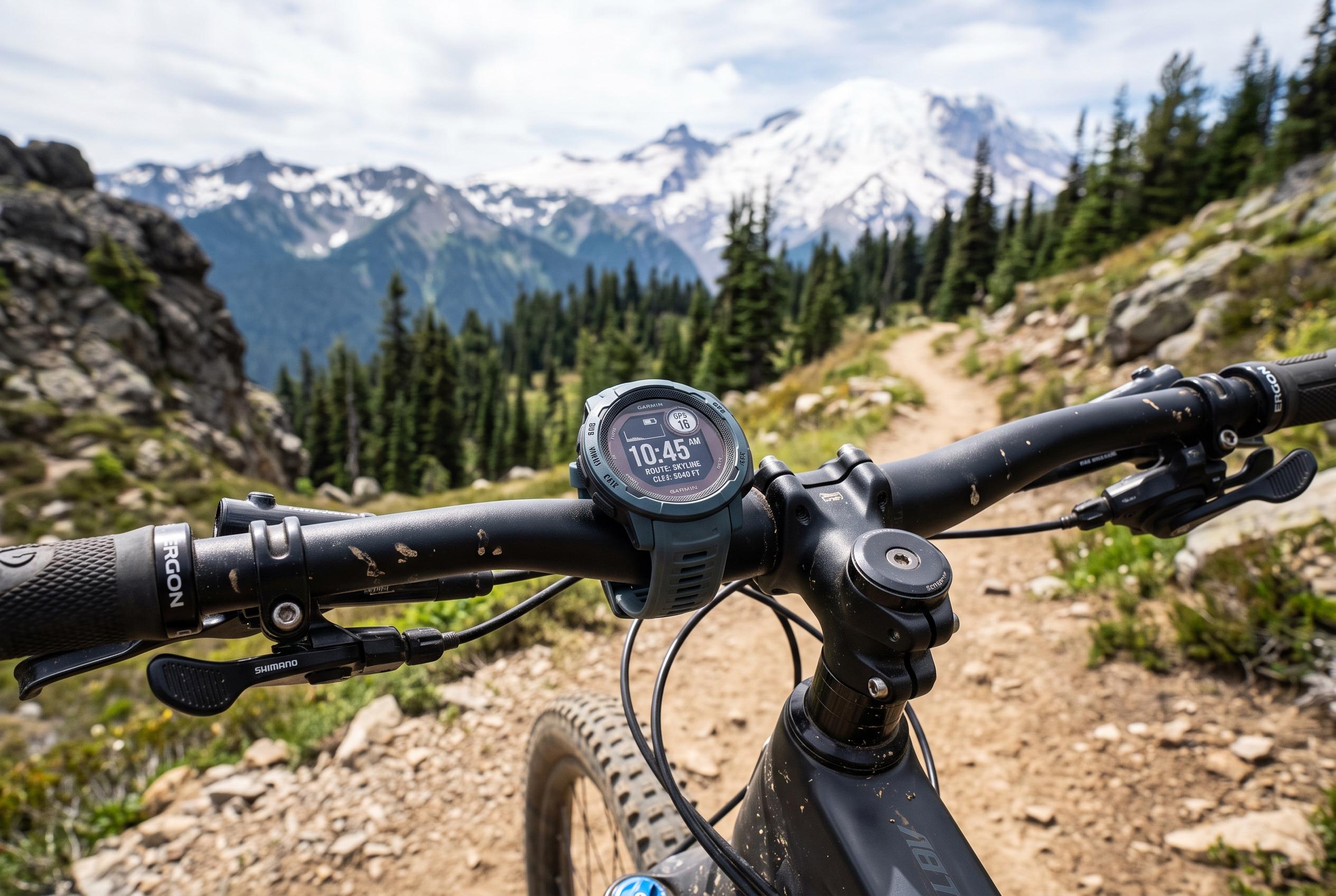

In a head-to-head trail test in Washington’s Cascade mountains, Garmin’s Instinct 3 proved superior to Samsung’s Galaxy Watch Ultra 2 regarding activity tracking, elevation accuracy, and comfort, highlighting its suitability for serious outdoor enthusiasts.
In Northern Washington State’s Cascade range, a real-world e-mountain biking test between Samsung’s Galaxy Watch Ultra 2 and Garmin’s Instinct 3 pointed to a clear winner for outdoor riders. After several hours on the trail, the Garmin came out ahead on the measures that matter most in the wild: activity support, elevation accuracy and comfort. Samsung’s watch had one obvious advantage, but it was not enough to offset the Garmin’s stronger all-round performance.
The most immediate difference was software. Samsung still does not offer a dedicated e-bike mode, so the Galaxy Watch Ultra 2 had to be used in standard mountain biking mode. The Instinct 3, by contrast, includes a purpose-built option for the activity. That mattered in the author’s testing, because the Garmin’s ride data lined up more closely with Strava on the paired iPhone. The Instinct 3 recorded 2,088 feet of climbing against Strava’s 1,885 feet, while the Samsung watch reported only 1,744 feet. That left the Samsung far further from the reference figure and reinforced a pattern the publication has seen before with inflated ascent readings from the Ultra line.
Comfort also tilted the comparison towards Garmin. The Instinct 3 is lighter and less bulky on the wrist, which becomes more important on a sweaty, multi-hour ride than it might in an office or on a short walk. The Galaxy Watch Ultra 2 was described as noticeably heavier and harder to forget once the ride went on. For a watch that is meant to be worn through rough terrain and repeated movement, that weight difference became a practical drawback rather than a minor specification.
Samsung did retain one meaningful advantage: screen visibility. The Galaxy Watch Ultra 2’s display remained easy to read in bright sunlight, even with sunglasses on, while the Garmin screen was less legible in the same conditions. Samsung rates the display at up to 5,000 nits, which helps explain that result. Still, for this specific use case, the better display did not outweigh the Garmin’s stronger tracking and more comfortable fit.
Tom’s Guide’s broader testing points in the same direction. In a separate hike in the Cascade Mountains, the publication also found the Instinct 3 more accurate on elevation, more efficient on battery life and more comfortable to wear than Samsung’s watch. Taken together, the evidence suggests that Garmin remains the safer choice for serious outdoor use, especially when reliable climb data and long-wear comfort matter more than having the brightest screen.
Disclaimer: This content is intended for informational purposes only. Readers are advised to exercise their own judgement, conduct due diligence, or consult a qualified expert before acting on any information provided.