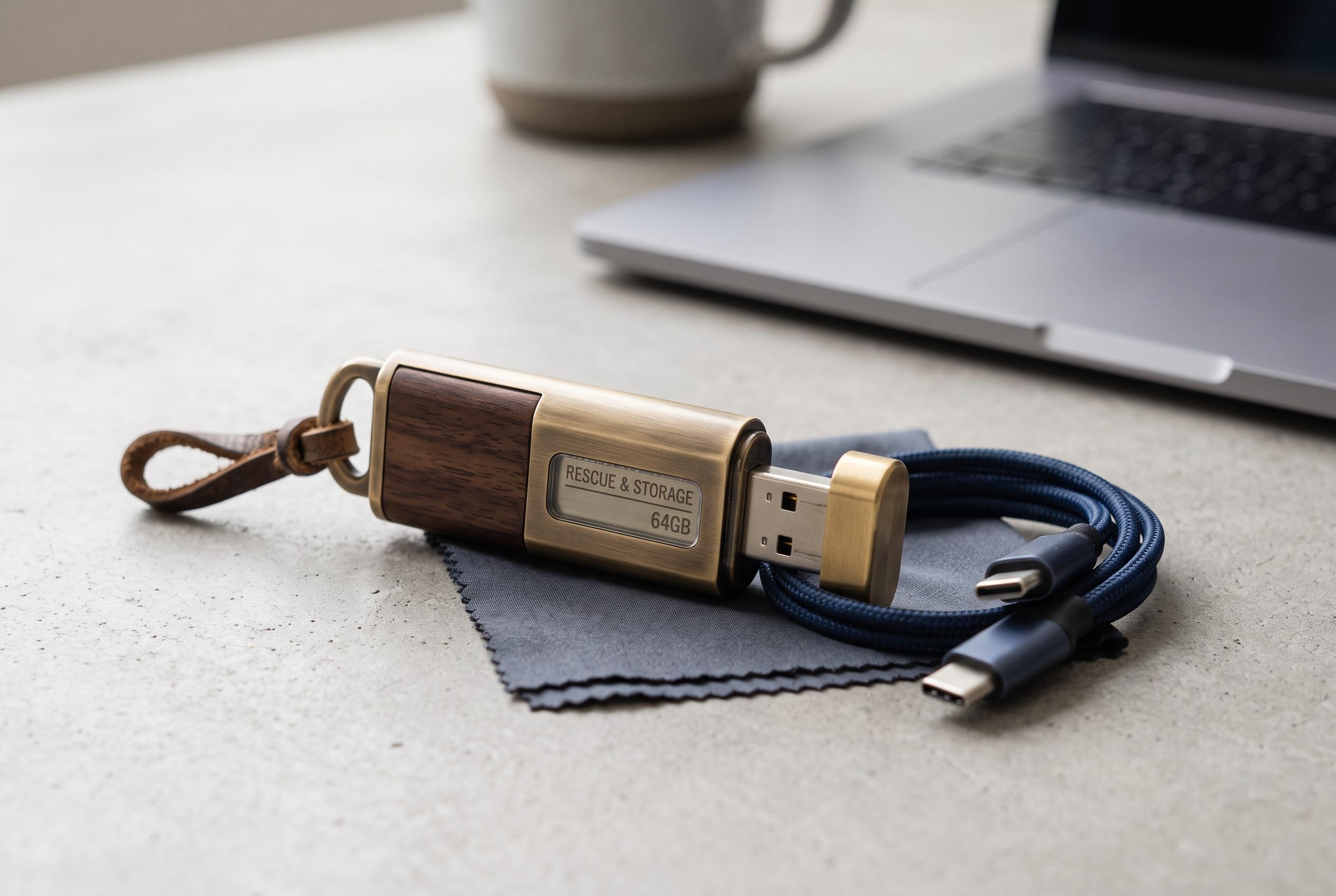

Old USB flash drives, often discarded, can be repurposed for rescue, offline storage, and media playback, proving their ongoing relevance beyond capacity.
Old USB flash drives are often treated as disposable, but they can still do useful work if they are checked first, wiped properly and matched to the right task. In homes, offices and when travelling, a modest pendrive can still help recover a failed computer, protect files offline, play media and keep personal data away from cloud-only storage. The Webnews report argues that their value lies less in capacity than in flexibility.
One of the most practical uses is as a bootable rescue drive. According to Ubuntu’s official documentation, tools such as Rufus can write a Windows or Linux ISO file to a USB stick so the machine can start from it instead of the hard drive. That makes the drive useful when an operating system will not load but the files on the disk still need to be saved. Microsoft Community Hub guidance on Windows 11 boot media similarly points to Rufus as a simple way to create installation or recovery media, usually on a drive with at least 8GB of space.
That rescue role matters because a bootable USB can buy time before a repair or reinstall. If the system is damaged but the storage is still readable, the drive can be used to copy documents, photos and other important files elsewhere. This is why technicians often advise preparing such media in advance rather than waiting until a laptop is already unusable.
Old flash drives can also serve as offline backup devices. The appeal is straightforward: a copy stored on a separate physical device is not exposed to the same failures as cloud accounts, syncing errors or ransomware attacks. For that reason, a small USB drive can still be a sensible place for work folders, family archives or scanned documents, especially when kept away from the main computer.
Their usefulness extends beyond storage. Many cars and televisions still read USB media directly, and a drive loaded with music, podcasts, photos or video files can be more practical than a phone on a long trip or in a room with weak connectivity. Some people also use portable software suites, encrypted vaults or privacy-focused operating systems from USB, which reduces traces left on shared computers and adds a layer of control over passwords and sensitive data.
In that sense, the old pendrive has not become obsolete; it has simply moved into more specific roles. A quick test, a careful format and a clear purpose can turn a forgotten device into a useful recovery tool, a private archive or a portable media player. The best answer to an unused USB stick may be to keep it in service rather than send it to a drawer.
Disclaimer: This content is intended for informational purposes only. Readers are advised to exercise their own judgement, conduct due diligence, or consult a qualified expert before acting on any information provided.