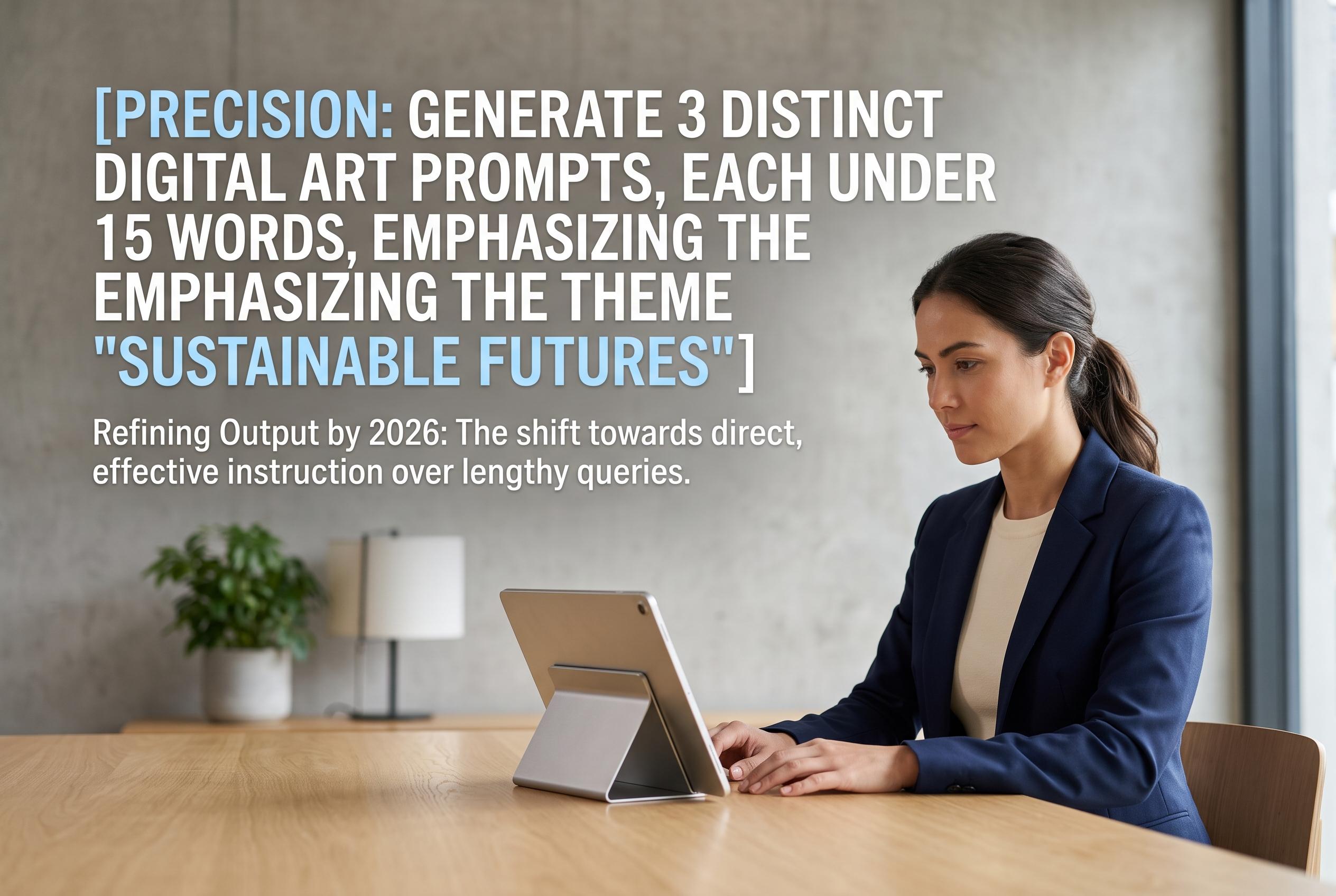

By 2026, AI image prompting has evolved into a more disciplined craft prioritising concise, structured commands over verbose descriptions, driven by advances in model capabilities and integrated app tools.
AI image prompting in 2026 looks very different from the early rush of keyword-stacked experiments. The field has moved towards tighter instruction, clearer visual intent and fewer decorative adjectives. The practical result is simple: models now reward precision more than volume, and the best prompts read more like production notes than search-engine bait.
Midjourney V7 is a good example of that shift. According to Midjourney’s documentation and related model summaries, the version released in April 2025 and made the default in June 2025 brought stronger detail coherence, improved handling of bodies, hands and objects, and new tools such as Draft Mode and Omni Reference for consistency across images. That makes camera language, composition and subject placement more useful than long strings of style labels.
Google’s Gemini 3 points in the same direction. Google said when it introduced the model in November 2025 that it was designed to improve reasoning and multimodal performance across its products. In practice, that means the model is better suited to direct, structured prompts than to verbose ones. For creators, the implication is that the clearest brief tends to outperform the most ornate one.
The rise of app-layer tools has also changed the workflow. The supplied material describes systems such as Nano Banana as translation layers that adapt a creator’s intent for different engines. Google’s own ecosystem has moved in a similar direction: reports from Android Central say Pixel Studio, the device-level image app launched with Pixel 9, has been discontinued for generation and now redirects users to Gemini and its newer image models. That reflects a broader consolidation around centralised, model-driven tools rather than standalone image apps.
The strongest prompt formula now follows a compact structure: subject, environment or lighting, medium or camera detail, then parameters. That approach works across portraits, products, interiors, illustration and video because it gives the model enough direction without overloading it. For teams building mock-ups, ad concepts or concept art, the practical lesson is not to write more, but to specify better.
Disclaimer: This content is intended for informational purposes only. Readers are advised to exercise their own judgement, conduct due diligence, or consult a qualified expert before acting on any information provided.