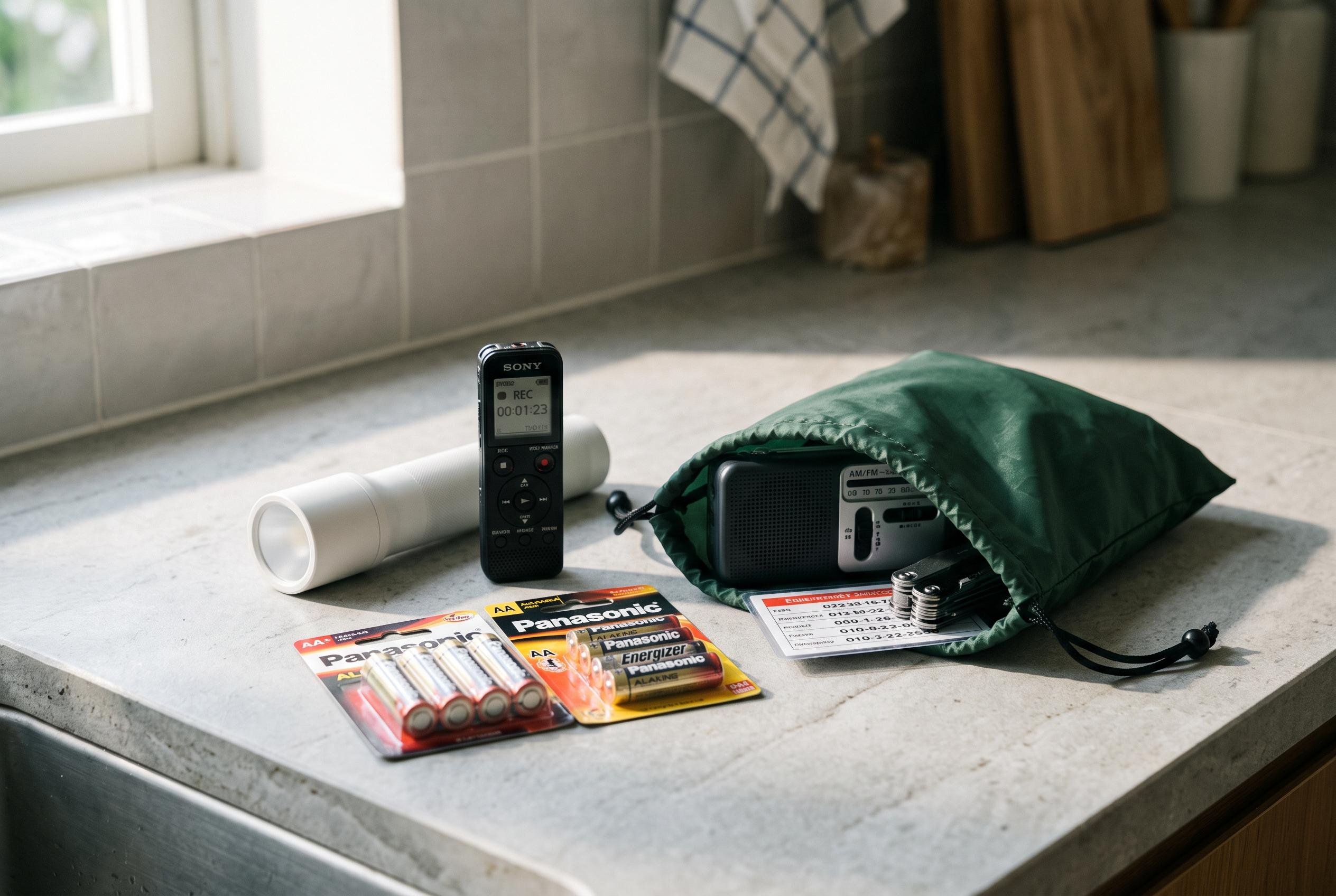

Devices like the Muji LED torch and Sony voice recorder highlight a shift towards more versatile, user-friendly gear built for convenience and reliability during outages or fieldwork, driven by the ease of spare battery availability.
For households preparing for outages or emergencies, battery-powered gear still has an advantage that rechargeable devices cannot always match: it is easy to keep spare cells on hand, and replacements are often available at convenience stores or supermarkets. The Muji LED Large Torch fits that logic well. According to the product description, it works with either AA or AAA batteries and can run on a single cell, with four LEDs lighting independently as batteries are added. That gives it unusual flexibility for a torch intended for emergency kits, bedside use or even as a simple lantern when placed face down. Similar battery-first flashlights sold elsewhere also emphasise everyday practicality, with makers highlighting common cell sizes, water resistance and long runtimes for power cuts and outdoor use.
That flexibility matters because many flashlights still depend on one exact battery format, which can be awkward when supplies are limited. Other products on the market show how manufacturers are responding to that problem: some accept both AA and AAA cells, while others use three or four AAAs and add spot-and-flood lighting modes or a lanyard for easier carrying. A few even combine rechargeable and disposable power sources. The wider point is that a torch is most useful when it can be kept working with the least possible planning, especially during a blackout or in a go-bag where battery type, size and shelf life all matter.
The same argument applies beyond lighting. Sony’s ICD-PX470F voice recorder is battery-powered rather than rechargeable, using two AAA cells. That reduces the risk of forgetting to charge it before an interview, lecture or meeting, and it also means a dead battery can be swapped out immediately. The lack of Bluetooth can be an advantage too, because it avoids accidental connections to wireless earphones that could interfere with recording. In practice, these are not glamorous features, but they are the kind that reduce user error, which is often the real problem in emergencies and field work.
Disclaimer: This content is intended for informational purposes only. Readers are advised to exercise their own judgement, conduct due diligence, or consult a qualified expert before acting on any information provided.