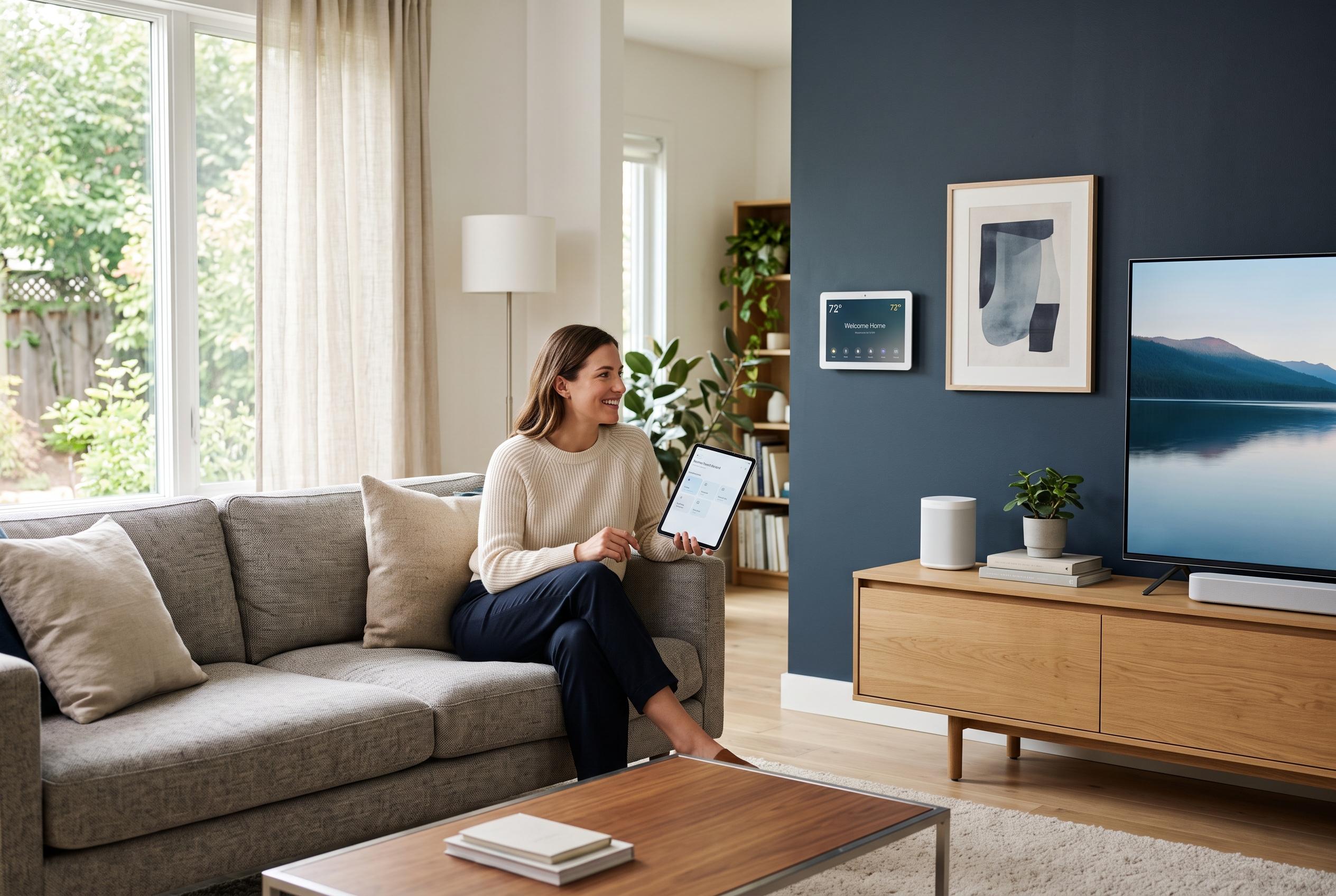

Advancements in smart home technology have made devices faster and more reliable, yet questions remain whether they truly improve daily life or simply add unnecessary complexity and cost, especially as interoperability efforts like Matter and Thread attempt to address longstanding usability issues.
The first smart device in the house was a light bulb, chosen because it seemed harmless enough. It could be switched on from anywhere, placed on a timer and folded into broader automations. In practice, the appeal was more modest. Even a short delay between tapping an app and seeing the light come on was noticeable when compared with a wall switch that works instantly and never needs an update.
That early frustration has faded as the hardware has improved. Modern smart bulbs are quicker, more stable and less prone to disconnecting than the first generations. But better performance has not automatically translated into a stronger case for adding more of them. The more the system matures, the clearer the central question becomes: does a device genuinely improve daily life, or merely relocate a simple action into an app?
That distinction matters because not every connected product is truly doing anything on its own. A motion sensor that turns on a corridor light before anyone reaches for a switch is removing a step. A leak sensor that alerts the homeowner before a cupboard floods is preventing a problem. A bulb controlled through a phone, by contrast, often just adds friction to a task that was already effortless. It is remote control, not always automation.
The hidden costs also become more obvious as the number of devices rises. Smart plugs can be useful, but they leave some users uneasy about having another powered component sitting between an appliance and the mains. Video doorbells are convenient, yet they add another battery to monitor. And when the internet or router fails, much of the system can stop behaving like a smart home at all. As T3 has noted, some devices can keep working locally if only the internet drops, but a broader network failure is far more disruptive. According to Optimum, cameras and video doorbells are among the biggest contributors to Wi-Fi congestion, especially once a home accumulates many always-on devices.
There is also an issue of household usability. The person who sets up the system often becomes its reluctant administrator, responsible for remembering which switch must stay on, which app controls which device and which routine is supposed to trigger something useful. Visitors and other household members usually want the home to behave normally, not like a project that requires instructions. When something stops working, the burden of maintenance tends to fall on the person who is most familiar with the setup, which is hardly an elegant result for consumer technology.
Even so, the category is not standing still. Matter, the interoperability standard backed by major smart-home players, is aimed at reducing the setup headaches and ecosystem lock-in that made early systems so awkward. Its recent 1.6 update adds easier setup and better device sharing across platforms, although support will arrive unevenly depending on the manufacturer and software environment. Thread, meanwhile, is increasingly discussed as a lower-power, more reliable alternative for some devices, particularly where Wi-Fi congestion and battery life are concerns. Together, these developments may make smart homes simpler to build. They do not, however, answer the more basic question of whether a particular gadget is worth the trouble.
For now, that is the standard many buyers may end up using. A useful smart-home device should remove work, not merely move it. It should solve a recurring annoyance, spot a problem early or quietly make the home easier to live in. If its main selling point is that a button can be pressed on a phone instead of on a wall, the case for adding it is far weaker than the marketing suggests.
Disclaimer: This content is intended for informational purposes only. Readers are advised to exercise their own judgement, conduct due diligence, or consult a qualified expert before acting on any information provided.