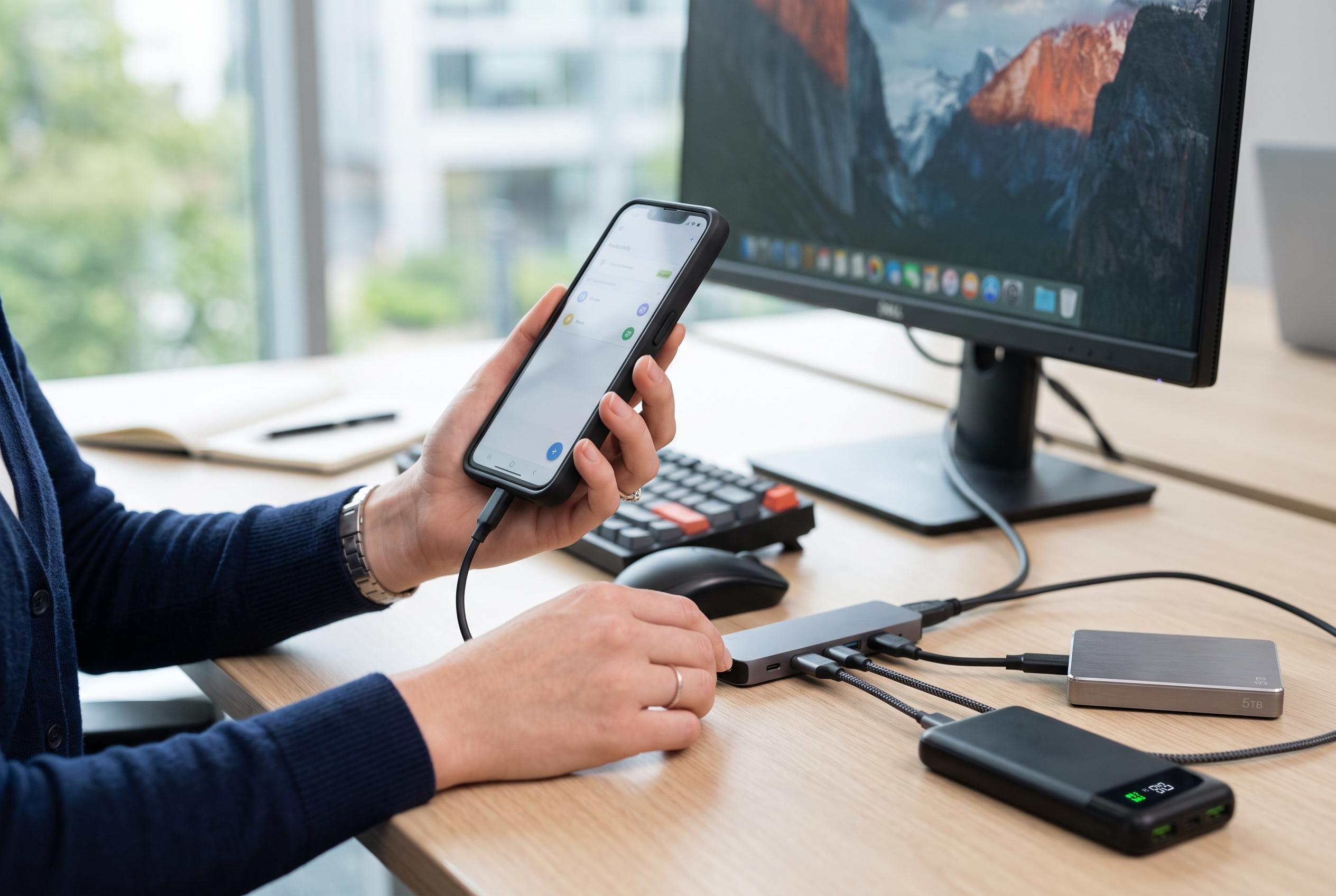

Modern smartphones now leverage USB-C ports for a range of functions beyond charging, transforming them into powerful tools for file management, content creation, and even desktop-like connectivity, with new capabilities like reverse charging and external display support.
USB-C has become far more than a charging socket on modern smartphones. According to Apple’s support documentation for iPhone 15 and later models, the port can handle charging, data syncing and audio and video playback, while also connecting to accessories such as external storage, displays, AirPods Pro and wired headphones. That makes the connector one of the most versatile parts of a current handset.
One of the most practical uses is reverse charging, where a phone can supply power to another device. With the right cable and sufficient battery life, a USB-C handset can top up earbuds, a smartwatch or even another phone. Macworld notes that this feature can be useful in a pinch, although power output and compatibility vary by device.
USB-C also turns a phone into a more capable file-handling tool. Users can plug in flash drives, SD card readers and microSD adapters to move photos and video without using cloud storage. For people working with large media files, that can save time and reduce dependence on wireless transfer. Apple says supported iPhone models can also work with external storage devices in this way.
The port can extend well beyond storage. A wired keyboard can make long-form typing easier, while a USB-C hub can add several connections at once, such as USB ports, card slots and network adapters. Macworld and other technology guides also point out that some phones can drive an external display through USB-C to HDMI adapters, effectively giving the handset a desktop-style output. Support for video output, however, still depends on the model.
USB-C can also improve audio and content creation. External microphones can be connected directly for cleaner sound in video, interviews or livestreams. Wired headphones remain an option too, either with native USB-C plugs or a suitable adapter. For mobile gaming, wired controllers can reduce input lag, and some clip-on gamepads turn a phone into a more console-like device.
The connector’s reach does not stop there. Industry coverage has highlighted uses such as Ethernet adapters, specialised cameras and other professional accessories, including inspection tools like endoscopes. In practice, though, the presence of a USB-C port does not guarantee every feature. Support depends on the phone’s hardware, USB version, software and the accessory itself.
Disclaimer: This content is intended for informational purposes only. Readers are advised to exercise their own judgement, conduct due diligence, or consult a qualified expert before acting on any information provided.