
As Google TV gains a competitive edge through its Gemini AI integration and improved usability, it’s becoming more than just a streaming interface, it’s transforming into a central smart home control point, though hardware quality remains critical for buyers.
Google TV has emerged as the platform most likely to win a place in a new television, not because it is perfect, but because the alternatives are often worse. Early smart TVs were hampered by weak processors and clumsy software, which is why external devices such as Chromecasts and Roku players became so popular. In that context, Google TV looks less like a triumph than the least frustrating option available for many buyers.
Its advantage is not the home screen, which still mixes apps, recommendations and promotional material in a way that feels familiar across much of the smart TV market. The distinction comes in day-to-day use. The settings menus are generally easier to navigate than those on Fire TV, and less opaque than many Samsung and LG interfaces. Roku remains the simplest system for getting straight into an app, but Google TV offers a broader, more coherent set of controls without becoming as cramped or budget-minded as some rivals.
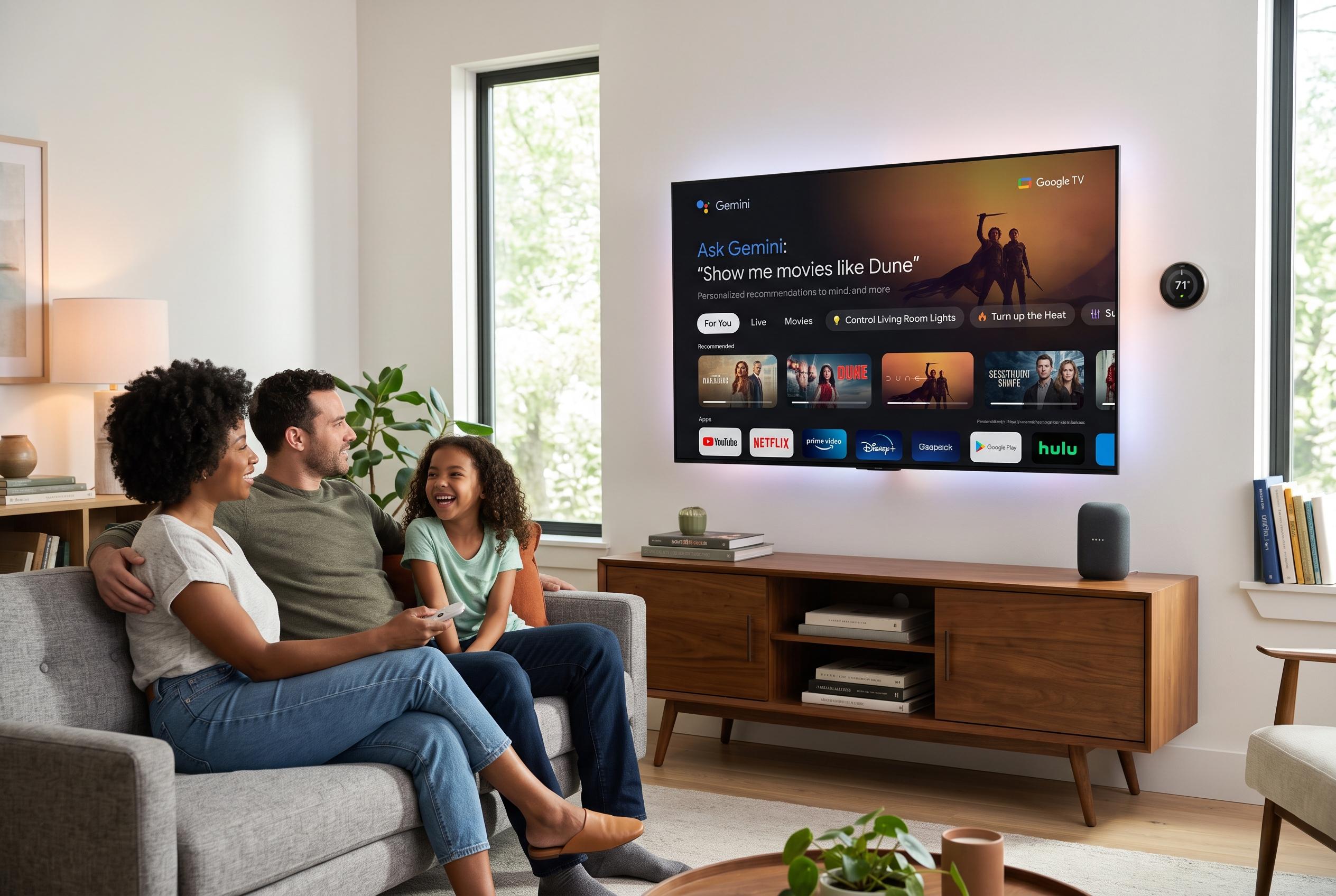
The most persuasive reasons to choose it now are Gemini and smart home integration. Google has begun bringing Gemini to TV, allowing users to ask complex questions in a conversational way and receive practical answers rather than simple search results. That matters for media discovery, but it also broadens the television into a general information tool. Google says Gemini for TV can handle recommendation requests based on detailed preferences and answer general knowledge questions in a way that is useful for families, while keeping the interface tied to the larger Google ecosystem.
The smart home side is equally important. Gemini’s companion role across devices is expanding as Google shifts away from Assistant on phones, tablets and Wear OS devices from September 4, 2026, according to reports from Tom’s Guide and TechRadar. Google’s own support pages also show that Gemini can control connected devices, including lights, climate controls, blinds, media equipment and cameras, once the right settings are enabled. On Google TV, that means television is increasingly becoming a control point for the home, not just a portal to streaming services.
Even so, Google TV should not be the deciding factor when buying a set. Panel quality, HDMI 2.1 ports, processing speed and overall picture performance matter more than the operating system. A better-equipped Tizen television or a stronger LG model may be the smarter choice if it offers more useful hardware. Google TV is best seen as a functional, increasingly capable platform with strong ecosystem ties, not as a reason by itself to buy a particular screen.
Disclaimer: This content is intended for informational purposes only. Readers are advised to exercise their own judgement, conduct due diligence, or consult a qualified expert before acting on any information provided.