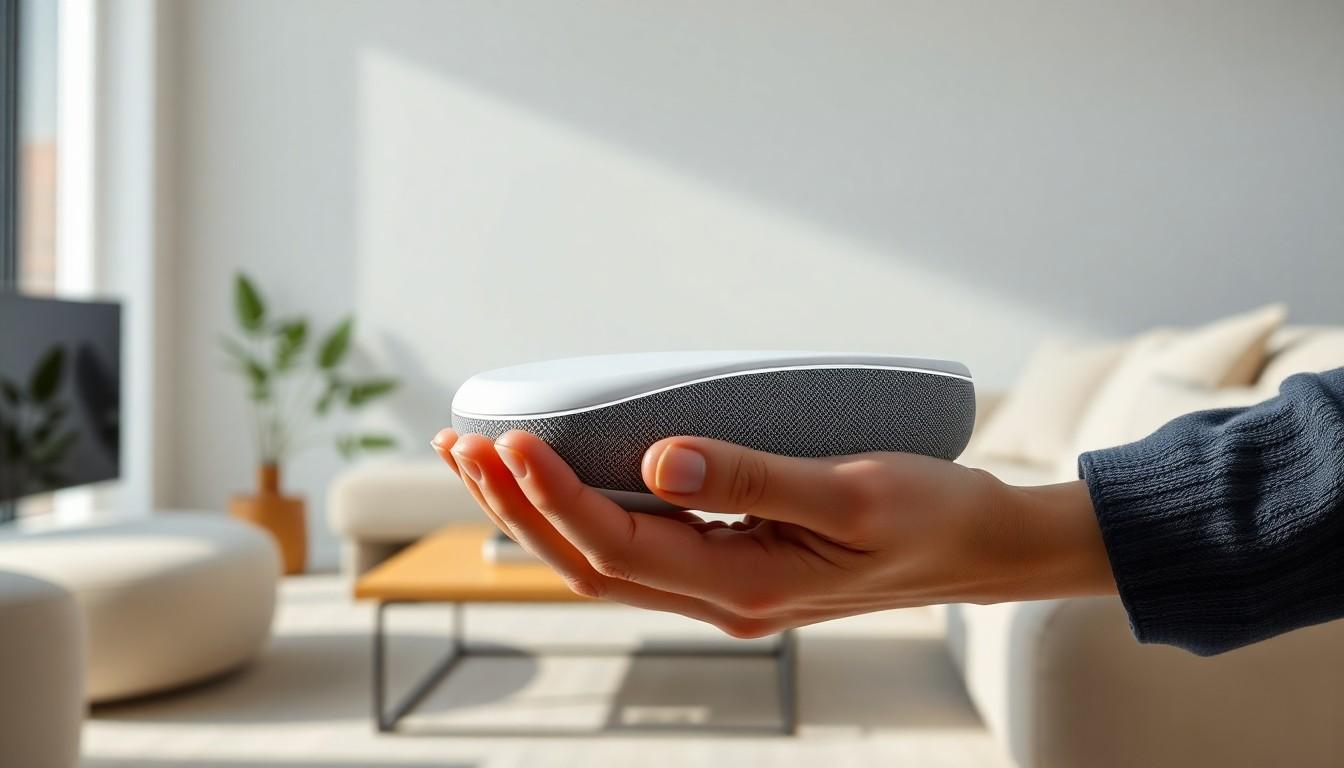

OpenAI’s collaboration with Jony Ive is leading to a sleek, portable, and context-aware home device, raising questions about privacy and device control in private spaces.
OpenAI’s rumoured move into home hardware is being framed as a rethink of the AI assistant, but it also raises a more familiar concern: how much presence is too much. According to reports cited by TechRadar, T3, MacRumors and Tom’s Guide, the first device from OpenAI and Jony Ive is expected to be a compact, screenless speaker, roughly puck-shaped and intended to sit somewhere between a smart speaker and a more attentive household companion. It is said to include microphones, cameras, sensors, speakers and moving parts, with a battery-powered design that would make it easy to carry around the home.
The appeal is obvious from a product-design perspective. A device with sight and sound can do far more than a voice assistant that only wakes on command. It can recognise context, identify who is speaking and react to what is happening nearby. That could make it useful for tasks such as cooking, planning or managing a busy home office. But the same capabilities that make the product more capable also make it harder to trust.
That tension is becoming more pronounced as consumer electronics increasingly collect ambient data. Smart speakers have normalised microphones in the home, while phones now show clear indicators when the camera or microphone is active. TechRadar has also reported on the wider backlash against always-on wearables and camera-equipped devices, as bystanders become part of the data equation without meaningful consent. Privacy advocates cited in that report argued that products should be built around privacy by default, not as an optional setting buried in menus.
The bedroom is where those concerns sharpen. A kitchen or study can plausibly justify a context-aware assistant, but a private sleeping space is a different matter. If OpenAI does build a device meant to live beside a bed, it will need hard, visible controls: a physical microphone mute, a camera shutter and clear rules on what is processed on-device rather than in the cloud. Without that, a glowing status light will not be enough to reassure users that the device is not collecting more than they intended.
OpenAI has not publicly set out the technical details of how the product will handle recordings, storage or access permissions. Even so, the broader direction is clear. The company and Ive are reportedly aiming for a calmer, more human-feeling form of computing, one that moves away from phones and screens. Whether consumers see that as a step forward or simply a more elegant form of surveillance may depend less on industrial design than on how much control the device really gives back to the people living with it.
Disclaimer: This content is intended for informational purposes only. Readers are advised to exercise their own judgement, conduct due diligence, or consult a qualified expert before acting on any information provided.