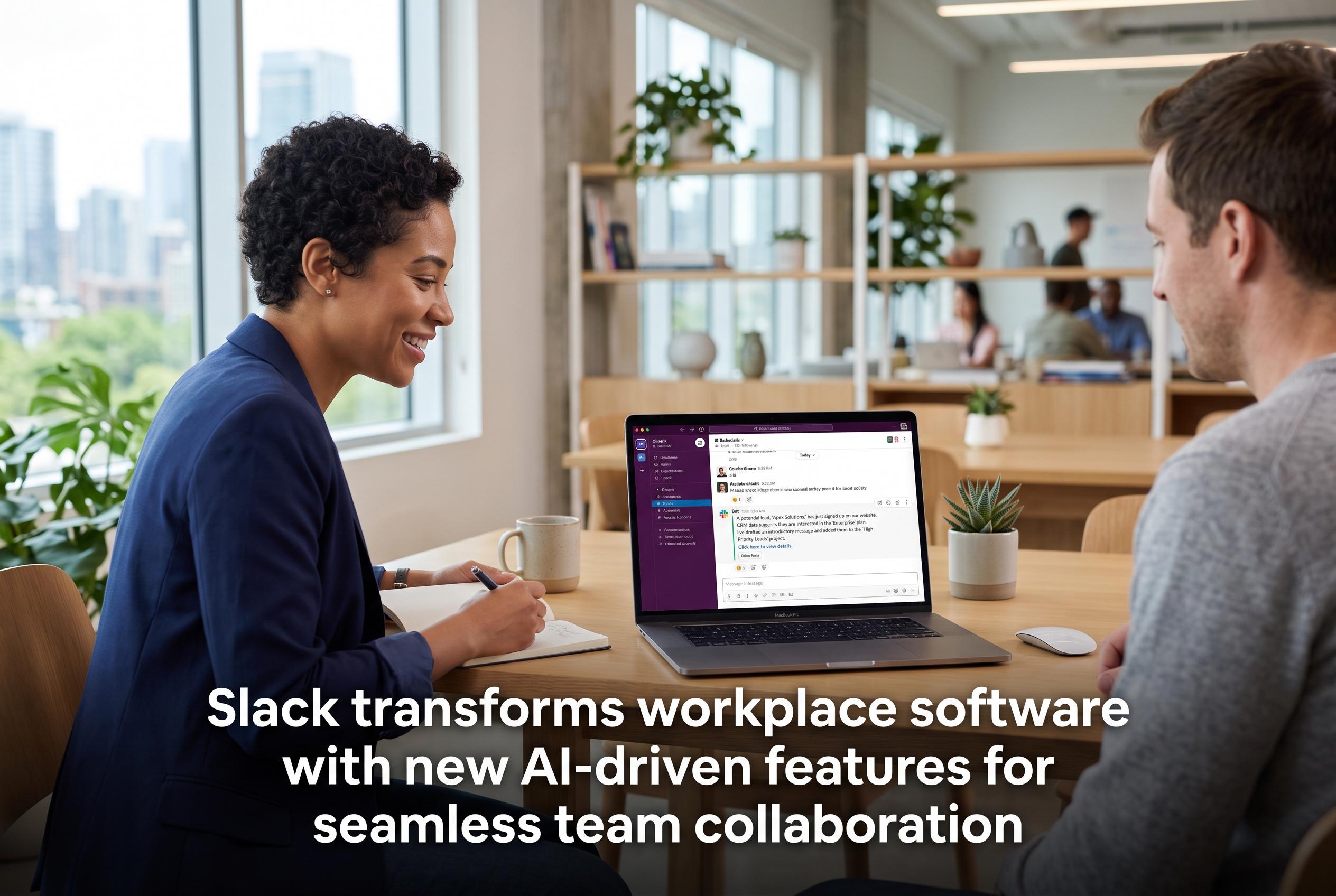

Slack expands its platform to automate routine tasks, enhance CRM integration, and position itself as a central operating layer for teams, signalling a shift from messaging to comprehensive workflow management.
Slack is expanding the role of its workplace software with a set of features aimed at keeping teams moving when staff are away from their desks. The company says the latest additions are designed to reduce switching between apps, automate routine work and make it easier to surface business data inside everyday conversations.
Among the most notable changes is a larger remit for Slackbot. According to Slack’s update pages, the assistant can now generate Google Slides and PowerPoint presentations from existing templates, build reports and live dashboards within channels and connect more tightly with Salesforce. Slack also says users can create Salesforce-connected channels with a command, while iOS notifications can now be used to update CRM activity on the move. The company is positioning Agentforce DM as a way to centralise discussions tied to sales and customer work.
Slack is also pushing further into AI. Its own blog says Agentforce can be used inside Slack to surface CRM insights and take action, while third-party agents from companies including Adobe and Anthropic can be integrated into the platform. The company has also added AI search that pulls in files and apps, huddle transcription and note-taking, plus an AI-assisted Workflow Builder intended to simplify automating repetitive tasks without code.
Other changes are aimed at day-to-day usability. Slack says users can schedule custom statuses in advance, use a Merged Omniswitcher to search across functions in one place and rely on an auto-generating table of contents in Canvases. Workflow Builder now supports bulk actions, while new tools such as Lookups and Repeaters are intended to help teams manage larger task sets. Slack has also renamed its App Directory as the Slack Marketplace and added analytics for Canvas usage, giving administrators more visibility into engagement.
The broader direction is clear: Slack is trying to become less of a messaging tool and more of an operating layer for sales, reporting and automated work. That could be especially useful for small businesses that need to keep processes running with limited staff. But the gains will depend on licensing, setup and training, since not every feature will be available to every workspace straight away and more advanced automation can take time to implement well.
Disclaimer: This content is intended for informational purposes only. Readers are advised to exercise their own judgement, conduct due diligence, or consult a qualified expert before acting on any information provided.