
Processing audio locally in sleep and health apps enhances user privacy by avoiding data transmission to the cloud, with on-device solutions becoming more prevalent amid rising privacy concerns.
For builders of sleep, meditation and connected-home apps that record sound, the decisive technical choice is not the model architecture but whether raw audio ever leaves the device. A bedroom recording can expose sleep patterns, illness, the number of people in a room and, in some cases, the content of conversations. Once that material is uploaded for analysis, privacy promises become much harder to defend.
One practical alternative is to process audio in tiers. The riskiest approach sends raw recordings to the cloud. A safer option keeps classification on the handset and uploads only derived results, such as snoring counts or sleep-stage summaries. The strongest position is full on-device processing, where the cloud sees only an aggregate summary or nothing at all. That approach is increasingly common in healthcare-related voice products. Sensory says its healthcare tools process voice locally to avoid transmitting private audio, while Switchboard describes an offline framework for real-time voice control across iOS, Android, macOS and embedded Linux.
The engineering cost of local processing is often overstated. Audio can be handled in short bursts rather than through constant recording. Lower sample rates, such as 8 kHz to 16 kHz mono, are usually sufficient for basic sleep detection, and streaming pipelines can discard audio once it has been transformed into compact features. For developers worried about performance, the argument is less about raw compute than about design discipline.
That privacy-first approach matters because the mobile health market has a long record of weak controls. TechTarget reported on a study of more than 20,000 mobile health apps that found 88% contained code capable of collecting user data, 55% sent data to third-party servers and 28% had no privacy policy. A separate voice-health vendor, Amplifier Health, says its platform supports on-device, private-VPC and cloud deployments, but it also markets a zero-retention policy and compliance claims that underline how central data handling has become to product positioning.
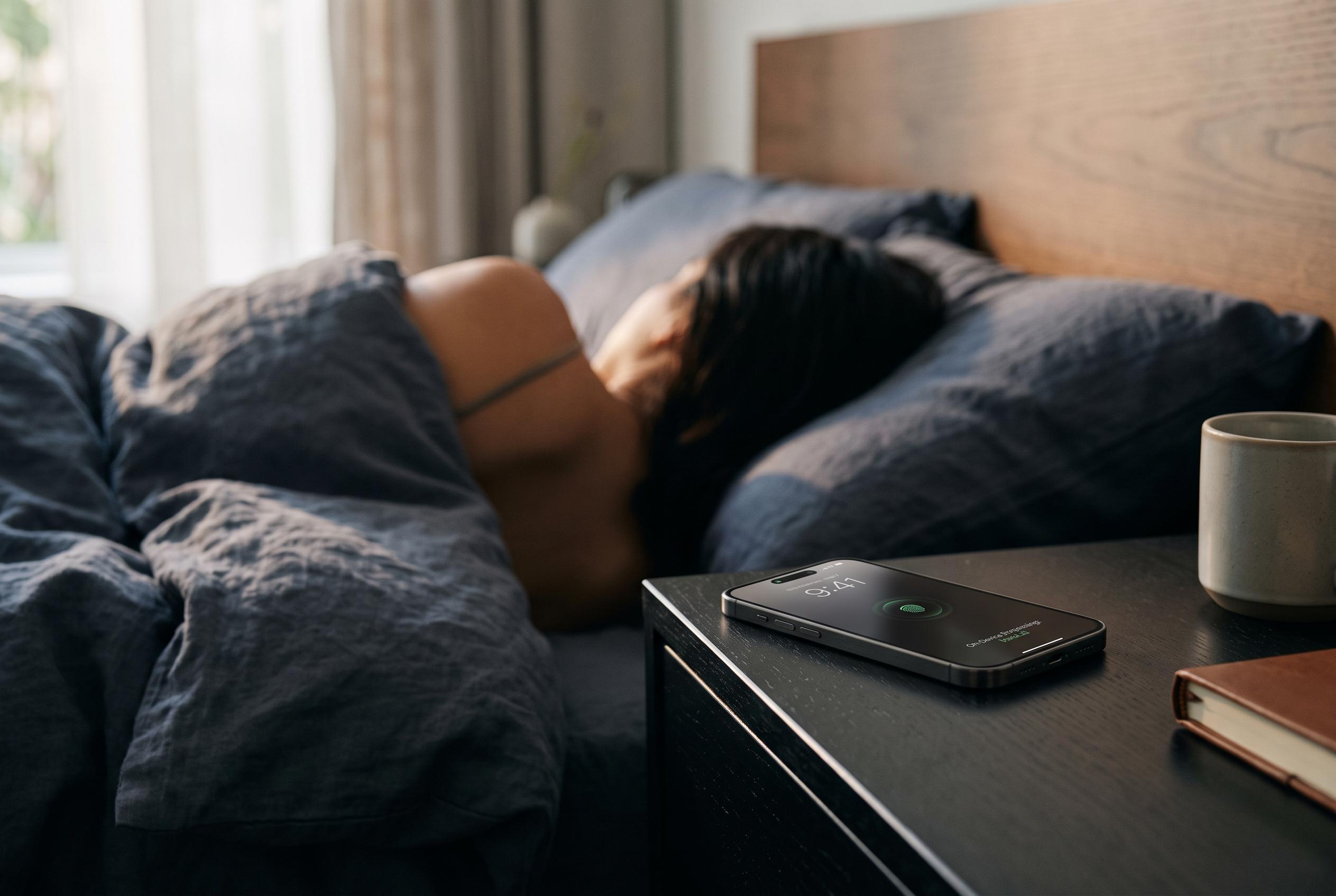
The most convincing example is a device that does not treat privacy as an afterthought. SleepTrace, a no-wearable sleep tracker, says the iPhone stays on the nightstand while all stage classification and sound detection happen locally, with nothing uploaded. That is more than a technical choice. In consumer health, it is increasingly the product itself.
Disclaimer: This content is intended for informational purposes only. Readers are advised to exercise their own judgement, conduct due diligence, or consult a qualified expert before acting on any information provided.