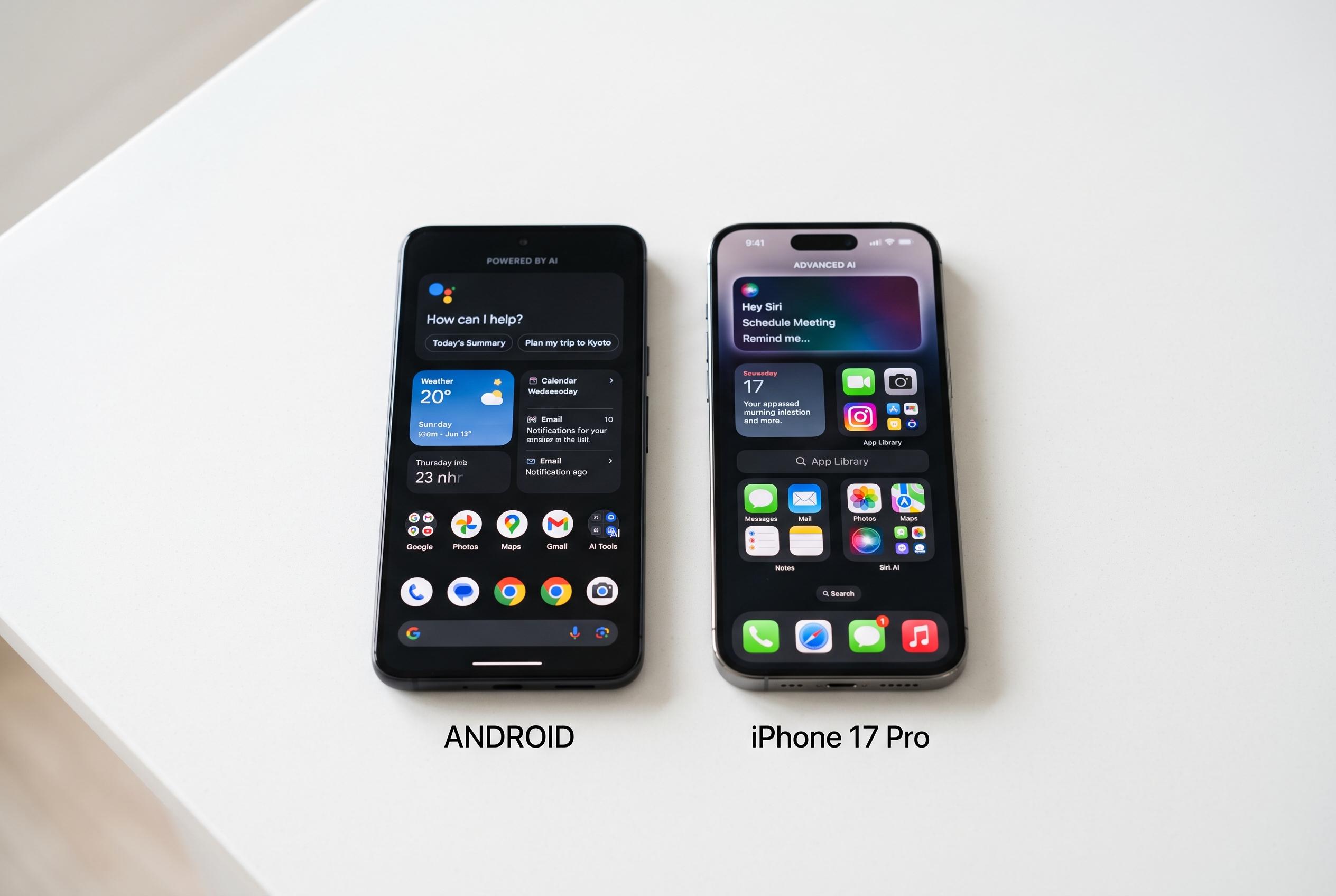

With both Android and iPhone now offering high-end specs and AI tools, users’ choices hinge on design, customisation, and ecosystem preferences in the evolving smartphone landscape of 2026.
Choosing between Android and iPhone in 2026 remains less a question of absolute superiority than of priorities. According to a Medium guide by Mike Thomas, the two platforms now meet at a high technical standard, with fast chips, capable cameras, AI tools and strong battery life. The practical difference is that Apple still leans towards a tightly controlled, uniform experience, while Android continues to offer wider choice across price points, hardware styles and software customisation.
That split begins with design. Several 2026 comparison guides note that Android devices now span foldables, gaming phones, rugged handsets, ultra-thin models and budget phones, giving buyers far more form factors to choose from. iPhone, by contrast, is built around consistency: premium materials, restrained styling and a familiar feel across the range. For buyers who value variety, Android has the edge. For those who want predictable industrial design and a strong resale profile, iPhone remains compelling.
Performance is much closer than it once was. Apple’s latest chips still rank among the fastest in the smartphone market, particularly for gaming, video editing and on-device AI tasks. But high-end Android phones from major manufacturers now compete closely in everyday use, and most users are unlikely to notice a meaningful gap in routine tasks such as browsing, streaming or messaging. The result, in practical terms, is a tie for general performance, with the deciding factor often being the rest of the device, not raw speed.
Software remains one of the clearest dividing lines. Android continues to offer deep customisation, including alternative launchers, split-screen use, custom keyboards and app installation outside the main store. iPhone’s iOS prioritises simplicity, consistency and a lower-friction setup. That difference matters. Android suits users who want to shape the phone around their habits, while iPhone is better for people who prefer a system that works with minimal adjustment. Apple also keeps the lead in long-term software support, with older iPhones typically receiving updates for many years.
Artificial intelligence is becoming a more important part of the comparison. A mid-2026 review by Switch to Android said Android manufacturers have moved faster in rolling out AI tools such as live translation, contextual assistance and on-device processing. Apple, meanwhile, has focused on a more controlled and integrated approach. That suggests Android currently has the wider AI feature set, while iPhone may still appeal to users who prefer tighter integration and fewer moving parts.
The same pattern appears in battery life, photography, gaming and app availability. Android devices often offer larger batteries and much faster charging, while iPhone tends to rely more on power efficiency than charging speed. Android cameras are frequently stronger for zoom and manual controls, while iPhone is still widely preferred for video capture and consistent colour. Gaming performance is excellent on both platforms, and the app ecosystem is mature on each side, with Apple retaining an advantage in app quality control. In price terms, Android remains the more flexible choice, stretching from entry-level devices to elite flagships, while iPhone stays focused on the premium segment. For buyers already invested in Apple hardware, the ecosystem advantage can be decisive; for everyone else, Android’s breadth may be the stronger argument.
Disclaimer: This content is intended for informational purposes only. Readers are advised to exercise their own judgement, conduct due diligence, or consult a qualified expert before acting on any information provided.