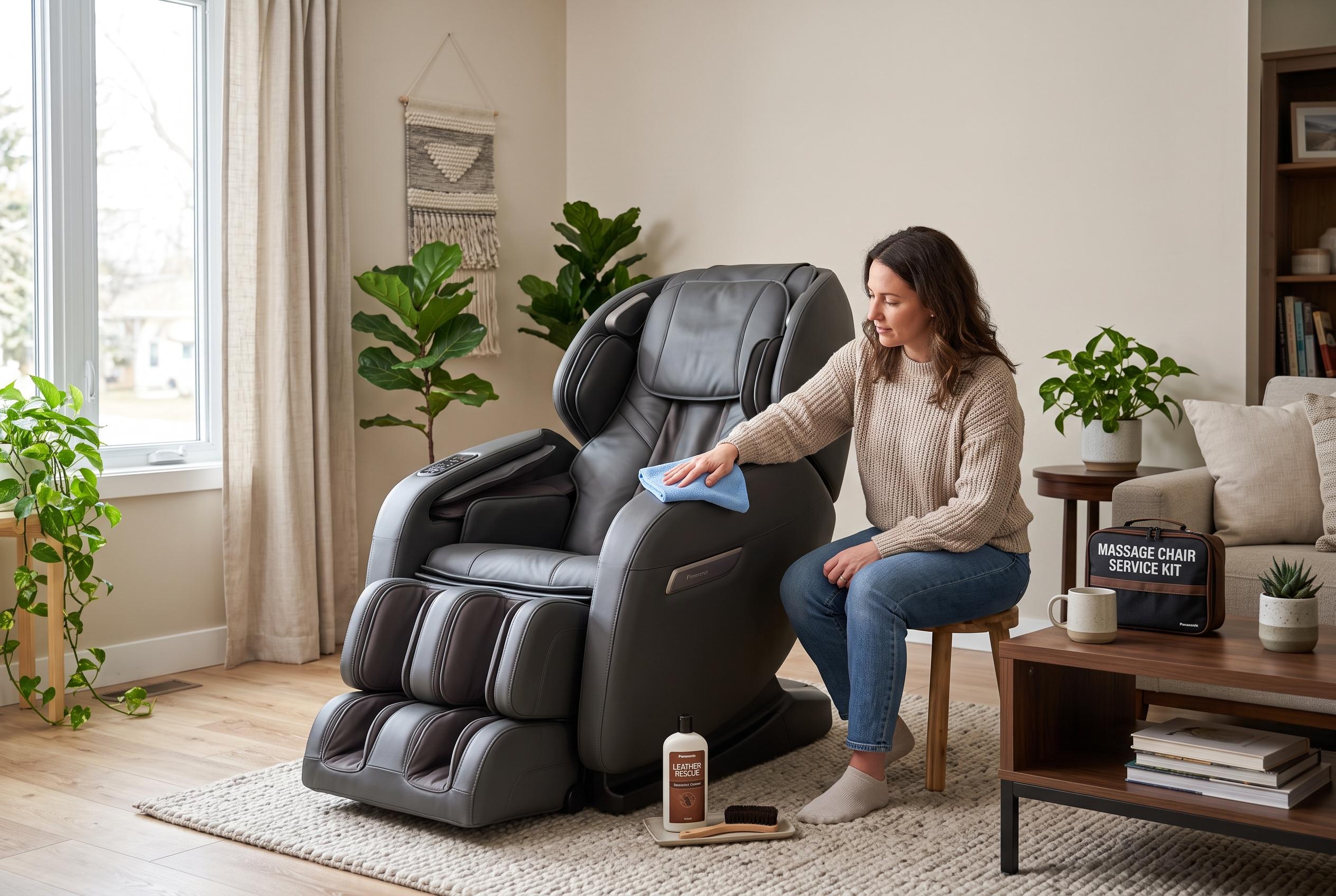

Regular cleaning, proper placement, and professional servicing are key to ensuring your massage chair remains comfortable and functional for years, according to industry experts and care guides.
Regular maintenance is the difference between a massage chair that stays useful for years and one that starts to feel tired far too soon. The basic rule is simple: clean it often, protect it from heat, moisture and direct sunlight, and pay attention to early signs of wear before they turn into costly faults. Several maintenance guides agree that routine care is far more effective than occasional deep cleaning or reactive repairs.
The upholstery deserves the most regular attention. For PU leather or other synthetic finishes, a soft microfibre cloth and a mild soap solution are usually enough, while harsher chemical cleaners can dry out the surface and speed up cracking. Fabric models need similar care, though owners should use a soft brush or an upholstery cleaner suited to the material. Industry guides also recommend wiping high-contact areas, such as armrests, headrests and foot sections, because body oils and dust build up there first.
Cleaning the chair’s moving parts matters just as much. Massage chair specialists advise checking the track system, keeping rollers and other mechanisms free from obstruction and listening for changes in sound or movement, such as grinding, squeaking or uneven motion. While some internal components rarely need attention under normal use, persistent noise or rough operation can indicate wear that should not be ignored. Most sources also recommend avoiding overuse, especially in shared settings.
Placement is another factor that affects durability. Keeping the chair away from direct sunlight helps prevent fading and brittle upholstery, while avoiding damp rooms and heat sources reduces the risk of moisture damage. A flat, stable surface is important too, because an uneven base can place unnecessary strain on the frame and moving components each time the chair reclines or resets.
Electrical care is equally important. Owners should check power connections regularly, keep liquids away from the remote and control panel and use a surge protector to reduce the risk of damage from voltage spikes. Some guides also note that detachable cushions should be cleaned separately and fully dried before being returned to the chair. For storage, it is better to use a breathable dust cover than a plastic one, which can trap moisture.
Professional servicing is still necessary from time to time. Maintenance guides generally suggest a check-up every 6 to 18 months, depending on how heavily the chair is used. A technician can handle worn motors, calibration problems and electronic faults that are not suitable for do-it-yourself repair. For owners, the practical aim is straightforward: small, steady habits will usually preserve comfort, extend lifespan and reduce the chance of major breakdowns.
Disclaimer: This content is intended for informational purposes only. Readers are advised to exercise their own judgement, conduct due diligence, or consult a qualified expert before acting on any information provided.