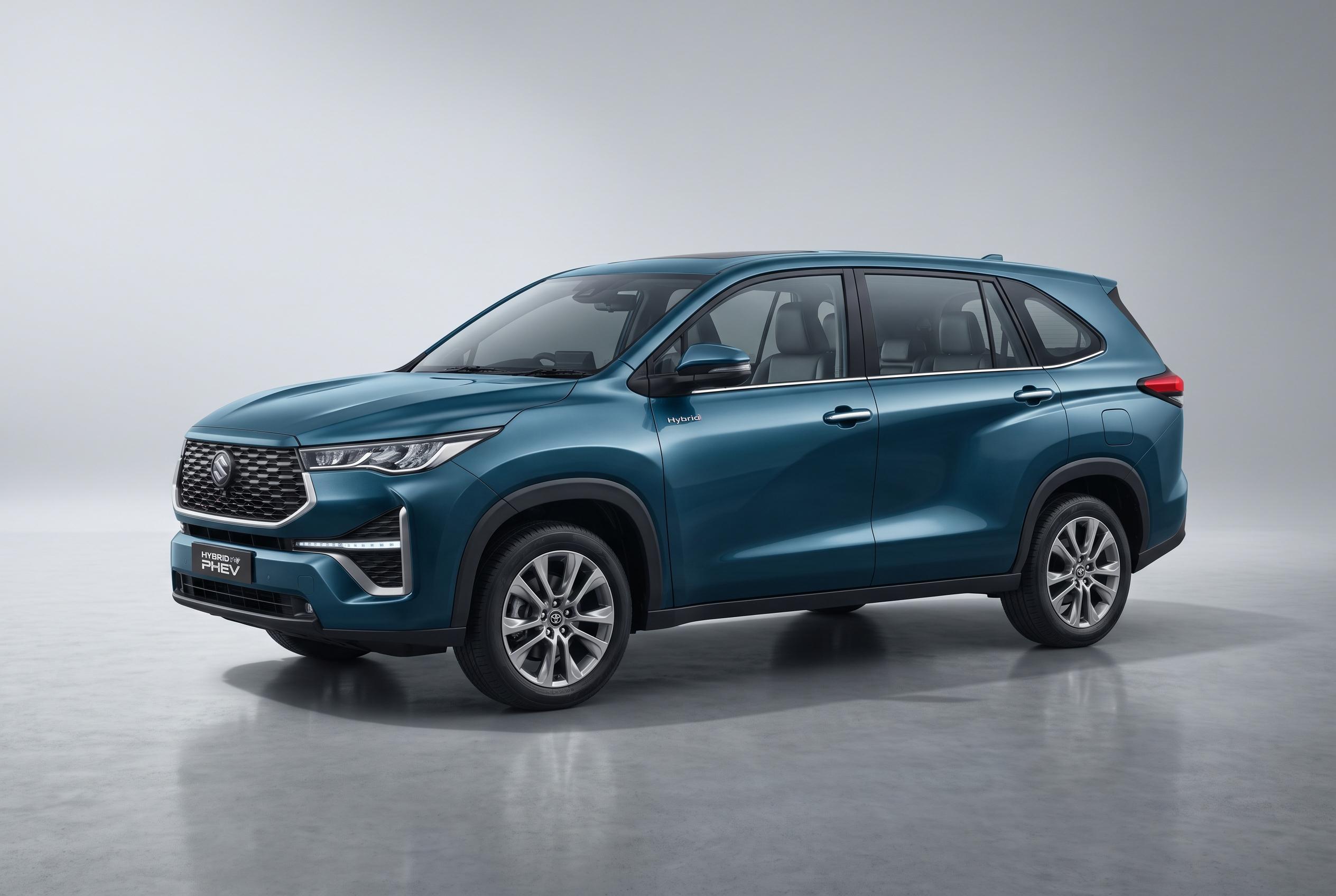

A cluster of hybrid and plug-in hybrid three-row SUVs from brands like JSW MG, Kia, Toyota and Renault are set to reshape India’s family vehicle segment over the next two years, highlighting a significant shift towards more efficient and versatile off-road options.
India’s seven-seat SUV market is moving towards a new phase of electrification, with a cluster of hybrid and plug-in hybrid models due over the next few years. Until now, strong-hybrid technology has been concentrated mainly in five-seat SUVs and premium people carriers such as the Toyota Innova Hycross, but that balance is beginning to shift as Kia, Toyota, Hyundai, Renault and JSW MG Motor India prepare larger, family-focused electrified SUVs.
The nearest arrival is expected from JSW MG Motor India, whose Hector Hawk is due on August 26, 2026, according to the company’s launch plans and sector reports. The new model is being positioned as a three-row SUV and is expected to arrive in both plug-in hybrid and battery-electric forms. Industry reporting suggests the plug-in hybrid version may use a 1.5-litre petrol engine, an electric motor and a battery pack of about 20.5kWh, with overseas versions pointing to a combined output of about 197hp and an electric-only range of roughly 100km under the CLTC cycle. The new SUV would sit above the current Hector and below the Gloster in MG’s local line-up. JSW MG Motor India has recently refreshed the Hector nameplate with new styling, new cabin details and a starting price of ₹11.99 lakh, reinforcing its effort to keep the badge relevant as it prepares for a larger model range.
Kia is close behind with the Sorento, which has now been confirmed for an India launch on September 4, 2026. CarDekho reported that the Korean marque has outlined an electrified product plan for India, with the Sorento Hybrid set to occupy a premium three-row position above the Seltos and Carens family. Spy shots reported by CarWale indicate that the SUV is already being tested in India, strengthening expectations that it is nearing production readiness. The international hybrid uses a 1.6-litre turbocharged petrol engine paired with an electric motor, mated to a six-speed automatic gearbox. Kia is also expected to offer a diesel version in India. Equipment is likely to include twin 12.3-inch displays, level 2 driver assistance, a panoramic sunroof, ventilated front seats, powered front seats, a 360-degree camera and connected-car features. That would put it into contention with the Toyota Fortuner, Skoda Kodiaq, Volkswagen Tayron and Jeep Meridian.
Further out, Renault is preparing a seven-seat SUV derived from the latest Duster platform, with a launch likely in 2027 or around FY2027-28. The model is expected to be influenced by the international Boreal and Dacia Bigster family, and could become a key part of Renault’s attempt to rebuild its Indian business around SUVs. A hybrid option is under consideration, and that would give Renault a useful efficiency advantage in a segment where larger petrol engines still dominate. If the product reaches India as planned, it would be aimed at rivals including the Mahindra XUV700, Tata Safari, Hyundai Alcazar, Kia’s own three-row range and the next wave of Maruti Suzuki and Toyota SUVs.
Hyundai is also understood to be working on a new three-row SUV, known internally as the Ni1i, with a launch expected around 2028. Unlike the Alcazar, the new vehicle is expected to use its own body design and a more premium layout, while sharing some engineering direction with Hyundai’s next-generation Creta family. Reports suggest the company may introduce its 1.5-litre petrol strong-hybrid system in this SUV, and there is also a possibility of local production at the Pune plant. If that happens, Hyundai would add another mainstream hybrid option at a time when Indian buyers are increasingly drawn to lower fuel use without depending fully on public charging infrastructure.
Toyota is likely to extend the Urban Cruiser Hyryder line with a seven-seat derivative that retains the current model’s hybrid strategy. The existing Hyryder has already helped establish Toyota in India’s midsize hybrid SUV space, and a larger version would widen that appeal. The new model is expected to use a longer body, an extended wheelbase and revised rear packaging to accommodate a third row, while continuing with Toyota’s 1.5-litre strong-hybrid system. A more affordable petrol-electrified version may also be offered, depending on final product planning. A closely related Maruti Suzuki model is also expected, following the existing Grand Vitara-Hyryder partnership. If priced carefully, the Toyota could become one of the more accessible three-row strong hybrids in the market.
Taken together, these projects point to a sharper shift in India’s family-SUV segment. Strong hybrids can cut petrol consumption in city use while preserving the convenience of refuelling for long journeys, and plug-in hybrids add a short-range electric mode for daily driving. For now, the Toyota Innova Hycross remains one of the few mainstream seven- or eight-seat vehicles offering that mix of practicality and efficiency. That position is likely to face far more competition over the next 18 to 24 months as the market opens up to plug-in hybrids, strong hybrids and, in some cases, full battery-electric alternatives.
Disclaimer: This content is intended for informational purposes only. Readers are advised to exercise their own judgement, conduct due diligence, or consult a qualified expert before acting on any information provided.