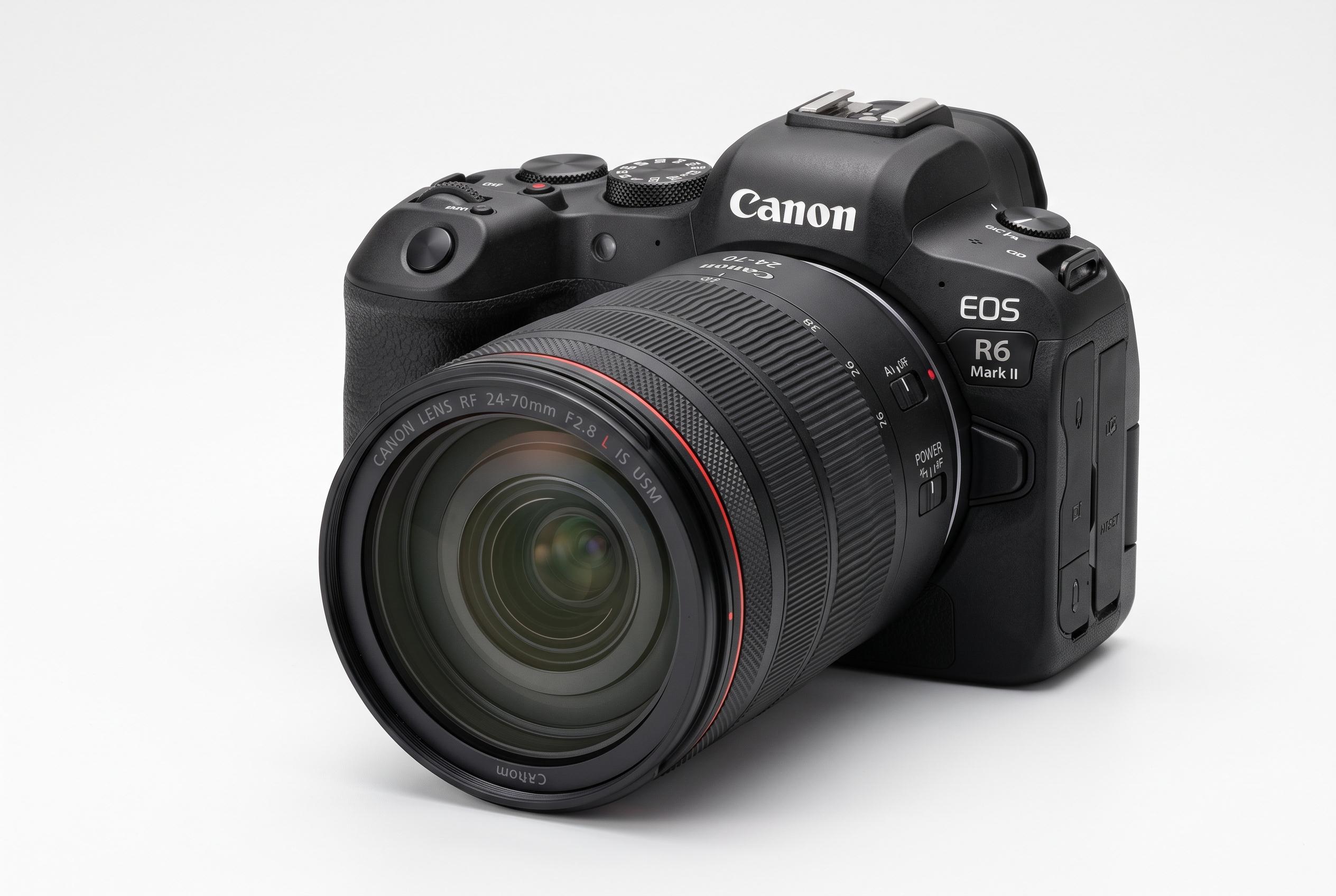

Canon has unveiled the EOS R6 V, a compact, stabilised mirrorless camera tailored for solo video producers, blending high-end cinema features with a user-focused design to challenge traditional hybrid and cinema markets.
Canon has built a camera that makes a blunt argument: for many solo video makers, a stills body is no longer the right starting point. The EOS R6 V takes the 32.5-megapixel full-frame sensor and video system from the Cinema EOS C50, then drops them into a smaller mirrorless body with in-body stabilisation, a lower price and controls aimed squarely at people who shoot, frame and upload alone.
That shift is visible before the camera is switched on. The electronic viewfinder is gone, replaced by an active cooling vent, while a second tripod mount on the side and a front tally lamp make it easier to shoot vertically and to work without an assistant. According to Digital Camera World, the design is meant for content creators rather than traditional photographers, and Canon has clearly tried to remove the small frictions that slow down one-person production.
The rest of the body follows the same logic. The grip is deep, the build is weather-sealed and the control layout is arranged around video work, with custom buttons and direct access to recording functions. The camera also accepts Canon’s RF 20-50 mm F4 L IS USM PZ, a power zoom lens that reinforces the idea that this is a system for controlled, repeatable video rather than purely manual stills shooting.
Canon has also given the R6 V the sort of connectivity that matters on a set. The camera has a full-size HDMI port, microphone and headphone sockets, USB-C power delivery and dual card slots for CFexpress Type B and SD UHS-II media. According to Canon’s product information, it can shoot continuously at up to 40 frames per second in electronic mode and offers in-body stabilisation rated at up to 7.5 stops.
The key distinction is video performance. The R6 V records 7K open gate footage, supports Canon Log 2 and Log 3, offers 4K at up to 120 frames per second and uses active cooling to extend recording times. Digital Camera World said the camera is built around long-form capture, with the cooling system and tally light making it more practical for interviews, social video and event coverage than a conventional hybrid body.
That puts it in direct tension with Canon’s own Cinema EOS C50. The two cameras share the same sensor and much of the same video output, but the R6 V adds stabilisation and removes the body features that suit a cinema rig. Canon’s pricing makes the strategy obvious: at $2,499, the R6 V undercuts the C50 while keeping much of the image pipeline intact. The trade-off is equally clear. The C50 is still the better choice for a crewed production with XLR audio built in, while the R6 V is aimed at creators who want a lighter, cheaper, more flexible tool.
It is also a camera with limits that matter. There is no mechanical shutter, no flash support and no viewfinder, so it is less convincing as a general-purpose stills model than the broader EOS line. But for users whose priority is long recording times, clean autofocus and a body that is ready for vertical and horizontal delivery, the R6 V looks like Canon’s first serious answer to the modern creator camera rather than a compromise between two markets.
Disclaimer: This content is intended for informational purposes only. Readers are advised to exercise their own judgement, conduct due diligence, or consult a qualified expert before acting on any information provided.