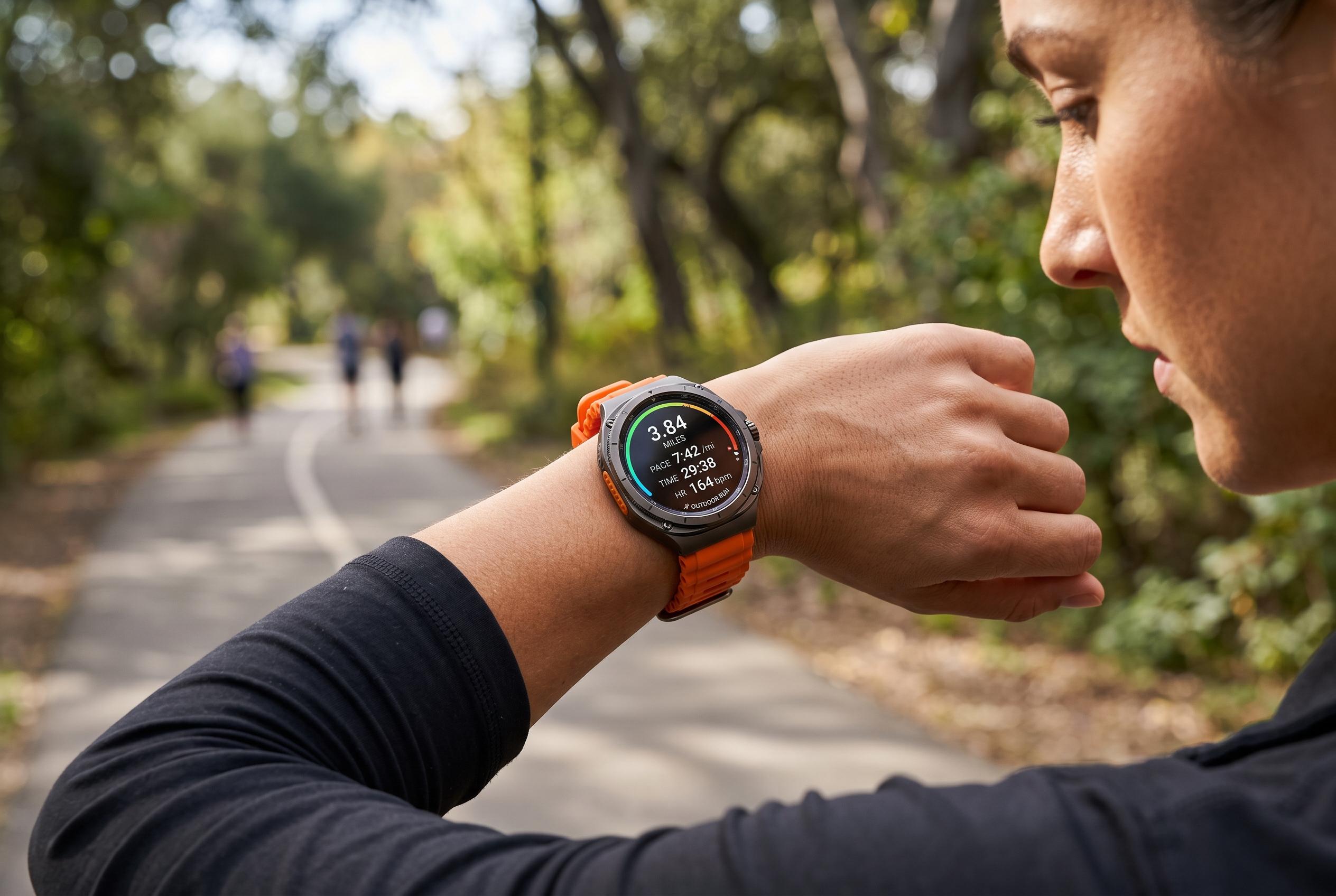

A recent run test highlights Samsung’s Galaxy Watch Ultra’s superior brightness, haptics, and comfort for runners, although Apple maintains an edge with its Digital Crown interface, marking a noticeable shift in wearable performance dynamics.
A direct run test with Samsung’s Galaxy Watch Ultra and Apple’s Watch Ultra 2 suggests the two premium wearables are closer than their branding implies, but Samsung has the edge in a few practical areas. Tom’s Guide said the author wore both watches during a 10K run, with the Galaxy model on the right wrist and the Apple model on the left, and found the Samsung device easier to read at speed thanks to its brighter display and simpler workout view. It also recorded a slightly shorter time and a little more distance, which the author linked to auto-pause behaviour while stopping for push-ups.
The strongest advantage was the screen. Samsung’s watch uses a 1.5-inch Super AMOLED panel rated at up to 5,000 nits, while the Apple Watch Ultra 2 peaks at 3,000 nits on an LTPO OLED display, according to product reporting and independent reviews. In practice, that meant the Samsung screen stayed clearer in sunlight and shaded sections alike, and its workout layout put fewer figures on screen in larger type. For runners, that makes the display easier to scan quickly, which is often more useful than simply having more pixels.
Haptics were the second area where Samsung impressed. Tom’s Guide reported that the Galaxy Watch Ultra’s vibrations felt stronger than Apple’s Taptic Engine during kilometre alerts and pace prompts, and the watch could also read out splits through its speaker without forcing the wearer to lift a wrist. That makes a real difference on longer runs, where clear alerts matter more than polish. Samsung’s bundled Marine Band was the third gain, with the review noting better comfort, less sweat retention and a lighter design than the earlier version.
Apple still has one important advantage: the Digital Crown. The Tom’s Guide review said the physical wheel remains easier to use with gloves, because it can be felt and turned without looking at the screen. Samsung’s touch bezel offers a workable alternative, but it is less direct and less reliable in poor weather. That leaves the broader verdict unchanged. Samsung appears to offer the better running watch on brightness, feedback and strap comfort, while Apple still wins on one of the simplest interfaces in wearables.
Disclaimer: This content is intended for informational purposes only. Readers are advised to exercise their own judgement, conduct due diligence, or consult a qualified expert before acting on any information provided.