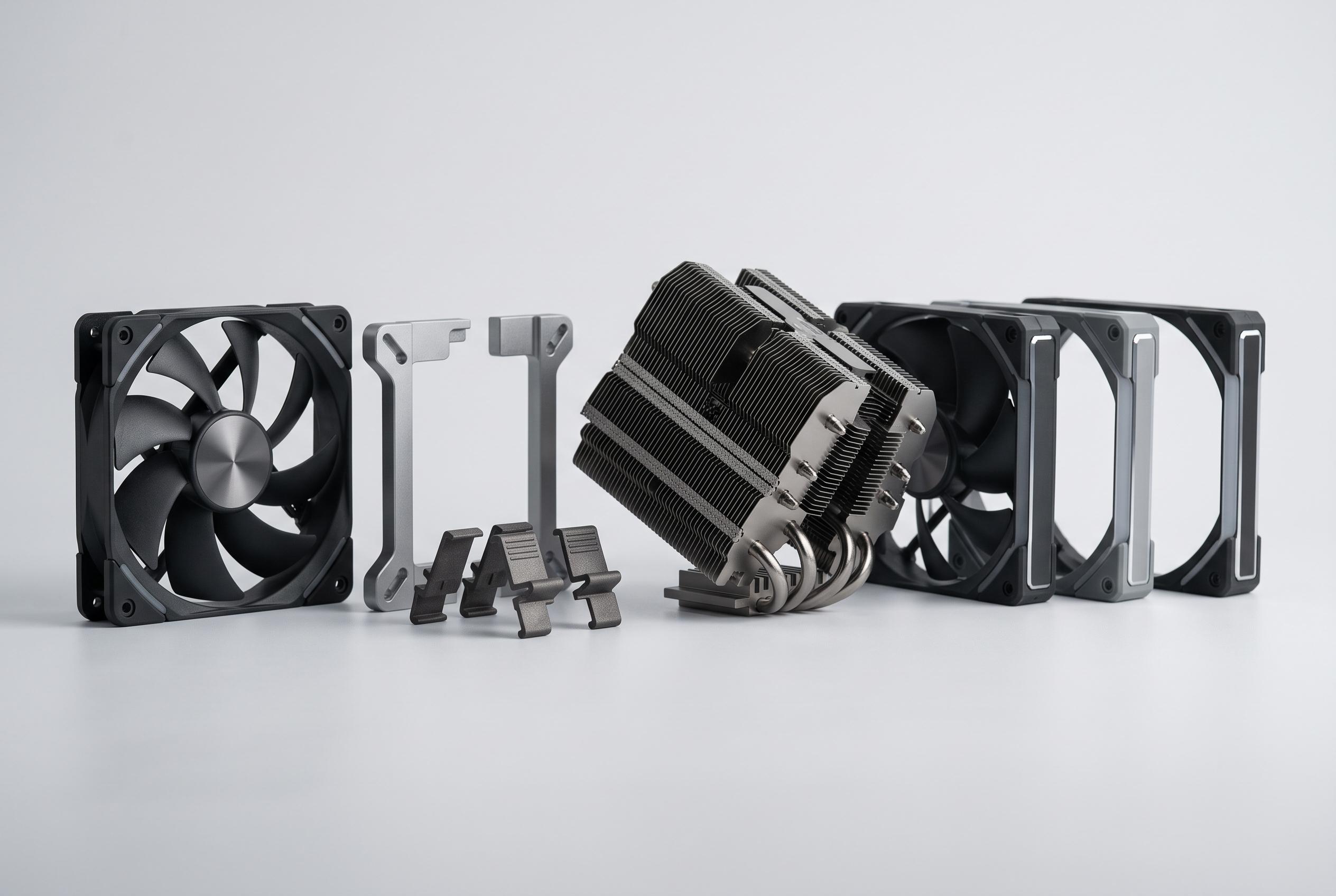

Levelplay unveils a new collection of modular, tactile cooling components at Computex 2026, shifting focus from performance to personalisation and aesthetic expression in PC crafting.
Levelplay used Computex 2026 to present a broader cooling range that leans less on plain function and more on the look and feel of the building process. The company’s latest products are centred on tactile controls, built-in monitoring, modular fitting and a more distinctive industrial design language aimed at PC builders who want their hardware to feel as considered as the rest of their system. According to Levelplay, the line-up includes the Newtro Series, Edge 360, Wave 360, Digital Air 5 and Mag Fan Kit.
The clearest expression of that approach is the Newtro Series, which Levelplay says is inspired by classic audio gear, industrial controls and retro computing equipment. Dennis Liu, the company’s chief executive, said in the announcement that PC building should be treated as “a creative platform, not simply a hardware category”. He added that many modern components are becoming too standardised and that the new range was intended to restore some of the personality and interaction that once defined DIY PCs.
That philosophy also appears to extend to the rest of the range, which is described as combining practical installation features with more expressive styling. Reports from The FPS Review around Levelplay’s Computex presence said the company was also showing concepts such as a MagBracket fan system with magnetic attachment and USB-C connectivity, along with a Newtro 360 all-in-one cooler that replaced the usual embedded display with a large physical control knob. Hardware Busters also reported that the Edge 360 uses a 4.4-inch LCD integrated into a curved ARGB pump housing.
Taken together, the products suggest Levelplay is trying to carve out a more design-led position in a crowded cooling market. Rather than competing only on thermal performance, the company is pitching interaction, modularity and visual identity as part of the value proposition. That may appeal to enthusiasts who see a PC build as both an engineering project and a personal object, not just a collection of parts.
Disclaimer: This content is intended for informational purposes only. Readers are advised to exercise their own judgement, conduct due diligence, or consult a qualified expert before acting on any information provided.