
While smart thermostats offer convenience and energy savings, their data collection practices and security settings can make homeowners uneasy. Experts advise clear communication and proactive security measures to build trust and protect privacy.
Smart thermostats are often the first connected home device a homeowner installs, and that makes them a natural starting point for privacy questions. The appeal is easy to understand: remote control, energy savings, alerts and utility incentives. But according to ACHR News, the same features that make the devices useful can also make customers uneasy about what is being collected and who can see it. Contractors who can explain the basics clearly are often better placed to turn suspicion into confidence.
The data involved is usually less dramatic than many homeowners imagine. According to the report, smart thermostats typically collect temperature settings, schedules, fan use and user preferences, and may also use sensors for humidity or occupancy. Victoria Garcia Massimo of Airzone Control said cloud connectivity is what enables remote access and weather-based automation, but it also means homeowners should understand permissions, integrations and security settings. Nick Dalsin of Resideo said some of the more sensitive-sounding requests, such as location data, are tied to specific functions like local weather features, geofencing and contractor diagnostics.
That explanation matters because connected heating and cooling equipment sits at the intersection of convenience and surveillance. Consumer Reports has warned that smart appliances can reveal usage patterns and other household behaviour, while the National Institute of Standards and Technology recommends strong passwords, regular updates, unused-feature controls and careful review of privacy settings. Trane, in its own privacy guidance, says its thermostats use strong passwords, optional biometric log-ins, regular updates and encrypted diagnostic data, and that utility demand response programmes are opt in. Those programmes, Dalsin said, are not government-controlled; in the United States they are usually offered by utilities or energy providers, require enrolment and can typically be exited subject to programme terms.
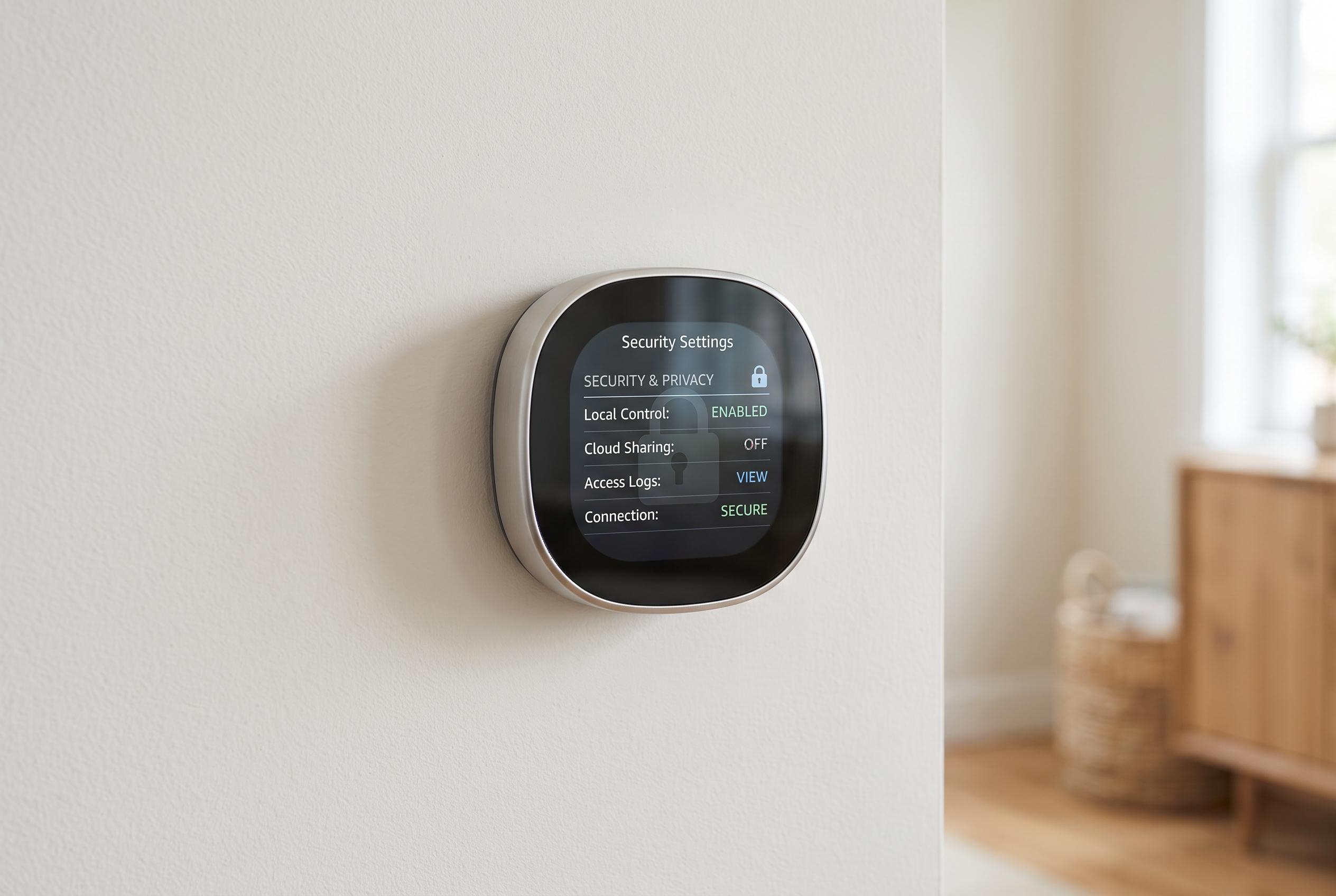
For contractors, the practical challenge is not just explaining what the thermostat does, but showing where control remains with the homeowner. ACHR News said best practice includes letting customers enter their own Wi-Fi credentials, pointing out where data sharing can be switched on or off and making clear which features will stop working if a permission is removed. Valdez said contractor access is intended for servicing and diagnostics, not unrestricted monitoring. Massimo added that devices with local control options and data minimisation practices can preserve smart-home functions without forcing homeowners to sacrifice privacy.
The common thread across manufacturers, consumer advocates and federal guidance is that connected devices are safest when users understand them. That means asking what data is collected, how it is used, whether it is shared and how it is protected. It also means using strong, unique passwords, securing home Wi-Fi, enabling updates and reviewing privacy settings before turning on every available feature. As Valdez put it, “Ultimately, homeowners are usually comfortable with connected technology when they understand what information is collected, why it is collected, who has access to it, and how it improves their home’s comfort and HVAC performance.”
Disclaimer: This content is intended for informational purposes only. Readers are advised to exercise their own judgement, conduct due diligence, or consult a qualified expert before acting on any information provided.