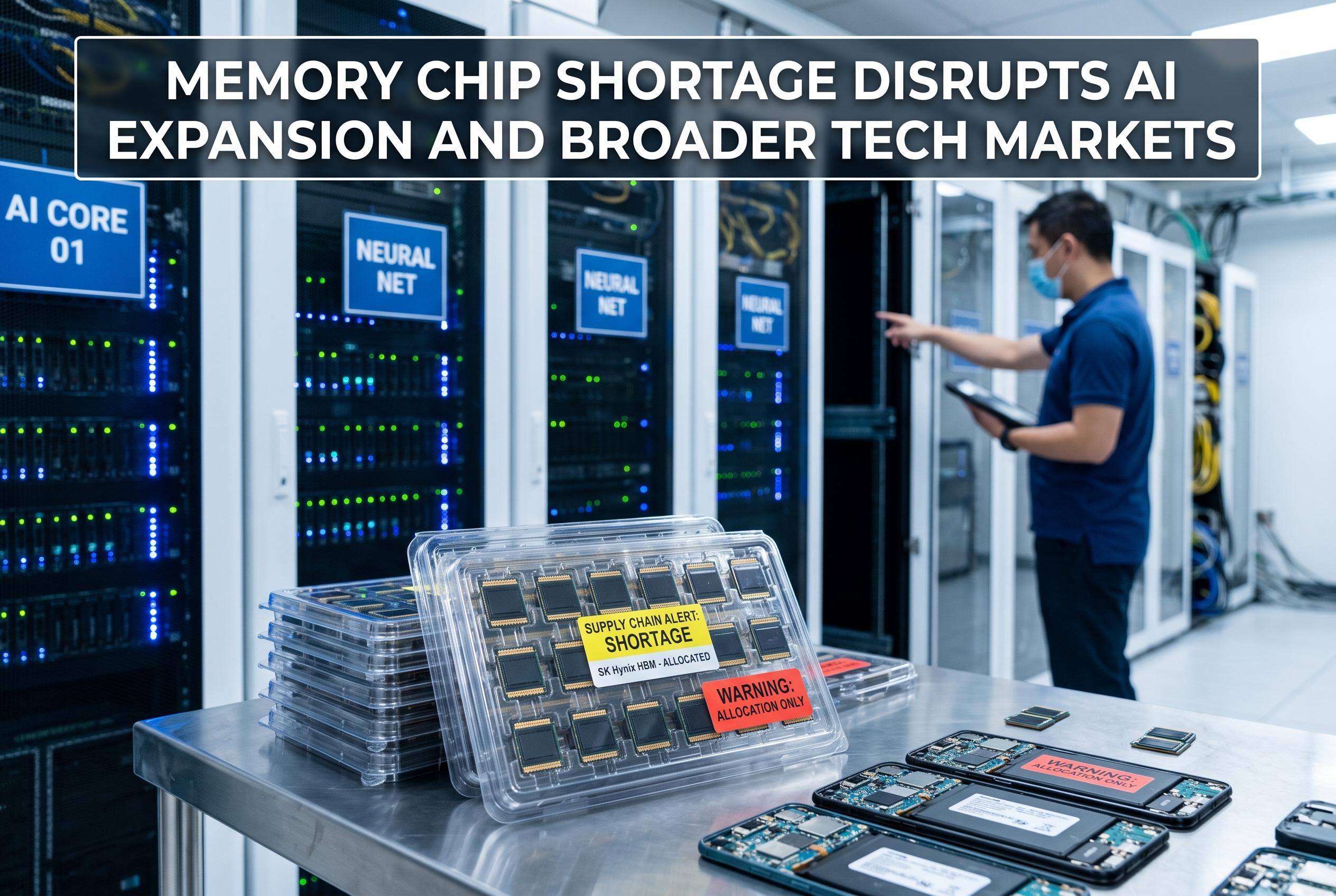

A surge in AI development is colliding with a significant memory chip shortage, leading to increased prices and supply constraints across smartphones, vehicles, and medical devices, prompting calls for government intervention.
The artificial intelligence build-out is colliding with a less visible but more basic constraint: memory chips. According to The New York Times, prices for these components have quadrupled in the past year as data centres for AI systems absorb more of the global supply, leaving manufacturers in other sectors scrambling for access.
The shortage matters because memory chips sit inside products far beyond servers. They are used in smartphones, cars and medical devices, and the squeeze is now forcing companies and lobbyists to press Washington for help. The Times reported that some industry groups want the government to encourage chipmakers to divert more output to non-AI customers, a more interventionist approach than the usual calls for expanded domestic manufacturing. Bloomberg has separately reported that major AI buyers, including Google and OpenAI, have been drawing heavily on memory-intensive hardware as they expand their data centre fleets, which has tightened supply for firms such as Apple and Tesla.
The pressure is already feeding into broader market forecasts. Bloomberg said IDC now expects the global smartphone market to contract sharply in 2026 because advanced memory demand tied to AI is draining supply. In that same period, companies across the sector have warned that DRAM shortages could restrict production and, in some cases, push manufacturers to consider building their own chip capacity.
The bottleneck is also becoming a strategic issue inside the AI industry itself. In March, Bloomberg quoted OpenAI chief operating officer Brad Lightcap saying memory shortages and US energy constraints could slow the next wave of infrastructure growth. A Forbes analysis in May argued that the shift from model training to inference, the stage where systems answer live queries, has made memory a defining limit on AI deployment. It said the shortage is unlikely to ease quickly and advised firms to improve software efficiency rather than hoard hardware.
Disclaimer: This content is intended for informational purposes only. Readers are advised to exercise their own judgement, conduct due diligence, or consult a qualified expert before acting on any information provided.