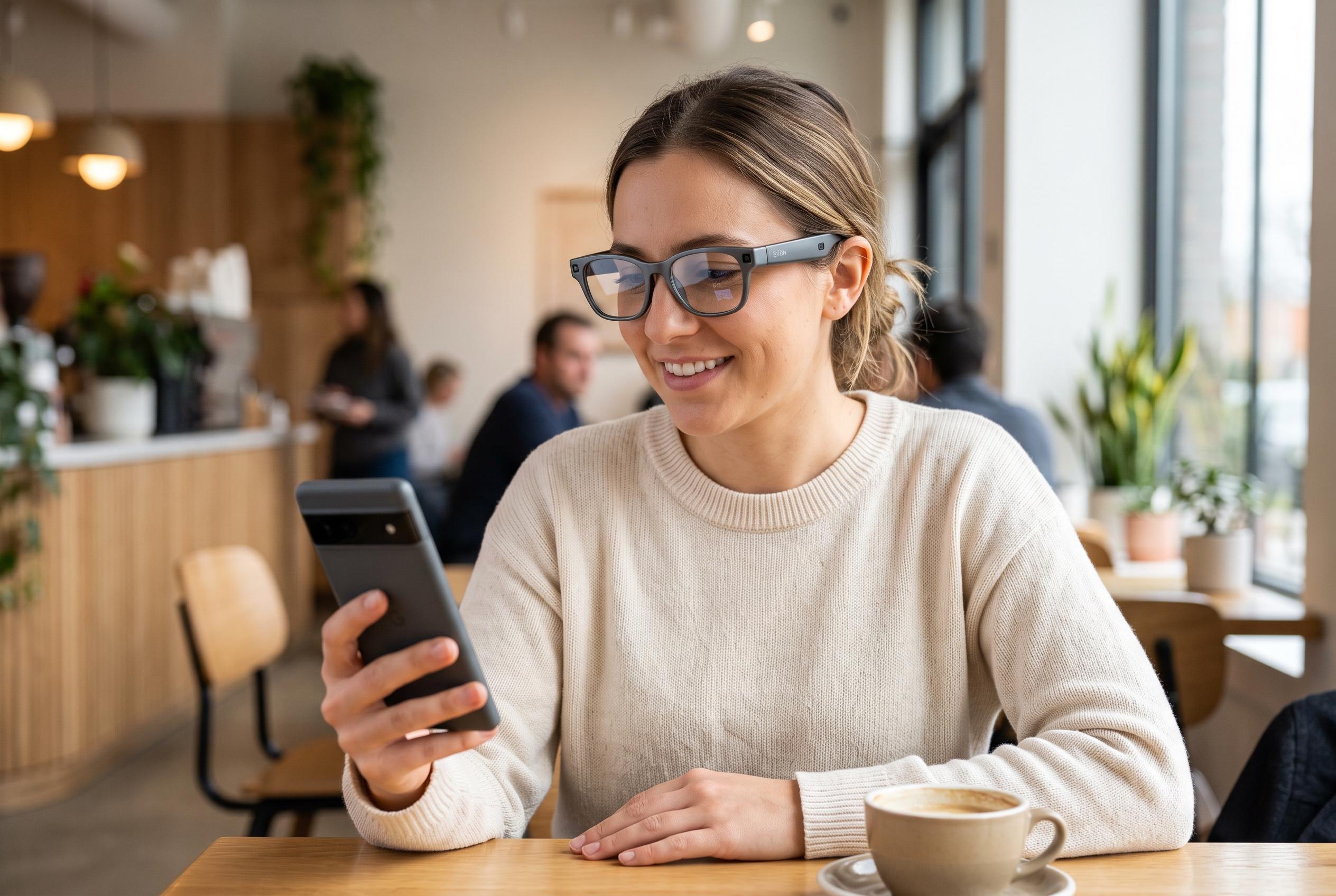

The Chinese-made Even G2 smart glasses offer a glimpse into the evolving role of wearables, combining discreet design with practical features like real-time translation and interaction, hinting at a post-phone personal computing era.
A Chinese-made smart glasses device is offering an early look at how wearables may change everyday computing. The Even G2 projects smartphone information into the wearer’s field of view as a green, floating display, letting users check lists, directions, captions and notifications without reaching for a handset. That makes it less of a novelty than a preview of the next phase of personal technology, in which the phone may become less central to daily use.
The glasses are built around a pair of tiny projectors and a simple interface controlled by touch sensors on the frame or by a smart ring. In practice, that means a wearer can tick items off a shopping list, glance at the weather or see calendar reminders while keeping their eyes on the world around them. Even Realities says the display is discreet, sharp and visible only to the wearer, with the company positioning the device as a practical tool rather than a full augmented-reality platform.
Its most persuasive features are the ones that solve specific problems. Live translation can turn foreign speech into subtitles in the user’s line of sight, while the captioning mode can transcribe conversations in real time. The glasses can also record meetings, generate AI summaries and surface contextual notes during discussions. According to the company, four microphones and waveguide lenses are used to capture and project speech with little delay, even in noisy surroundings.
Design appears to be a major part of the appeal. The frame looks close to an ordinary pair of glasses, with much of the hardware hidden in the temples, and Even Realities says the titanium construction keeps the device slim and stable. Battery life is also a differentiator: the company says the glasses can last a full day, while the charging case extends use for up to a week. Just as importantly, the G2 omits cameras and speakers, which may make it more acceptable to users uneasy about recording and privacy concerns that have dogged camera-equipped smart glasses.
Even Realities is also betting on software. A dedicated app store now allows outside developers to build tools for the platform, and early examples include ebook readers and chess games. Still, the G2 remains limited. It shows simple, monochrome graphics rather than rich colour interfaces, and it cannot replace a smartphone outright. That places it closer to a smartwatch for the face: useful for quick tasks, but not yet a full substitute for the device in your pocket.
That distinction matters because the larger industry is moving quickly. Meta already has a display-enabled smart glasses model, Google is working on one built around Gemini and Apple is widely expected to enter the category later, according to industry reporting and company announcements. The Even G2 is not as ambitious as those systems, but it offers a clearer answer to the question of what smart glasses are for today. For now, the most convincing version is not a device that tries to do everything, but one that makes ordinary digital tasks slightly less intrusive.
Disclaimer: This content is intended for informational purposes only. Readers are advised to exercise their own judgement, conduct due diligence, or consult a qualified expert before acting on any information provided.