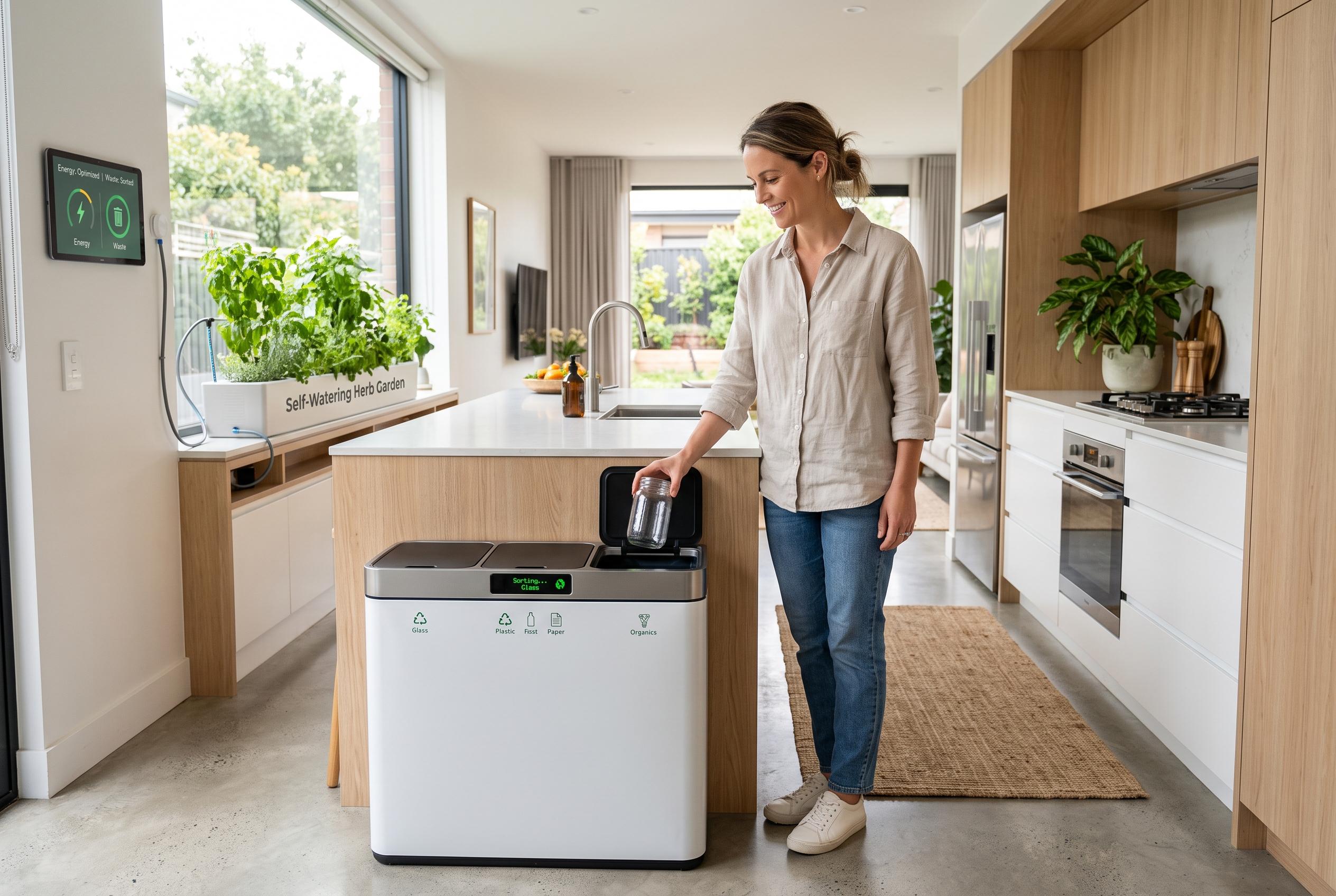

Maggie Berry advocates for a subtle approach to eco-friendly smart homes, emphasising background automation that streamlines routines, reduces waste, and enhances comfort without complicating daily life. This shift reflects a broader trend of integrating efficiency with smart technology for more sustainable living.
Maggie Berry argues that the most effective eco-friendly smart home is not the one with the most gadgets, but the one that quietly reduces waste in the background. Her central point is that sustainability works best when automation supports normal routines, rather than complicating them. In practice, that means combining efficient home design with smart controls that cut energy and water use while improving comfort and making cleaner electricity easier to use. The result is a home that behaves more predictably and costs less to run.
That approach fits a broader planning trend. The Climate Emergency Forum says sustainable homes should be treated as integrated systems, starting with insulation, windows and other efficiency upgrades before layering on renewable power and smart controls. Shipshape.ai makes a similar case for building from the network upwards, beginning with reliable Wi-Fi and then adding devices in order of impact. The common lesson is that smart technology works best when the house itself is already efficient and the infrastructure is stable.
Berry’s room-by-room framework starts with the appliances and controls that run every day. In the kitchen, she recommends focusing on cooking, refrigeration and dishwashing, with induction cooking highlighted as a cleaner, more targeted alternative to conventional electric or gas ranges. She also stresses that efficiency labels, smart monitoring and surge protection matter because even well-chosen equipment can fail if installation and upkeep are poor. The point is not simply to buy better appliances, but to protect the investment after the upgrade.
Lighting and climate control offer some of the clearest savings. Berry advises replacing the most-used fixtures with LEDs first, then adding occupancy sensors, dimmers and scheduled scenes so rooms use only the light they need. For bedrooms, she recommends smart thermostats that follow occupancy and sleep patterns, with overnight temperature setbacks and a gradual wake-up ramp. That fits the planning advice from Livingetc and EcoFlow, which both emphasise remote operation, automation and central platforms that keep the system manageable rather than fragmented across too many apps.
She also ties sustainability to health and maintenance. Berry recommends controlling pollution at the source with kitchen extraction, bathroom ventilation and low-emission materials, then automating fans and filtration so they run when needed rather than constantly. Her advice to document device locations, filter sizes, firmware updates and warranty details reflects a broader warning from planning guides: compatibility problems, hidden electrical work and neglected upkeep often undermine otherwise sensible projects. The practical message is clear enough: start with the biggest waste, add controls only where they solve a real problem and build the system so it still works if the internet does not.
Disclaimer: This content is intended for informational purposes only. Readers are advised to exercise their own judgement, conduct due diligence, or consult a qualified expert before acting on any information provided.