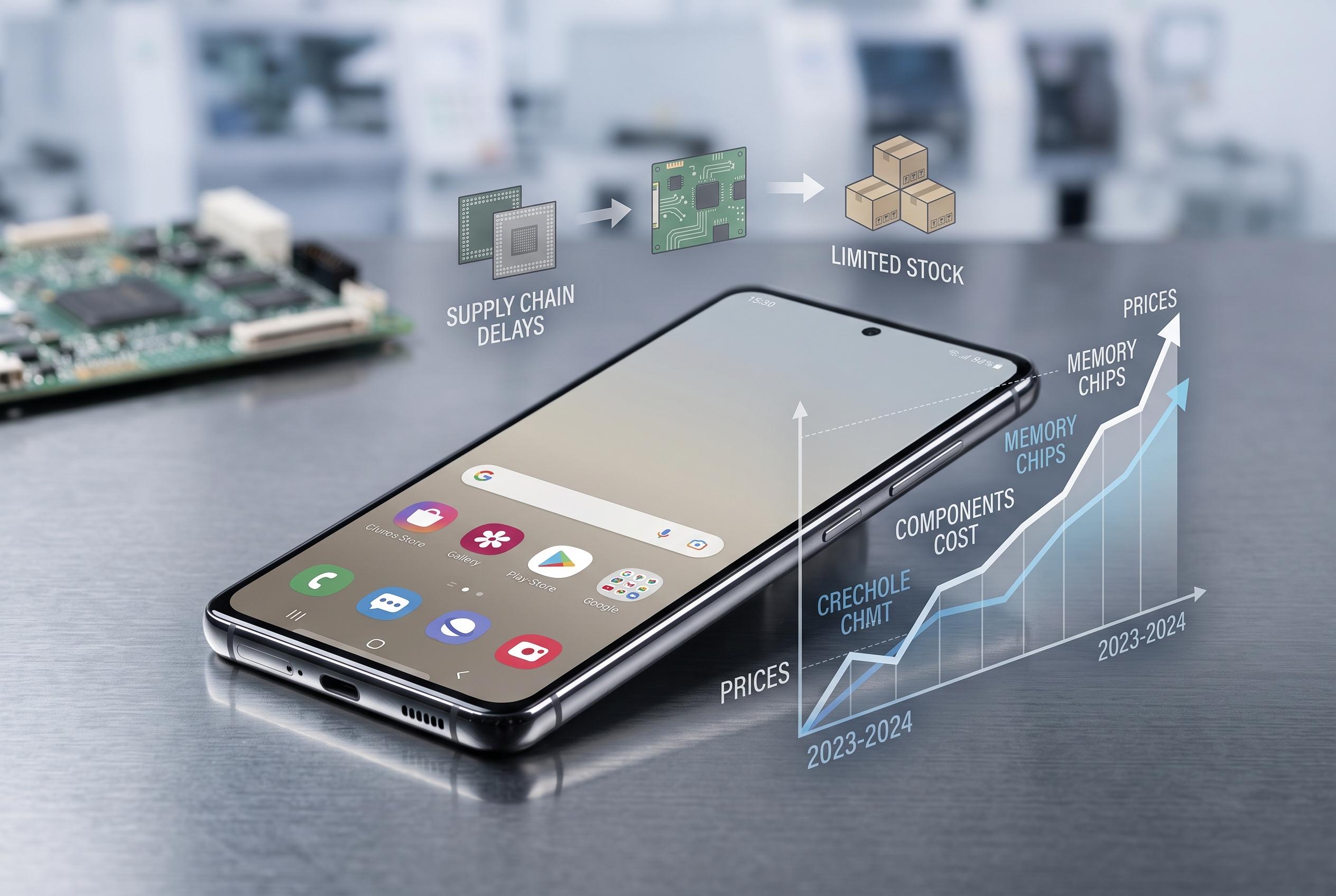

Rising memory chip costs driven by supply shortages and increased demand for data centres are prompting major tech firms like Apple to raise prices, signalling wider disruptions across the consumer electronics industry.
Apple’s latest price increases are turning a familiar consumer complaint into a wider warning for the technology sector: memory chips are becoming expensive enough to reshape retail pricing. In Switzerland, Apple’s Mac and iPad range has already moved sharply higher, with the NZZ reporting that an iPad Air that cost 539 Swiss francs only weeks ago now sells for more than 830 francs, while an iMac and a MacBook Pro have also risen materially. Reuters-style reporting in MacRumors, TechCrunch and Business Standard says Apple has lifted prices across several product lines to offset higher memory and storage costs, with some models rising by $100 to $300 and the iPad Air and iPad Pro also taking significant increases.
The trigger is not a problem with Apple’s own hardware design, but a shortage in the components that sit inside almost every modern device. The NZZ reports that the artificial intelligence boom is absorbing huge volumes of high-end memory for data centres, leaving less supply for consumer electronics. That pressure is spreading through DRAM, the short-term memory used for running applications and calculations, and NAND, the longer-term storage used for files and photos. The result, according to the NZZ, is that consumers are paying more even when devices do not offer new features.
Industry analysts quoted by the NZZ say the scale of the shortage matters because chip supply cannot be expanded quickly. Building new fabrication capacity can take up to two years and cost hundreds of millions of dollars, which makes manufacturers cautious about adding supply too aggressively. The NZZ also notes that data centres are expected to consume more than 70% of high-end memory output in 2026, a level of demand that leaves smartphone, laptop, automotive and television makers competing for what remains.
Apple appears to be the first major device maker to pass on the higher costs in a visible way, but it is unlikely to be the last. MacRumors says the company has increased prices on 14 products in total, while other reports cited by the NZZ suggest Google’s smartphones and Dell PCs are also trending higher. HP has described the situation as more than a short-term bottleneck, and Microsoft has said it is facing a strained memory supply. The pattern suggests a broader repricing phase across consumer hardware if chip markets stay tight.
There is also a geopolitical layer to the story. The NZZ reports that DRAM production is dominated by Samsung, SK Hynix and Micron, with China’s CXMT gaining share, while NAND supply is concentrated among Samsung, SK Hynix, Micron, SanDisk, Kioxia and China’s YMTC. Apple is said to be exploring additional supply options, including Chinese vendors, but that creates risks in Washington, where senators have warned Tim Cook against reliance on state-supported Chinese chipmakers. For consumers, the immediate effect is simpler: the next laptop, tablet or phone may cost more because the smallest components have become strategic assets.
Disclaimer: This content is intended for informational purposes only. Readers are advised to exercise their own judgement, conduct due diligence, or consult a qualified expert before acting on any information provided.