
Advances in USB Power Delivery 3.1 standard are making portable laptop charging more feasible, yet device compatibility and capacity limitations still influence practical use for high-performance systems.
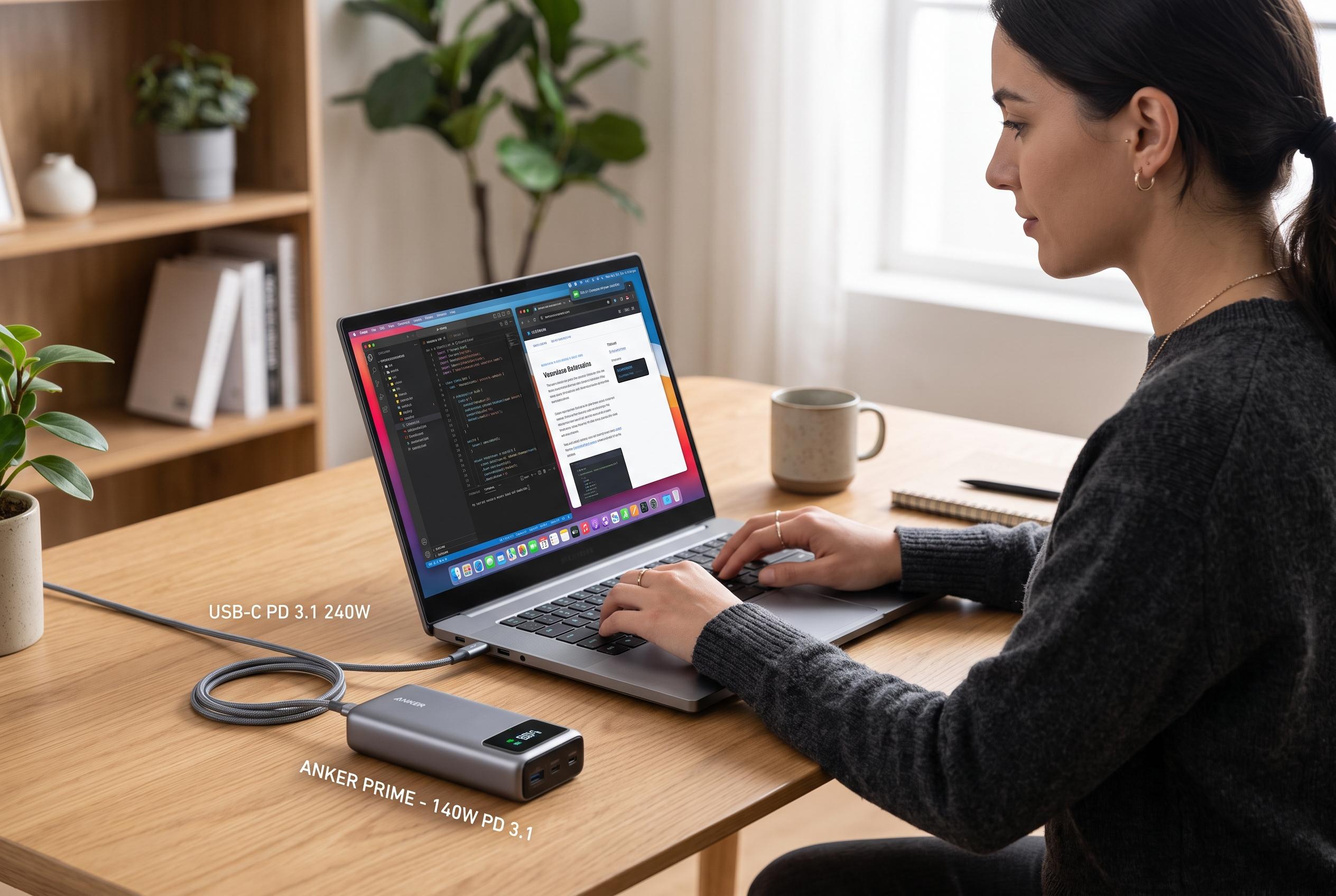
Charging a laptop from a power bank is increasingly practical, but only if the hardware on both sides is designed for it. In principle, the same USB-C port used for a phone or headset can also deliver power to a notebook, provided the laptop supports USB Power Delivery, the power bank can supply enough wattage and the cable is rated for the load. Guides from Gizhub and PCWorld say the key is not whether the port fits, but whether the charging standard, output level and cable specification all match.
USB Power Delivery 3.1 is the important benchmark for higher-wattage charging. Under that standard, compatible devices can negotiate power digitally so the charger only supplies what the laptop requests, and certified cables help reduce the risk of overheating or poor performance, according to ChargeTechLab and Plugable. Some premium power banks now advertise outputs of up to 140W, but the laptop must accept that level, and the cable must be built for the same rating. For many mainstream machines, 100W remains a common ceiling.
That limit matters because a number of laptop makers cap USB-PD input at 100W even when the machine itself needs more power during heavy use. Dell’s support guidance for Latitude and Precision systems notes that some USB-C ports are restricted in what they can draw, which means charging may be adequate for browsing, office work and other light tasks but not for sustained, demanding workloads. Once the system is under load, the battery can still drain gradually even while plugged in. On performance laptops, that can also mean features that require more power, such as discrete graphics, do not behave as they would with the original AC adapter.
For gaming laptops and other high-performance systems, USB-C charging from a power bank is often limited by design. XMG says some manufacturers use proprietary charging methods to reach 140W, while standard USB-PD setups may not be enough for the most power-hungry machines. That is why users should check the laptop maker’s specifications before relying on a portable battery, especially if the machine normally ships with a large AC charger. The practical rule is simple: if the laptop, the power bank and the cable are all certified for the same charging standard, portable charging can work well; if not, it may be slow, unstable or unsafe.
Disclaimer: This content is intended for informational purposes only. Readers are advised to exercise their own judgement, conduct due diligence, or consult a qualified expert before acting on any information provided.