
Mainstream budget cine lenses have evolved from niche accessories to reliable tools for indie filmmakers, offering professional features at under $500, with the right mount and focal length key to building a versatile kit.
Budget cine lenses have moved from specialist purchases to practical tools for independent filmmakers, and the current under-$500 market now offers genuine cinema features rather than photo lenses with cosmetic tweaks. Short Film Central’s August 2026 guide argues that the strongest options combine geared focus and iris rings, T-stop markings and consistent manual handling at prices that make sense for small productions. It places the Sirui Night Walker 35mm T1.2 at the top for Sony E-mount APS-C users, with the Meike 25mm T2.2 and 7Artisans 12mm T2.9 also standing out for value and versatility. It also highlights that the right mount matters as much as the lens itself, since most of the options are tied to Sony E, Canon EF or Micro Four Thirds systems.
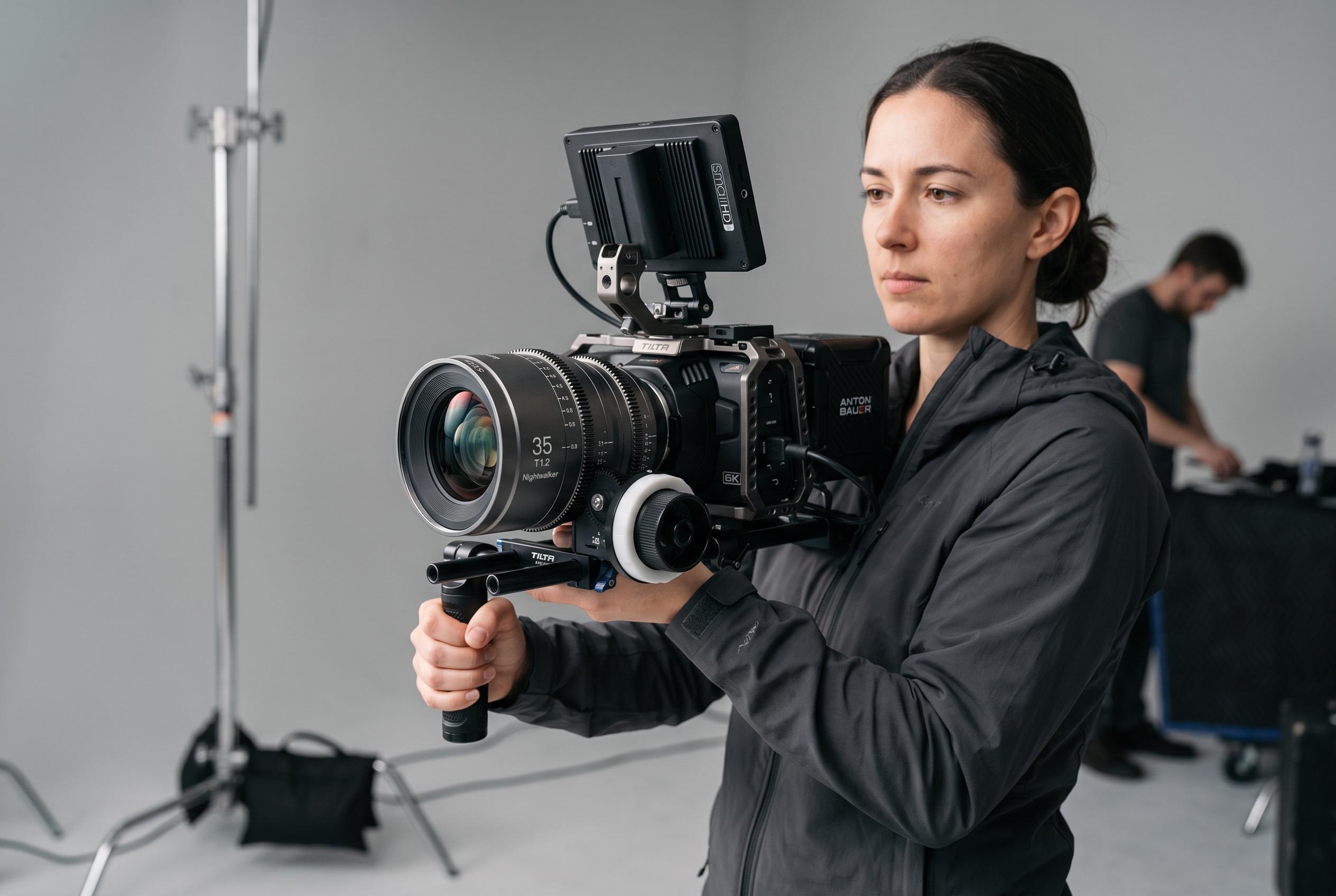
The Sirui Night Walker 35mm T1.2 is presented as the most balanced choice for Sony APS-C shooters because of its fast aperture, 270-degree focus rotation and restrained focus breathing. B&H Photo’s product information similarly describes the lens as a Super 35 optic with an ultrafast T1.2 aperture, compact build and cine-style gearing, reinforcing its appeal for low-light work and manual focus pulling. In practical terms, that makes it a strong fit for documentary, wedding and narrative crews using cameras such as the FX30 or ZV-E10.
Among Micro Four Thirds options, the Meike 25mm T2.2 earns its reputation as a value pick because it pairs a de-clicked aperture ring with geared focus and iris controls, plus a compact metal body suited to smaller rigs. B&H describes it as an APS-C lens with 0.8 MOD gears and a 9.8-inch minimum focus distance, while independent review material also points to the lens’s metal construction and good performance on the BMPCC 4K. That combination makes it a credible entry point for filmmakers who want repeatable manual operation without paying premium cine-prime prices.
The guide also gives unusual but useful attention to specialist options. The 7Artisans 12mm T2.9 fills the ultra-wide niche for cramped interiors, real estate work and music videos shot on crop-sensor cameras. The Sirui 50mm F1.8 1.33x anamorphic is the budget route to a wider cinematic frame, with horizontal flares and oval bokeh that mimic the aesthetic of far more expensive anamorphic glass. For Canon EF users, the Rokinon Cine DS 35mm T1.5 and 85mm T1.5 remain relevant because their matched gears and colour response make them practical as part of a set rather than as isolated purchases.
Taken together, the list reflects a broader shift in low-cost filmmaking equipment: entry-level cine lenses now deliver enough optical consistency and mechanical control to support serious work. The most important decision remains the mount, followed by focal length and sensor coverage. For shooters building a first kit, the strongest strategy is still to start with one fast normal lens and one portrait lens in the same mount, then add wider or more stylised glass as the production demands grow.
Disclaimer: This content is intended for informational purposes only. Readers are advised to exercise their own judgement, conduct due diligence, or consult a qualified expert before acting on any information provided.