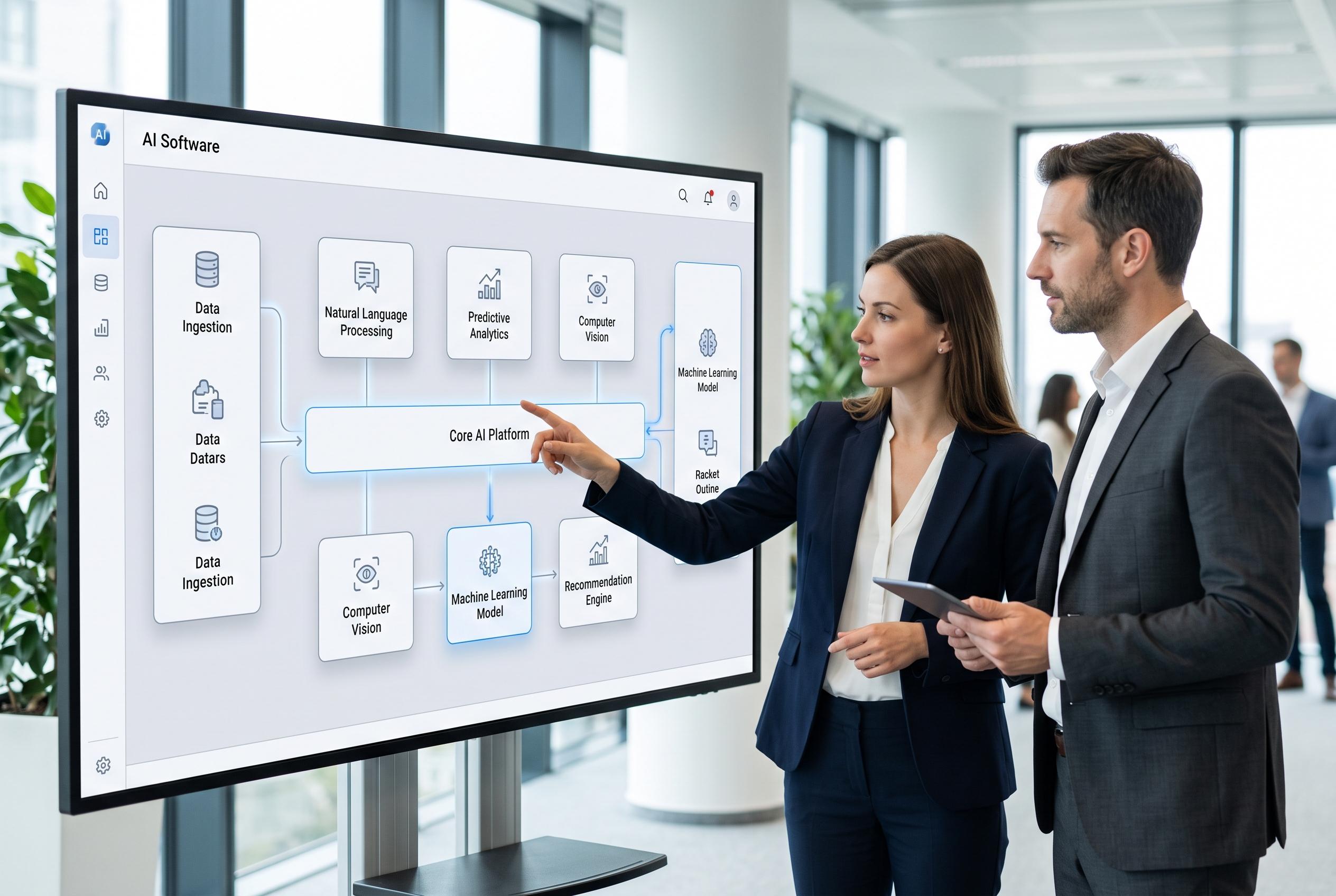

Microsoft is transforming its AI approach by developing swappable, specialised models embedded within its software ecosystem, aiming for greater flexibility, control, and sovereignty in enterprise AI applications.
Microsoft is moving to make artificial intelligence less like a single all-purpose engine and more like a swappable component inside its software stack. In a recent post on X, chief executive Satya Nadella pointed to a new paper on Microsoft’s MAI models, which the company says now power specialised tasks in products such as Excel and GitHub Copilot. The broader point is not just that Microsoft is building smaller models, but that it is redesigning how AI is delivered to business users.
According to Microsoft’s own announcement, MAI-Excel can handle common spreadsheet work at a level comparable with GPT-5.6, while MAI-Code-1-Flash has improved code suggestions in GitHub Copilot. Microsoft says both models were trained in reinforcement learning environments that mimic real work, allowing the systems to practise tasks and receive feedback until they become more efficient. The company says this approach is now being extended to Copilot Chat, Outlook and PowerPoint.
The significance is architectural as much as technical. Microsoft appears to be treating the model as one layer in a larger system rather than the product itself. That means the underlying model could be changed without altering the customer experience, whether the replacement is another Microsoft model, an external model or something not yet built. In practice, the value lies in the surrounding harness: company data, workflows, permissions and feedback loops that stay in place even as models are swapped in and out.
That logic fits a wider shift towards sovereign AI, in which businesses want AI systems that learn from proprietary data without sending that information outside controlled environments. Microsoft’s Azure documentation says sovereign AI design should apply controls across the full life cycle, from data sourcing and training to inference and retirement. GitHub’s Copilot documentation also shows a mixed-model approach already in use, with OpenAI, Anthropic and Microsoft MAI models all available in the product, while customer data handling remains tightly governed.
Recent reporting suggests Microsoft has already started routing some Excel and Outlook prompts to its own MAI models behind the scenes, reducing reliance on OpenAI and Anthropic while lowering costs. That would fit Microsoft’s long-term strategy: not to win by making every model itself, but by owning the platform that decides which model should do the job. In that sense, the contest in AI may be shifting from model supremacy to control of the software layer around the model.
Disclaimer: This content is intended for informational purposes only. Readers are advised to exercise their own judgement, conduct due diligence, or consult a qualified expert before acting on any information provided.