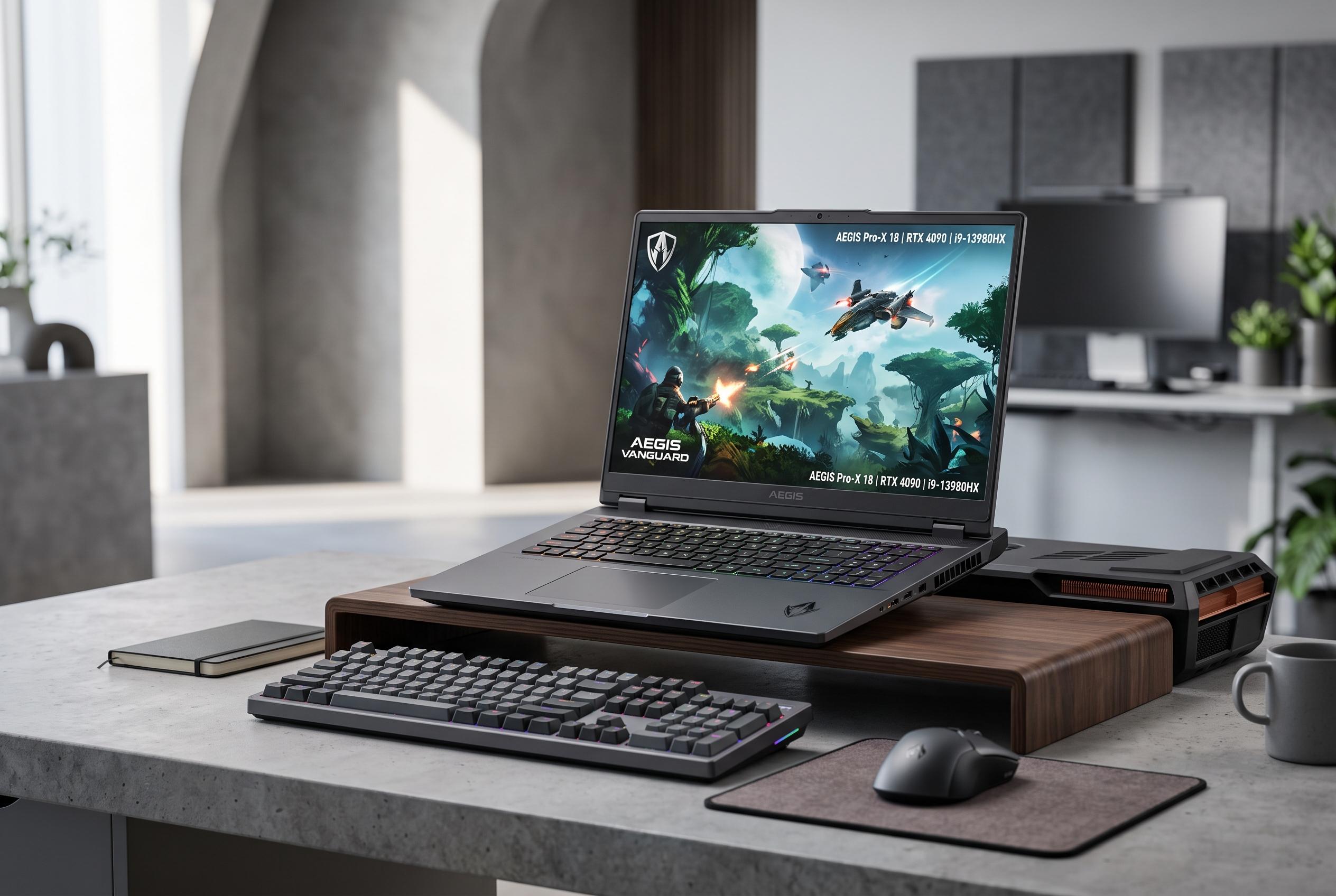

The emergence of 18-inch gaming notebooks signals a shift towards portable machines that combine desktop-level performance with mobility, driven by advanced hardware and increased cooling capabilities, appealing to both gamers and professionals seeking powerful, versatile laptops.
Eighteen-inch gaming notebooks are moving from niche status into the upper end of the laptop market, as manufacturers push for machine performance that comes closer to a desktop PC while preserving some degree of portability. According to El Día, the format is gaining ground among premium models because it offers more room for powerful components and better cooling, which are now central to high-end mobile systems.
For years, gaming laptops were dominated by 15.6-inch and 17.3-inch designs. That is changing as hardware improves and users demand more from a single device. El Día reports that the larger chassis is not only about a bigger screen: it also allows engineers to fit more capable thermal systems, which are essential when processors and graphics chips are pushed to their limits.
The trend is now visible in Argentina, where specialist brands are selling premium models built around recent Intel Core Ultra and AMD Ryzen processors, along with NVIDIA GeForce RTX 50 Series laptop graphics. Retail listings from MSI and XoticPC show how far the category has advanced, with machines such as the MSI Raider 18 HX and Titan 18 HX AI pairing 18-inch UHD+ Mini LED displays with Intel Core Ultra 9 chips, RTX 5090 graphics, fast DDR5 memory and high-capacity SSD storage. Acer has also introduced the Predator Helios 18 AI, a flagship model with up to 256GB of RAM, 6TB of PCIe 5.0 storage and a 4K Mini LED screen, underlining how aggressively the segment is being developed.
These notebooks are not aimed only at gamers. El Día notes that they also suit video editors, designers, architects, developers and other users who need sustained processing power. The larger display makes it easier to manage multiple windows, work on visual projects and edit content without relying on an external monitor. Manufacturers are pairing these panels with high refresh rates, often 240Hz, plus connectivity such as Wi-Fi 7, Thunderbolt and USB-C.
The trade-offs remain significant. These systems are heavy, expensive and far from ideal for long battery life. Review coverage of Acer’s Predator Helios 18 AI, for example, found that a 3.5kg chassis and roughly two hours of battery life came with the territory, even as performance reached desktop-class levels. That is why the category is unlikely to replace conventional desktops outright. Instead, the new generation of 18-inch notebooks is carving out a middle ground for buyers who want extreme power in a machine that can still be moved when necessary.
Disclaimer: This content is intended for informational purposes only. Readers are advised to exercise their own judgement, conduct due diligence, or consult a qualified expert before acting on any information provided.