

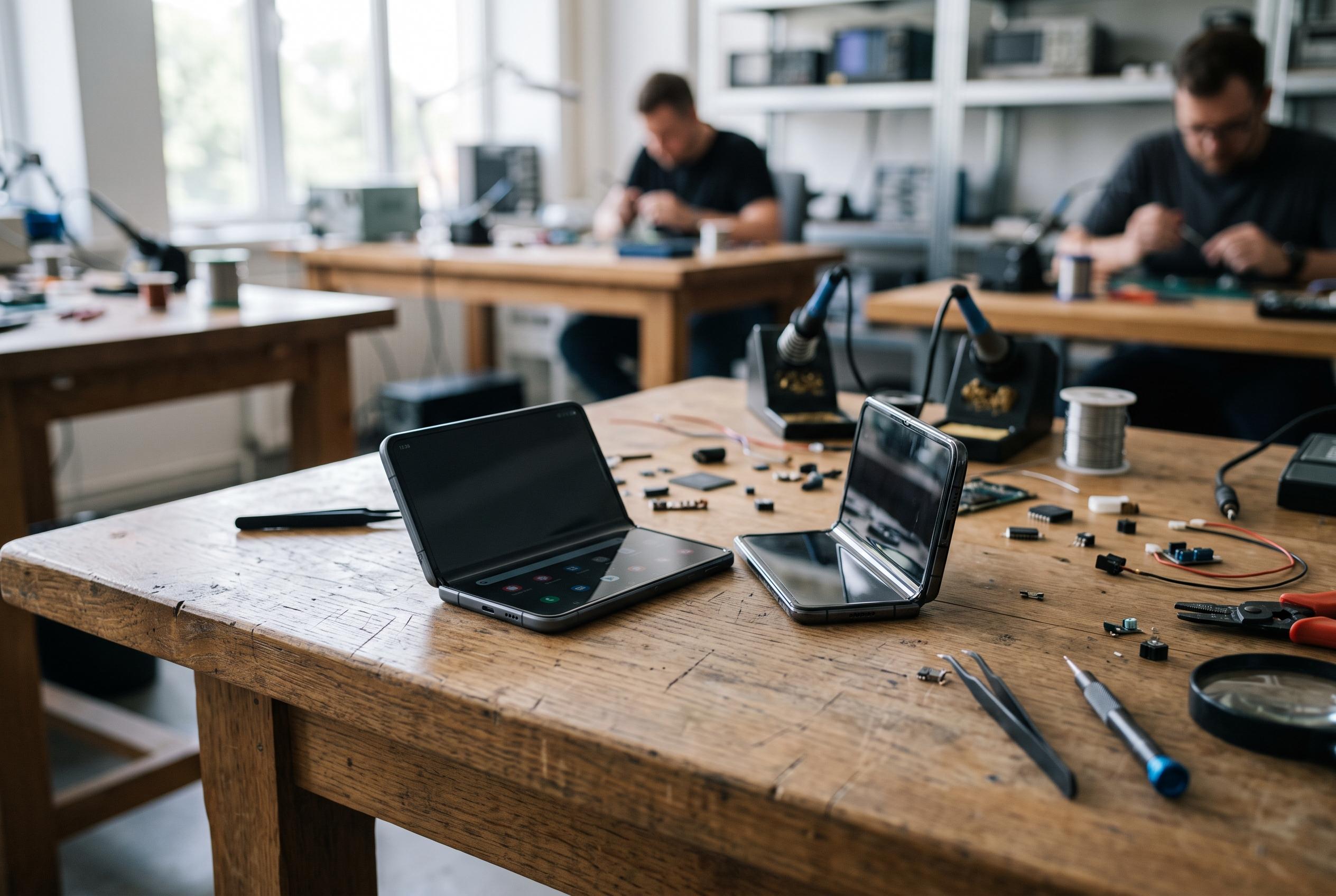

Apple is delaying pre-orders for its first foldable iPhone by more than six weeks after unveiling it, as low assembly yields, limited initial supply and steep repair costs underline the risks of its most expensive handset yet.
Apple’s first foldable iPhone, the Duo, is moving into the market on an unusual timetable. Pre-orders open on 16 October, with shipping due on 23 October, more than six weeks after its 10 September unveiling. That gap is far longer than Apple’s recent autumn flagship pattern, where the interval between launch and pre-order has typically been only a few days. The slower rollout reflects two linked pressures: manufacturing control and pricing. According to the company’s own comments and reporting from Chinese media, the device is being assembled in China, but only the final assembly work is local; the wider supply chain still stretches across the United States, South Korea and Taiwan.
The manufacturing picture is notable because Apple has kept its most exacting work in the hands of specialist suppliers. Reports in The Paper said the iPhone Duo is being assembled exclusively at a Foxconn plant in China, while other coverage indicated that Apple chief operating officer Sabih Khan visited the Zhengzhou site before pre-orders began. Samsung Display is said to be supplying both OLED panels, Corning is working with Apple on the cover glass, and TSMC is manufacturing the 2-nanometre A20 Pro chip. Chinese suppliers are handling some of the most technically demanding parts, including foldable glass and hinge components, with local firms such as Lens Technology and Luxshare among those linked to the project.
The central production question is yield. A report from Jiemian in mid-September, citing people familiar with Foxconn’s supply chain, said assembly yields were only in the low 60s, meaning a substantial share of units still required rework. That helps explain why Apple has stretched the gap between presentation and launch, and why production targets are reportedly conservative for a first-generation foldable. Industry talk has put early output well below the volumes associated with Apple’s mainstream Pro models. In practice, that means the company appears willing to trade speed for consistency, even if the result is a tighter launch window and a thinner supply of initial stock.
Pricing shows the same approach. The China starting price is 15,999 yuan, with the top 2TB version set at 26,499 yuan, making it the most expensive consumer phone Apple has launched so far. The foldable design also brings a higher ownership cost. Apple’s repair page in the United States lists an inner-display replacement at $999 without AppleCare+, the outer display at $379, rear glass at $199 and battery service at $229. With AppleCare+, the inner display falls to $99 and the outer display to $29, but the highest charge for other damage still reaches $1,499. In other words, the device is positioned not just as a premium phone, but as a product where repair protection is likely to matter as much as the purchase itself.
That pricing strategy has not stopped demand from building. Chinese retail chatter suggests some launch allocations are already attracting steep premiums, with resale mark-ups described as being thousands of yuan above list price. At the same time, online reservation counts have reportedly surged despite concerns about cost and first-generation reliability. The key test now is whether Apple can keep supply moving after the initial shipment wave and whether the market’s early excitement settles once the foldable is available at scale. If yields improve over the coming months, the current scarcity premium may fade faster than the headline price suggests.
Disclaimer: This content is intended for informational purposes only. Readers are advised to exercise their own judgement, conduct due diligence, or consult a qualified expert before acting on any information provided.



