

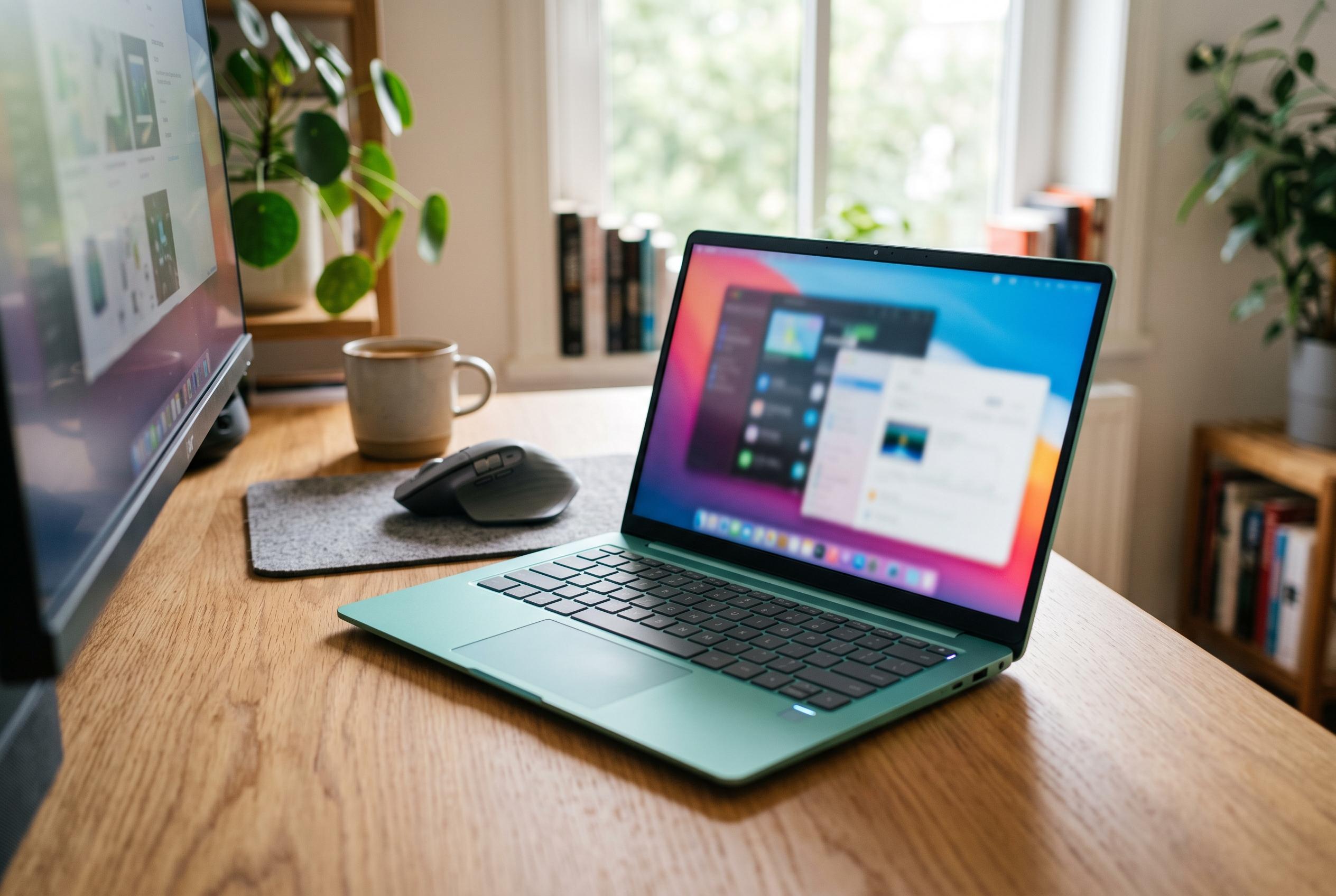

The lightweight 14-inch laptop undercuts Apple and Dell’s premium rivals, but its bargain price means compromises in build quality, memory and features.
Dell’s latest 14-inch budget laptop is pitched as a lower-cost alternative to the more premium machines that now dominate the thin-and-light market. According to CNET, the Dell 14S DS14270 is aimed squarely at students and other buyers who want a larger screen than Apple’s compact MacBook Neo without paying XPS 13 money. It undercuts both rivals on starting price, while still using an aluminium chassis and carrying a distinctly colourful design language.
That value, however, comes with compromises. CNET’s review makes clear that this is not a direct substitute for Dell’s more expensive ultrabooks. The tested configuration uses Intel’s Core 5 320, 8GB of memory and a 256GB SSD, and the machine is built around a 14-inch 1,920 x 1,200 IPS display rather than a sharper high-resolution panel. Dell does offer better-specced versions, including 16GB of RAM, a 512GB SSD, a faster Core 7 chip and a 2.8K screen, but the price rises quickly and the laptop stops looking like a student-focused bargain.
Portability is one of the 14S’s strongest arguments. CNET says the laptop weighs 2.5 pounds, making it lighter than Apple’s 2.7-pound MacBook Neo and only slightly heavier than the 2.3-pound XPS 13. Tom’s Hardware reported a similar figure, describing the device as roughly 2.65 pounds, and noted that Dell plans four finish options: linen, dusty rose, washed denim and velvet green. The combination of a bigger panel and relatively low weight is unusual at this price point.
The rest of the hardware is more plainly cost-conscious. CNET found that the chassis does not feel as rigid as the MacBook Neo’s or the XPS 13’s, and the lid flexes enough to make accidental input more likely. The review also criticised the absence of keyboard backlighting on the base model, the lack of biometric sign-in and the limited port selection, which consists of two USB-C ports, HDMI and a headphone jack. Tom’s Hardware likewise highlighted the inclusion of HDMI and audio connectivity as a practical advantage over some slimmer rivals.
Performance is adequate for routine work, but not much more. CNET said the 14S handled web browsing, document editing and light photo work without trouble, yet 8GB of RAM will be restrictive for heavier creative tasks, STEM workloads and on-device AI use. Battery life, by contrast, was a clear strength: the laptop lasted more than 16.5 hours in testing, enough for a full day on campus. Even so, CNET concluded that the MacBook Neo remains the better student choice overall, while the XPS 13 still offers the stronger Windows experience thanks to its superior display and build quality.
Disclaimer: This content is intended for informational purposes only. Readers are advised to exercise their own judgement, conduct due diligence, or consult a qualified expert before acting on any information provided.



