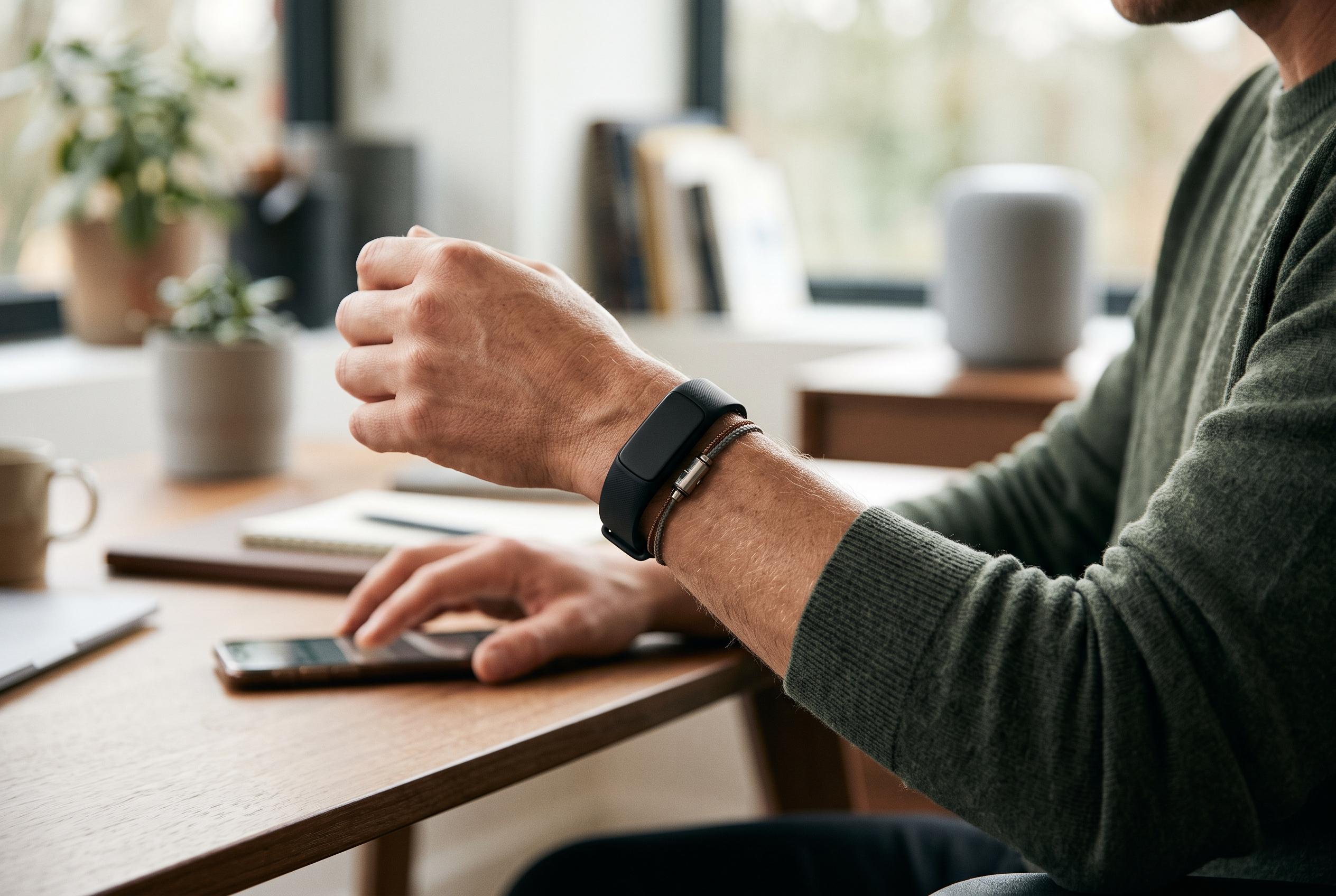

Google launches the Fitbit Air in India, a screenless health band equipped with Gemini AI for personalised coaching, aiming to disrupt the premium segment dominated by lower-cost rivals with advanced software features and a focus on continuous health monitoring.
Google has launched the Fitbit Air in India at ₹13,999, entering the increasingly crowded screenless fitness-tracker segment with a device aimed at users who want health monitoring without smartwatch-style interruptions. The band is positioned as a more premium alternative to rivals such as Noise REP and Amazfit Helio Strap, which are significantly cheaper at ₹9,999 and ₹8,999 respectively, but the higher price is justified largely by Google’s software layer rather than by hardware breadth alone. According to Android Central, Gizmochina and TechCrunch, the Fitbit Air is designed around discreet, continuous tracking rather than display-led interaction.
The device monitors heart rate continuously and also records heart rhythm, atrial fibrillation alerts, blood oxygen saturation, resting heart rate and heart-rate variability. It tracks sleep duration and sleep stages, and it can automatically recognise workouts, with the data surfaced through Google’s health app. Gizmochina and Android Central both report a battery life of up to seven days, while a five-minute fast charge is said to deliver roughly a day of use. That combination places the Fitbit Air squarely in the category of always-on health bands built for all-day wear and overnight monitoring.
Where Fitbit Air most clearly separates itself from its cheaper rivals is in coaching software. Google’s Health Coach, which runs on Gemini AI, is intended to turn the band’s data into personalised guidance, sleep explanations and fitness recommendations. The company says users can also photograph gym equipment or workout plans to receive related advice. Access to those more advanced coaching tools requires Google Health Premium, priced at ₹99 a month or ₹999 a year, although buyers receive a three-month trial. TechCrunch and Beebom report that the cross-platform Google Health app and premium subscription are central to Google’s effort to make the tracker more than a passive sensor band.
The competing devices, however, offer a strong case on value. Noise REP provides heart rate, HRV, resting heart rate, breathing rate, skin temperature variation, stress and sleep tracking, plus metrics such as sleep score, recovery score, effort score and stamina, along with more than 20 sports modes and compatibility with Apple Health, Google Health and Strava. Amazfit Helio Strap is cheaper still and adds features such as BioCharge, VO₂ Max, training load and recovery time, with 27 sports modes and strength-training recognition. Both are said to last about 10 days on a charge. Google has made Fitbit Air available from 2 October through the Google Store and retail partners, but its success will likely depend on whether buyers value Gemini-powered coaching enough to pay the premium.
Disclaimer: This content is intended for informational purposes only. Readers are advised to exercise their own judgement, conduct due diligence, or consult a qualified expert before acting on any information provided.