

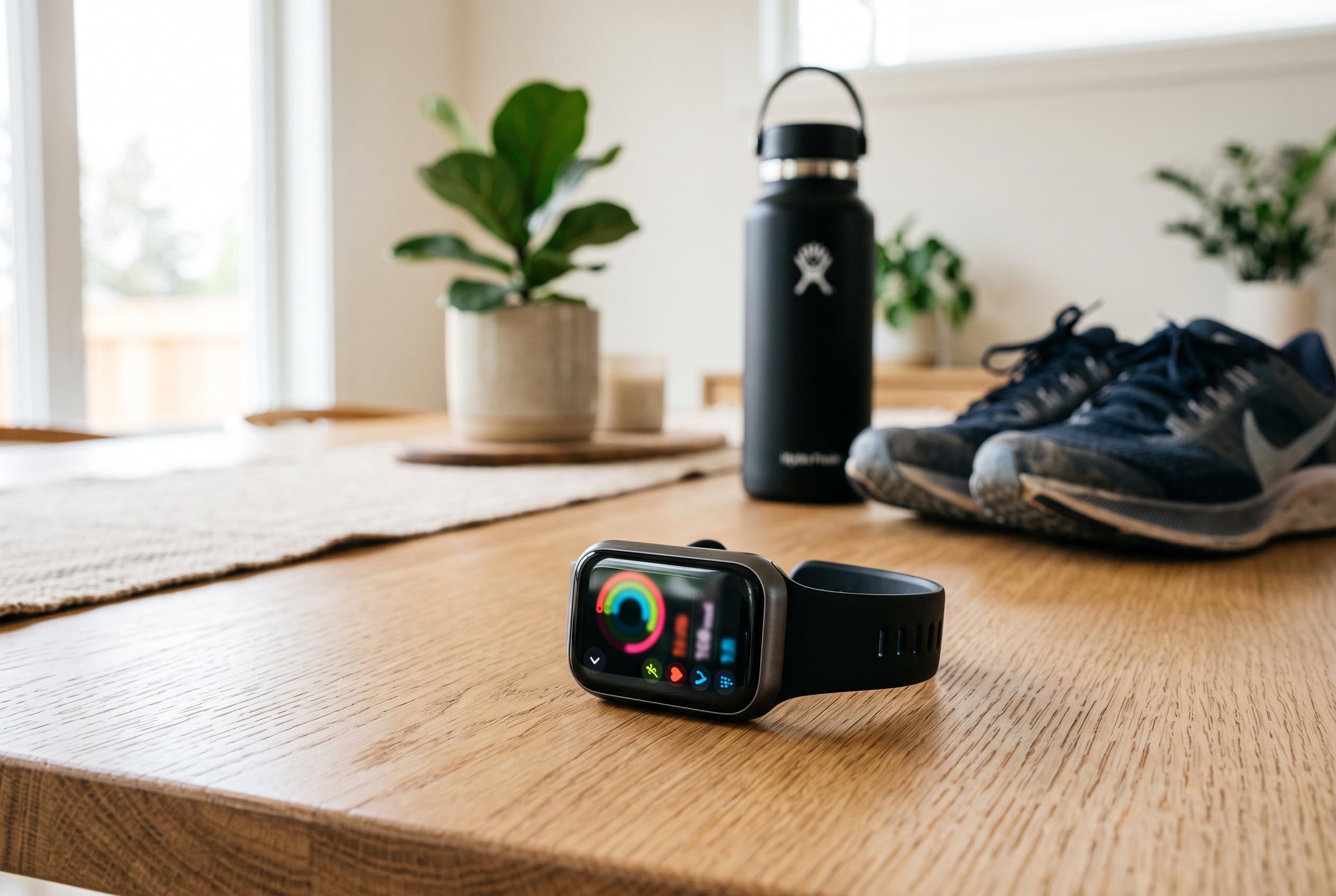

The $179.99 Fitbit Edge adds a larger display, built-in GPS, AI-powered coaching and replaceable internal parts, positioning it between Fitbit’s screenless bands and the Pixel Watch.
Google has launched the Fitbit Edge, a new fitness tracker that aims to sit between the screenless Fitbit Air and the Pixel Watch in its wearable range. The device is priced at $179.99 in the US, while a Stephen Curry Special Edition costs $219.99. Pre-orders are already open, and sales are due to begin on October 27. Google has not yet announced Indian pricing or availability, leaving that market without a launch date for now. According to reports from Google’s launch details and coverage by technology sites, the Edge is being positioned as a compact, everyday wearable rather than a full smartwatch replacement.
The new model keeps the familiar small-form-factor approach that made Fitbit popular, but with a more modern build. Google says the tracker is 11.5mm thick and uses a recycled aluminium case, while other coverage noted a weight of 17.7g without the band. The display is a hybrid OLED panel with a much larger viewing area than previous Fitbit trackers, and it adds support for Google Maps, media controls, calls and notifications. It is offered in Obsidian, Fog, Olive and Canyon, with interchangeable bands sold separately.
Battery life is one of the Edge’s main selling points. Google claims up to seven days on a charge, based on pre-production testing, and says a five-minute top-up can provide a full day’s use when paired with a 30W charger sold separately. The device is also the first Fitbit tracker designed with repairability in mind, with modular internal parts and a battery that can be replaced. That is a significant shift in a category where fitness bands have often been treated as disposable devices once the battery begins to age.
On the training side, the Edge offers more than 50 exercise modes and can automatically recognise and log up to 100 workouts. Google says built-in GPS works without a connected phone and is up to 40 per cent more accurate than in earlier generations, while an altimeter helps track elevation during runs, climbs and stair work. The tracker is rated for 50-metre water resistance and IP68 protection, although Google’s own wording notes that it is not waterproof.
Health tracking remains central to the product. The Edge continuously monitors heart rate, measures skin temperature overnight and uses sleep and heart rate variability data to produce a recovery score each morning. It also includes an ECG app in selected countries and a set of Health Guardian features, such as blood pressure trend tracking, insulin resistance trends and high or low heart-rate alerts, although availability will vary by market. The headline software addition is Google Health Coach, an AI-driven service that personalises training guidance and health interpretation, but it requires a Google Health Premium subscription after an initial three-month trial.
Google is also using the launch to signal a broader design reset for Fitbit. The Stephen Curry edition, developed with the four-time NBA champion, adds a different colourway and water-repellent coating, while Curry’s earlier partnership with Google has been tied to work on its health-coaching tools. The Edge supports Android 11 or later and iOS 16.4 or later, but it still depends on a Google account, the Google Health app and an internet connection. In practical terms, it looks aimed at users who want strong fitness tracking, a longer battery life and repairable hardware without moving to a more expensive smartwatch.
Disclaimer: This content is intended for informational purposes only. Readers are advised to exercise their own judgement, conduct due diligence, or consult a qualified expert before acting on any information provided.



