
Huawei’s €449 smartwatch uses an inflatable wrist cuff and medical-device certification to track blood pressure around the clock, but reviews question its fit, accuracy and role alongside conventional monitors.
Huawei’s Watch D3 is the latest attempt to bring clinically orientated blood-pressure monitoring into a consumer smartwatch. According to reviews and launch reports, the device pares back the bulk associated with earlier cuff-style wearables while keeping the central idea intact: a wristwatch that can inflate a miniature airbag to measure systolic and diastolic pressure with the same oscillometric principle used by upper-arm monitors. In Europe, the watch is priced at €449, while UK coverage puts the launch price at £399.99. It is offered in black, white and Mocha Gold.
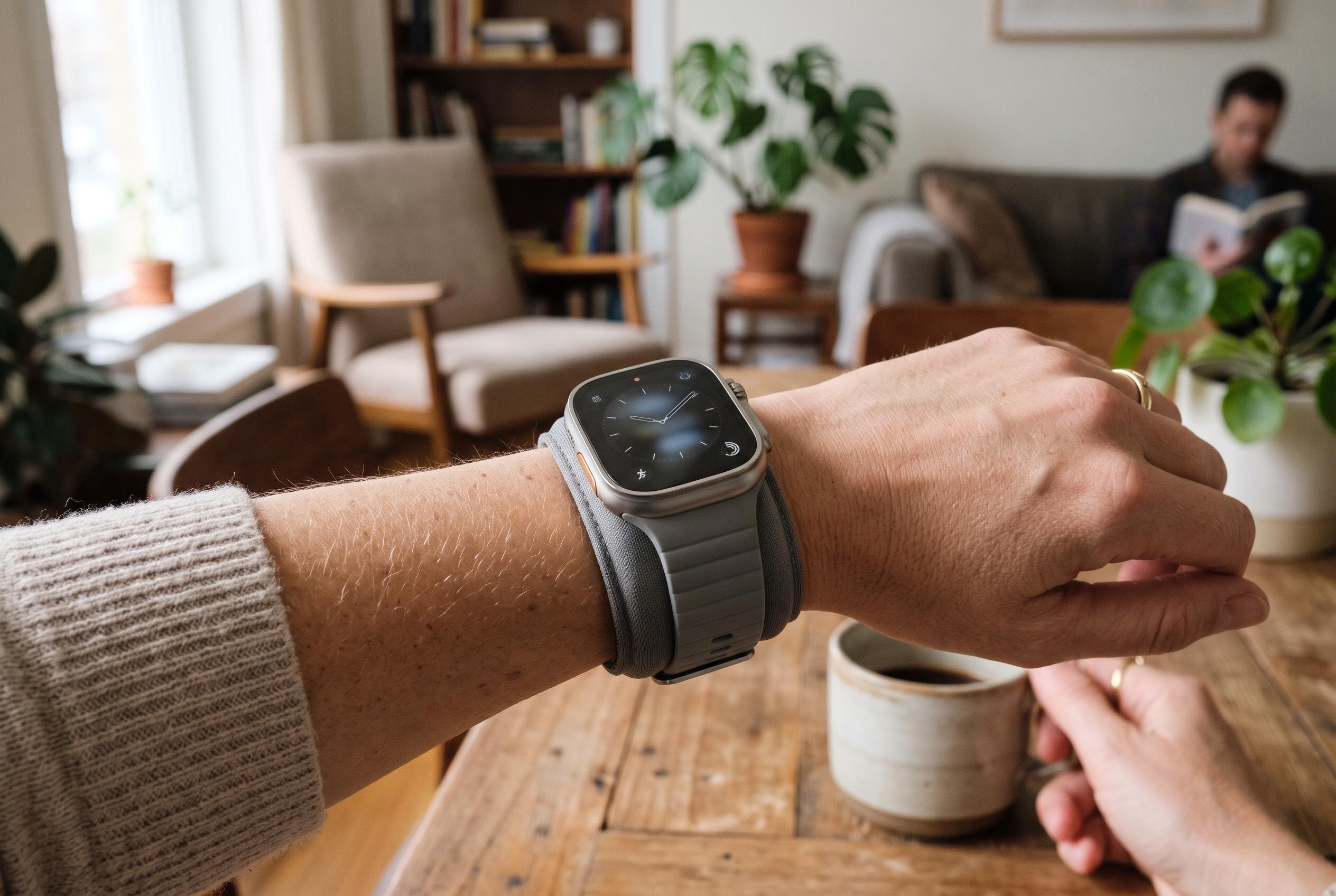
The defining hardware is the integrated cuff system. Rather than relying on optical sensors alone, Huawei has built a micro-pump and TPU airbag into the strap, and reports say the device carries EU CE-MDR medical-device certification as a class IIa product. That distinction matters, because the watch is intended not merely for wellness tracking but for structured blood-pressure measurement. Even so, the fit remains important: reviews note that the mechanism is more demanding on wrist size and positioning than a standard smartwatch, and that the strap design still makes the device more noticeable than conventional wearables.
Huawei has also pushed the D3 towards longer-term monitoring rather than isolated spot checks. The watch can be set to take readings at intervals throughout the day and night, including overnight measurements designed to be quieter and less disruptive while the wearer sleeps. TechRadar reported that the accompanying Huawei Health app can turn these measurements into reports suitable for sharing with a clinician, although the article also noted that the watch remains most relevant for users with a specific need to track blood pressure rather than for shoppers seeking a general-purpose smartwatch.
Beyond blood pressure, Huawei has tried to make the device behave like a broader health monitor. The watch includes ECG, heart-rate, blood-oxygen and stress tracking, sleep analysis, more than 100 workout modes, Bluetooth calling and NFC payments, and it can take pre- and post-exercise readings to show how the cardiovascular system responds to exertion. It also adds a health-sharing function that lets selected family members or carers view readings remotely, a feature that may be useful for older users or patients with hypertension, although it inevitably raises questions about data handling and privacy. Independent testing has been more mixed: one review found plausible blood-pressure results over a short period, but another recorded readings that were consistently lower than an upper-arm monitor, underlining that this remains a specialised medical device rather than a universal replacement for conventional checks.
Disclaimer: This content is intended for informational purposes only. Readers are advised to exercise their own judgement, conduct due diligence, or consult a qualified expert before acting on any information provided.