
Samsung launches the Galaxy Z Fold 8, combining a slimmer profile, enhanced usability, and robust multitasking capabilities, aiming to make foldables more practical than ever, despite trade-offs in camera and battery performance.
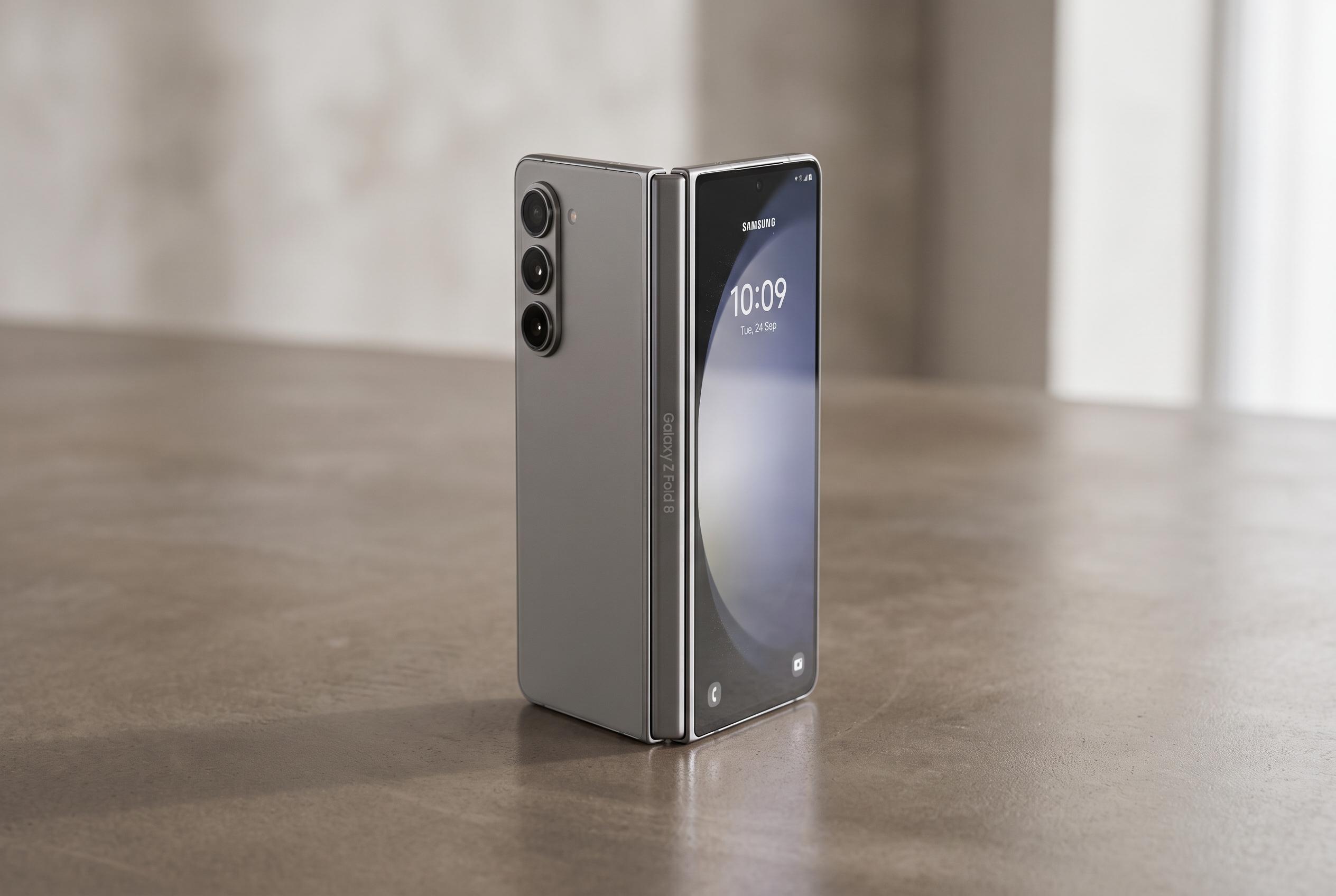
Samsung’s Galaxy Z Fold 8 arrives as one of the company’s most convincing attempts yet to make a foldable feel genuinely practical rather than merely impressive. Business Today reported that the device is priced at Rs 1,79,999 and that its appeal rests on a slimmer 4.5mm unfolded profile, a 201g weight and a wider cover screen that makes the handset feel closer to a conventional smartphone than earlier book-style foldables. That more usable outer display is the main change in tone: the phone is meant to work comfortably when closed, not only as a small tablet when opened.
That design shift is central to the Fold 8’s case. Digital Camera World described it as passport-sized, with a 5.5-inch outer display and a 7.6-inch inner panel, both running at 120Hz and reaching 3,000 nits of peak brightness. Android Central made the same point more bluntly, saying the shorter body and wider screen ratio improve ergonomics and pocketability. The inner display’s reduced crease is another meaningful refinement, while the matte finish should help keep fingerprints down. For many users, the result is a foldable that feels less like a compromise and more like a carefully balanced form factor.
Samsung has also leaned hard on productivity. The Fold 8 is powered by the Snapdragon 8 Elite Gen 5 for Galaxy, with up to 16GB of RAM and 1TB of storage, and both Android Central and Business Today said it handles demanding multitasking, gaming and AI-assisted features with confidence. One UI 9 introduces tools such as My FanCam, Now Nudge and Gemini-integrated functions across the interface, while split-screen use remains one of the phone’s strongest practical advantages. The main caveat is heat: both reviews noted warmth under sustained load and, in some cases, thermal throttling, which suggests the device is fast but not immune to the limits of its compact chassis.
Camera hardware remains the most obvious trade-off. The Fold 8 uses a dual 50MP rear setup without a dedicated telephoto lens, a omission that Business Today and Digital Camera World both treated as a notable weakness at this price. Daylight results are solid, with good colour and detail, and the device offers more advanced capture options such as RAW, Log video and 8K or 4K at 120fps. Even so, low-light performance and zoom flexibility fall short of what buyers might expect from a nearly Rs 1.8 lakh flagship, and the camera bump also prevents the phone from sitting flat on a surface.
Battery life is respectable rather than class-leading. Business Today said the 4,800mAh battery can last a full day of heavy use and takes about 90 minutes to recharge with 45W wired charging, while Android Central described endurance as solid despite the smaller cell. The broader verdict is that Samsung has made a foldable that finally feels coherent: compact when closed, useful when open and powerful enough to justify the format. But the price, the IP48 durability rating and the absence of a telephoto camera mean it is still a device for users who value design and productivity more than outright photographic versatility.
Disclaimer: This content is intended for informational purposes only. Readers are advised to exercise their own judgement, conduct due diligence, or consult a qualified expert before acting on any information provided.