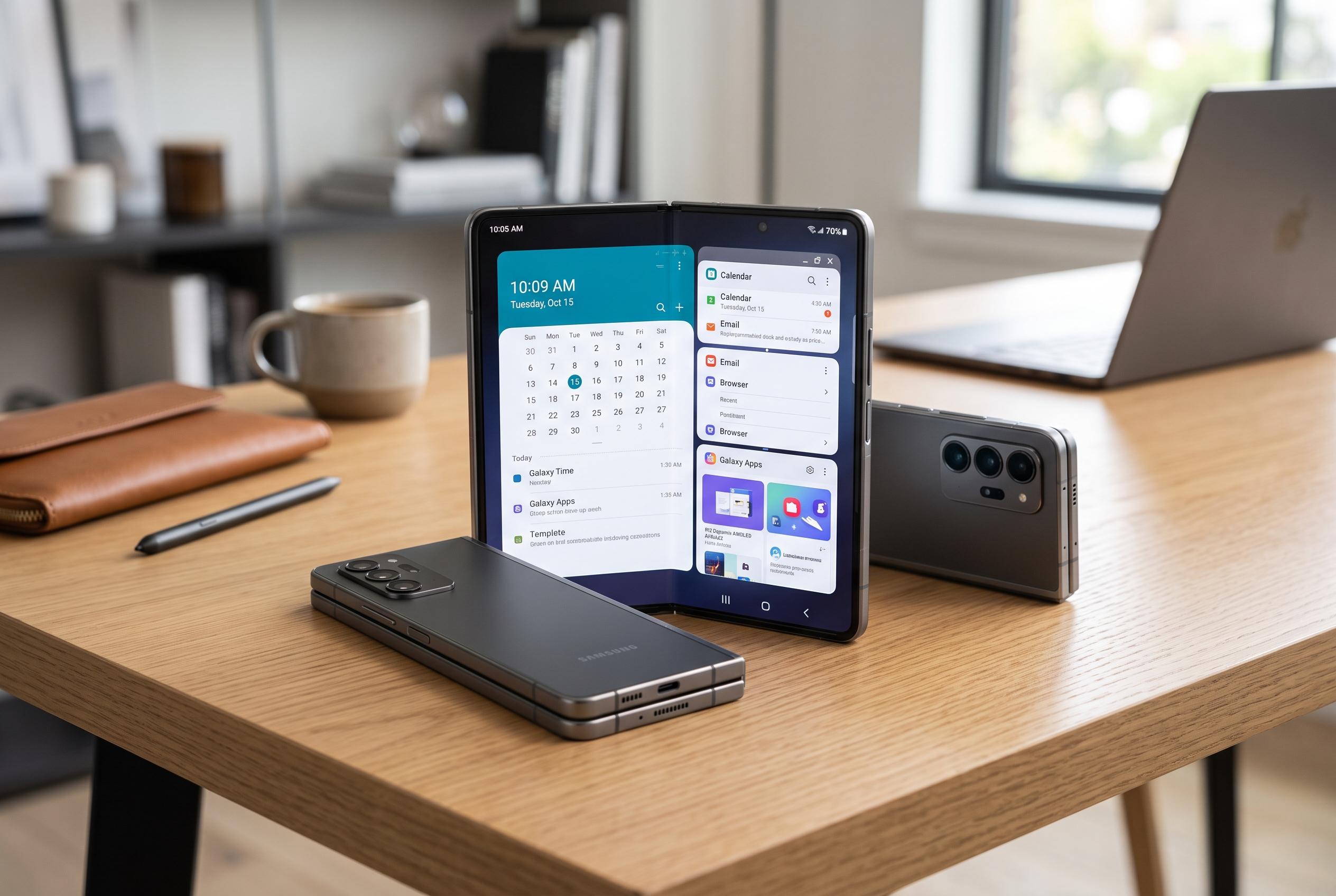

The Galaxy Z Fold 8 Ultra introduces significant hardware improvements, especially in processing power and battery life, raising the question of whether these gains warrant the higher launch price compared to the ageing Z Fold 7, especially with potential discounts.
Samsung’s Galaxy Z Fold 8 Ultra is a clearer step forward than a routine yearly refresh, but the question for buyers is not whether it is better than the Galaxy Z Fold 7. It is. The more relevant issue is whether the gains are large enough to justify the higher launch price, especially with the older model now likely to be discounted, according to Tom’s Guide and Samsung’s own comparison materials.
On paper, the two phones look closely matched, with the same overall size, 8-inch main display, 6.5-inch cover screen and 215g weight. In practice, the newer model brings a more refined folding panel with less visible creasing, a brighter screen and an anti-reflective coating that makes it easier to use outdoors. Samsung says the Z Fold 8 Ultra also has a more durable hinge and a display that is 15% brighter, with peak brightness reaching 3,000 nits.
The most meaningful hardware change is inside. The Z Fold 8 Ultra moves to Snapdragon 8 Elite Gen 5 for Galaxy, while the Z Fold 7 uses the standard Snapdragon 8 Elite. Tom’s Guide’s benchmark testing showed clear gains for the newer device across processor, graphics and AI workloads, with especially strong improvements in multi-core performance and gaming-related graphics tests. That makes the new phone the more capable option for demanding multitasking, media editing and sustained heavy use.
Battery life is another area where the newer phone pulls ahead decisively. Samsung increased capacity from 4,400mAh to 5,000mAh and added faster 45W wired charging. Tom’s Guide’s testing put the Z Fold 8 Ultra at 14 hours and 33 minutes, compared with 10 hours and 44 minutes for the Z Fold 7. The newer model also charged much faster in the same test, reaching 76% in 30 minutes versus 54% for its predecessor. For a folding phone, that is a practical improvement, not a cosmetic one.
Cameras tell a more mixed story. Both phones keep the 200-megapixel main camera, 10-megapixel telephoto lens and dual front cameras, but the Z Fold 8 Ultra upgrades the ultrawide sensor to 50 megapixels. Tom’s Guide found that the biggest real-world gains were in low light, where the newer model delivered brighter, sharper images with more detail. Daylight differences were smaller, and the telephoto system remained a weak point on both devices. Even so, the broader package is stronger enough to make the Z Fold 8 Ultra the better buy for readers choosing a new foldable today. The Z Fold 7 still looks attractive if it drops well below launch price, but the newer model is the more complete phone.
Disclaimer: This content is intended for informational purposes only. Readers are advised to exercise their own judgement, conduct due diligence, or consult a qualified expert before acting on any information provided.