
TechRadar’s Tom Bedford finds that the smaller Galaxy Z Fold 8 is more convenient for daily photography and editing, despite the Ultra model’s superior camera hardware, highlighting the importance of shape and usability in choosing foldable smartphones.
After spending two weeks with Samsung’s latest foldables and taking more than 650 photos between them, TechRadar’s Tom Bedford says the smaller Galaxy Z Fold 8 is the one he reaches for most often, even though the larger Z Fold 8 Ultra is the technically stronger camera phone. The reason is not image quality alone, but how the devices behave in daily use when they are carried, removed from a pocket and used for quick shots on the move.
Bedford argues that folding phones are judged as much by convenience as by sensor size. The Z Fold 8 Ultra is taller and narrower when shut, which makes it less comfortable to carry and more awkward to extract repeatedly during a busy day. The standard Z Fold 8, by contrast, has a shorter and broader folded shape that slips out more easily. That difference, he says, matters when a phone is being used dozens of times during travel, location scouting or review work.
On pure camera hardware, the Ultra is the clear winner. TechRadar says both models share the same 50-megapixel ultra-wide camera and dual 10-megapixel selfie cameras, but the Ultra adds a 200-megapixel main sensor and a 10-megapixel telephoto lens with 3x optical zoom. Tom’s Guide also notes that the Ultra’s camera system gives it a real edge in low light, portrait work, dynamic range and longer-range zoom, while the regular Fold lacks that reach altogether. In practice, the Ultra produces more flexible results, especially when shooting subjects such as flowers, where optical zoom and depth of field make a visible difference.
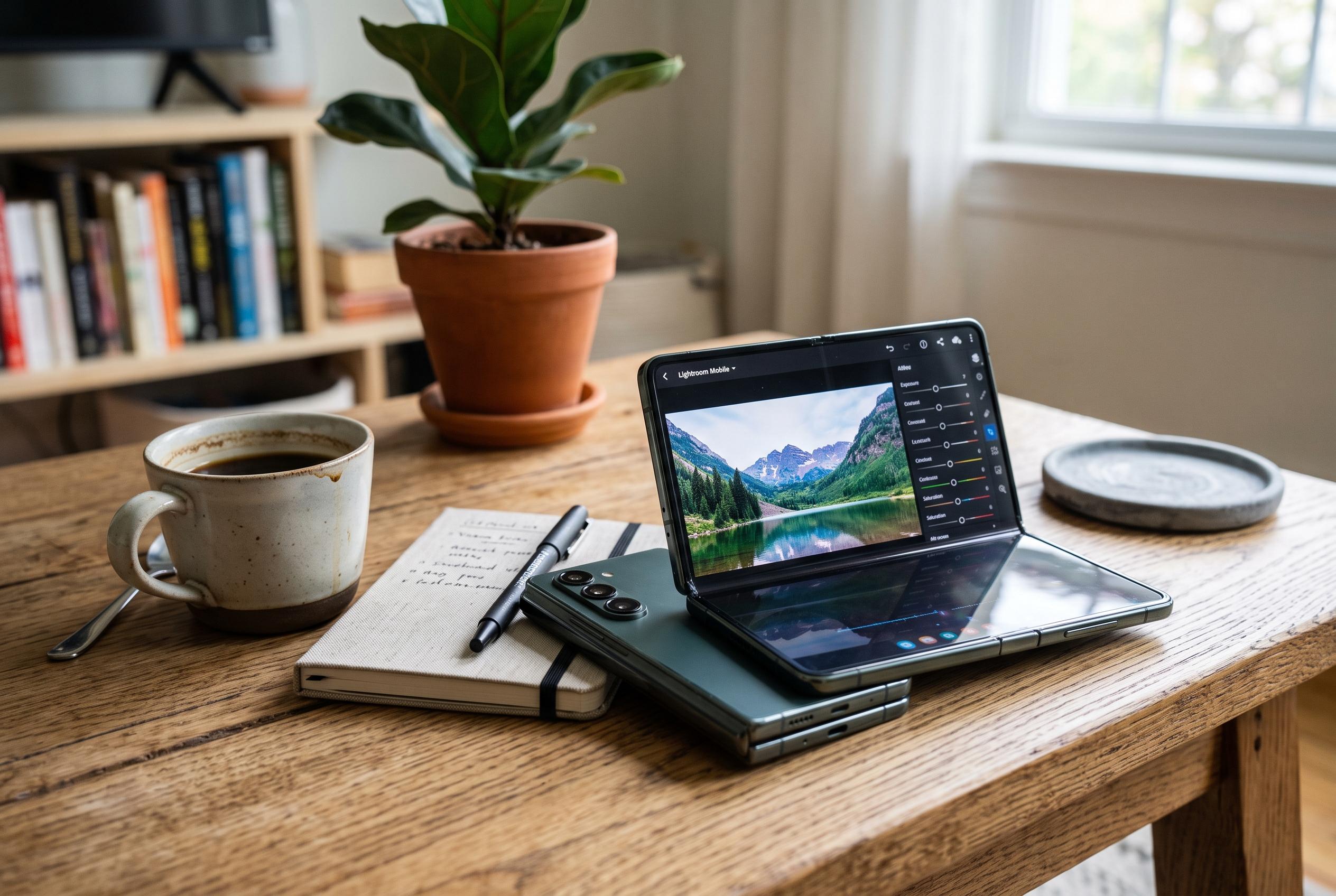
Yet the post-shoot experience shifts the balance back towards the smaller foldable. Bedford says the Z Fold 8’s inner screen, with its wider 4:3 layout, is easier for editing than the near-square panel on the Ultra, which leaves more unused space around widescreen images. That makes the standard model more comfortable for checking and trimming photos, particularly when the image is intended for web use or wider aspect ratios. He also says the hand position feels more natural on the smaller device, reducing the need to shuffle grip during editing.
The broader comparison published by Tom’s Guide suggests the same trade-off runs through Samsung’s foldable lineup. The Z Fold 8 Ultra is the better choice for camera performance, while the Galaxy S26 Ultra remains the stronger option for people who want a conventional slab phone with superior zoom, longer battery life and greater durability. For Bedford, though, the lesson is simpler: when the goal is a pocketable camera you will actually use all day, shape and handling can outweigh the spec sheet. If the phone is awkward to carry, the best camera in the world will not be used as often.
Disclaimer: This content is intended for informational purposes only. Readers are advised to exercise their own judgement, conduct due diligence, or consult a qualified expert before acting on any information provided.