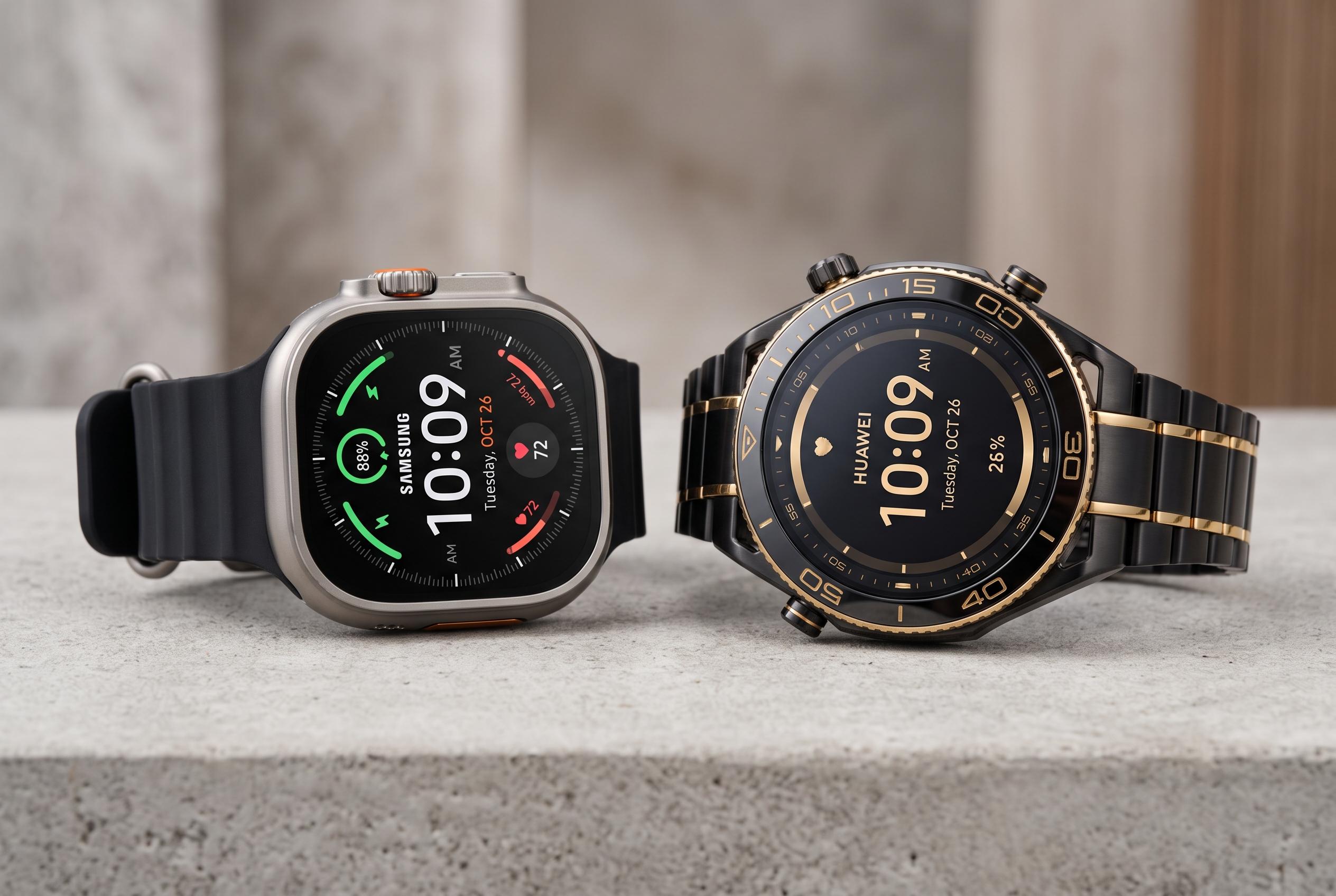

Samsung and Huawei race to dominate the premium smartwatch market, with Samsung emphasising versatile design and cutting-edge display, while Huawei bets on luxury materials and specialised diving features, marking a significant shift in consumer choices and technological advancements.
Samsung and Huawei have taken very different routes to the same premium smartwatch niche. The Galaxy Watch Ultra 2, launched on August 7, 2026, is Samsung’s latest attempt to combine rugged design with a mainstream app platform, while Huawei’s Watch Ultimate 2, on sale since September 2025, leans harder into luxury materials and specialist diving features. Samsung prices its model at $699, whereas Huawei’s starts at about $899 and rises higher for some variants.
On the wrist, the contrast is immediate. Samsung has kept to a titanium case with sapphire crystal glass, but it has slimmed the body to 10.7mm and held the weight at 61.5 grams without the strap. Huawei’s watch uses zirconium-based liquid metal with nanocrystal ceramic bezels, giving it a far more traditional dive-watch appearance, but also making it heavier and thicker. Samsung’s approach is the more discreet one; Huawei’s is the more imposing.
Samsung’s biggest hardware advantage is the display. Its 1.52-inch Super AMOLED panel reaches 5,000 nits of peak brightness, which Samsung says is the brightest ever on a Galaxy Watch. The watch is powered by Qualcomm’s Snapdragon Wear Elite chip and is rated IP69K, with EN13319 certification for dives to 40 metres. Huawei counters with a 1.5-inch LTPO AMOLED display rated at 3,500 nits, which is still strong by smartwatch standards, but not quite in Samsung’s class for outdoor visibility.
Software is where the user experience splits sharply. The Galaxy Watch Ultra 2 runs Wear OS 7 with One UI 9 Watch, giving it access to Google Maps, Google Wallet and the wider Play Store app ecosystem. Samsung also says it will support the watch with five years of software and security updates. Huawei’s HarmonyOS is compatible with Android and iPhone, and it is efficient enough to help extend battery life, but its app selection is much narrower and lacks many of the services Android users will expect on a premium watch.
For specialist users, the Huawei is the more unusual machine. The Watch Ultimate 2 is rated for dives to 150 metres and uses the Bühlmann ZHL-16C decompression algorithm, a feature normally associated with professional dive computers. Huawei also says two watches can exchange preset messages and SOS alerts through sonar-based underwater communication at depths of up to 60 metres. The watch adds golf mapping for more than 17,000 courses. Samsung, by contrast, is aimed more at hikers, trail runners and general fitness users, with extra training tools and health insights layered on top of the standard smartwatch package.
Battery life may decide the argument for many buyers. Huawei says the Watch Ultimate 2 can last roughly 4.5 days in normal use and up to 11 days in power-saving mode, with a quick charge delivering a full day from around 15 minutes at the charger. Samsung’s larger 800mAh battery is a meaningful improvement over the previous generation, but its Wear OS base still leaves it behind, with typical use measured in days rather than nearly a week. For most Android users, the Galaxy Watch Ultra 2 remains the more versatile pick. For divers, golfers and buyers who value endurance over app depth, Huawei’s watch is the more specialised tool.
Disclaimer: This content is intended for informational purposes only. Readers are advised to exercise their own judgement, conduct due diligence, or consult a qualified expert before acting on any information provided.