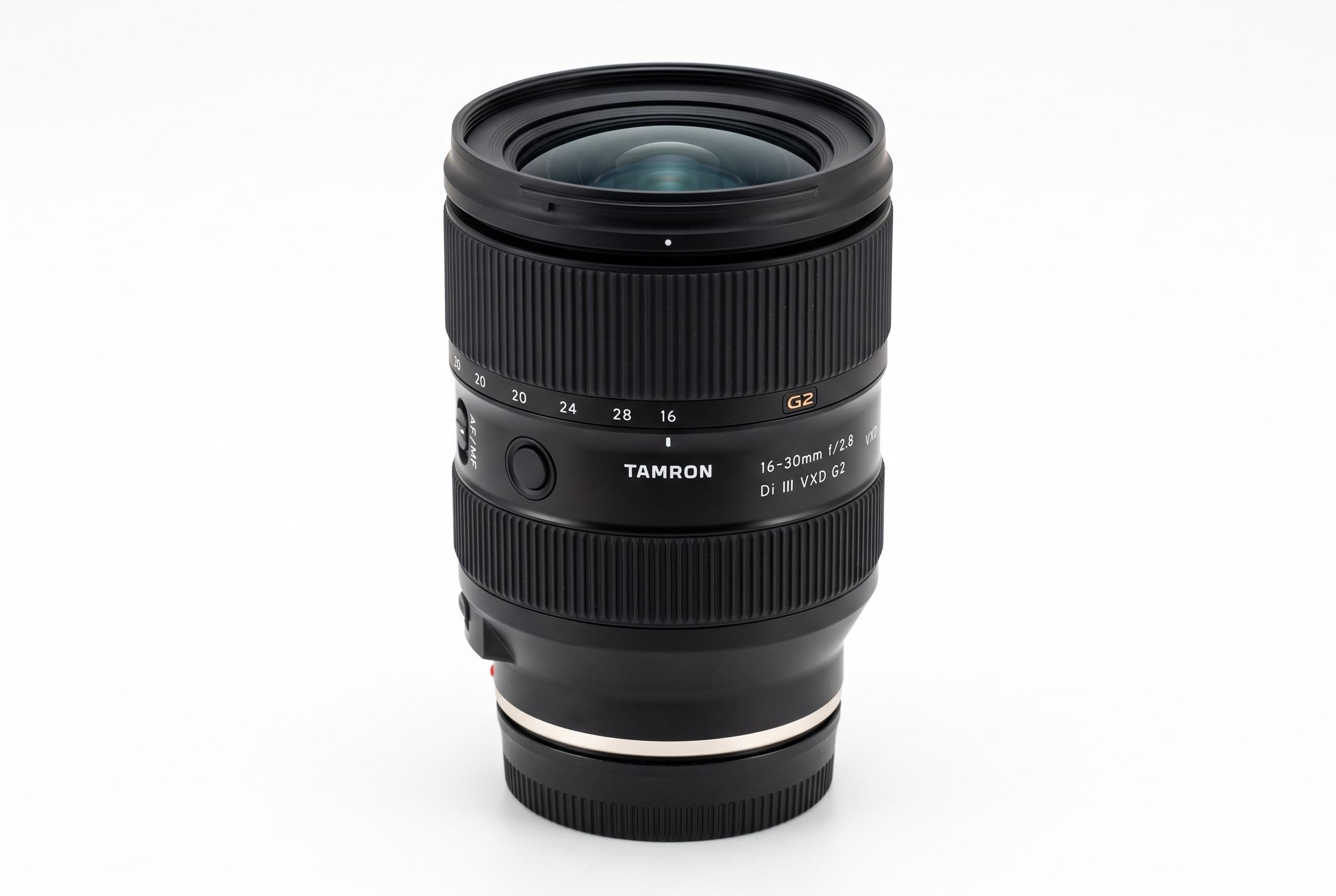

Tamron’s 16-30mm F/2.8 Di III VXD G2, a compact and versatile full-frame ultra-wide zoom, receives positive reviews for image quality, handling, and portability, making it an appealing choice for travel, landscape, and documentary photographers using Nikon Z8 and Sony E mounts.
Tamron’s 16-30mm F/2.8 Di III VXD G2 is a compact full-frame ultra-wide zoom aimed at photographers who want flexibility without a heavy carry. Reviewed by Amateur Photographer on a Nikon Z8, it sits between a conventional wide-angle and a true ultra-wide, giving users a framing range that is less extreme than 14-24mm designs yet still broad enough for landscapes, interiors, travel and documentary work. Tamron lists the lens for Sony E and Nikon Z mounts at £849 or $929, with a 67mm filter thread, a constant f/2.8 aperture and a minimum focus distance of 19cm at the wide end.
That practical range is part of its appeal. At 16mm, the lens delivers a 107-degree angle of view, while the 30mm end is much easier to compose with for everyday scenes and environmental portraits. Tamron’s specifications confirm a 16-element, 12-group optical design, including low-dispersion and aspherical elements, plus a nine-blade diaphragm. The lens also uses Tamron’s BBAR G2 coatings and a fluorine coating on the front element, both intended to improve contrast and make the glass easier to clean. According to Tamron, the Sony version weighs 440g and the Nikon version 450g.
Build and handling are clearly shaped by portability. The lens measures roughly 104mm in length, does not extend during zooming and uses a simple control layout with a zoom ring, focus ring and customisable function button. Amateur Photographer said the zoom action is smooth and precise, and that the lens feels well suited to travel use. The omission of optical stabilisation is less of a concern on modern mirrorless bodies with in-body stabilisation, though the lens is only described as moisture resistant rather than fully weather sealed. The review also noted that the USB connection used for Tamron’s Lens Utility software feels somewhat exposed.
Image quality is the main strength. Amateur Photographer found sharpness to be very good across the frame, especially from around f/4 to f/8, with strong central detail wide open and excellent performance once stopped down. Flare control was also praised, as was the smoothness of the bokeh for an ultra-wide lens. The review noted some barrel distortion at 16mm and visible vignetting wide open, but said both are largely corrected by in-camera profiles. Other reviewers have reached similar conclusions, with The-Digital-Picture describing the lens as sharp, fast-focusing and well priced, while Lenstip highlighted its rapid autofocus, low chromatic aberration and sensible price-to-performance balance. In practice, the Tamron looks like a well-judged alternative for photographers who want a fast, light ultra-wide zoom that does more than just push to the widest possible field of view.
Disclaimer: This content is intended for informational purposes only. Readers are advised to exercise their own judgement, conduct due diligence, or consult a qualified expert before acting on any information provided.