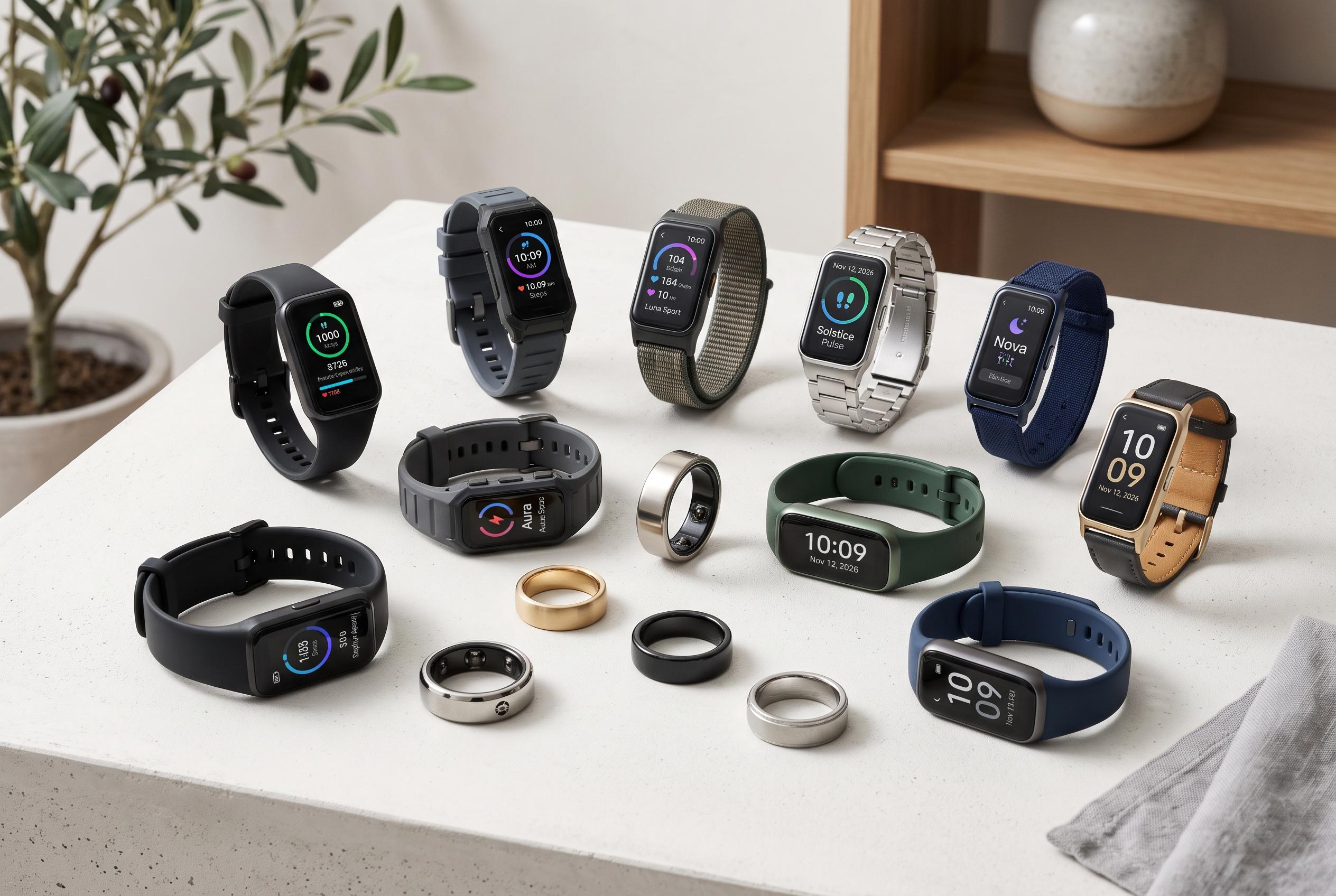

The 2026 fitness tracker market evolves with a focus on usability, battery life, and diversity of form factors, from advanced smart rings to budget bands, reshaping consumer choices and expectations.
After three months of testing, the central lesson from this 2026 fitness tracker round-up is simple: the best wearable is the one that adds clarity without adding noise. Garmin’s vivoactive 5 stands out for long battery life, broad health tracking and the absence of a subscription fee, while Fitbit’s Inspire 3 remains the clearest budget choice for people who want the basics done well. Oura’s Ring 5 still has a place for users who want discreet, research-led tracking in ring form, and newer guides from TechRadar and Live Science show that the category now stretches from inexpensive bands to advanced smart rings and multisport watches.
What separates the strongest devices is not the number of features alone, but how usable those features are day to day. The Garmin vivoactive 5 combines built-in GPS, sleep coaching, menstrual and pregnancy tracking, and up to 11 days of battery life, making it the most rounded option in the review. Fitbit’s Inspire 3 is lighter and cheaper, but still delivers dependable heart-rate, sleep and stress data, plus a long battery life that suits people who do not want to charge every night.
For iPhone users, however, the field has become more competitive. The lead review puts the Apple Watch Series 11 at the top for health monitoring depth, but TechRadar’s 2026 guide now names the Apple Watch SE 3 as its best choice for iPhone users, which suggests Apple’s wearable line is being judged differently depending on whether buyers prioritise advanced health sensors or broader value. That broader market split matters: some users want the richest medical-style features, while others want a simpler smartwatch with strong fitness basics.
Subscription costs remain one of the biggest dividing lines in the category. Garmin and RingConn are notable for offering full functionality without recurring fees, while WHOOP and Oura rely on paid memberships for the best experience. TechRadar’s smart-ring coverage and Tom’s Guide’s review of the Garmin Cirqa reinforce that there is now clear demand for screen-free devices that still provide recovery data, sleep analysis and long battery life without an ongoing bill. Tom’s Guide says the Cirqa, launched in July 2026, costs $199, runs for about 10 days and includes health metrics such as heart rate, SpO2, skin temperature and sleep analysis.
The market is also fragmenting by form factor. Slim bands such as Fitbit’s Inspire 3 and Garmin’s vivosmart 5 are still the easiest fit for everyday wear, but rings are gaining ground among people who dislike wrist-based devices. Oura remains the premium reference point in that segment, while RingConn’s subscription-free model and long battery life make it the practical challenger. That mirrors a broader trend identified by Live Science and The Independent, both of which point to a wider range of devices now serving runners, casual users and recovery-focused buyers.
In practice, the decision comes down to a trade-off between insight, comfort and ownership cost. Garmin’s vivoactive 5 is the strongest all-rounder for most people. Fitbit’s Inspire 3 is the best entry point. WHOOP suits those who want athlete-style recovery analytics and do not mind a mandatory membership. Oura remains the premium discreet option. And the newer generation of screen-free devices, led by Garmin Cirqa and RingConn, shows that many buyers now value less distraction as much as more data.
Disclaimer: This content is intended for informational purposes only. Readers are advised to exercise their own judgement, conduct due diligence, or consult a qualified expert before acting on any information provided.