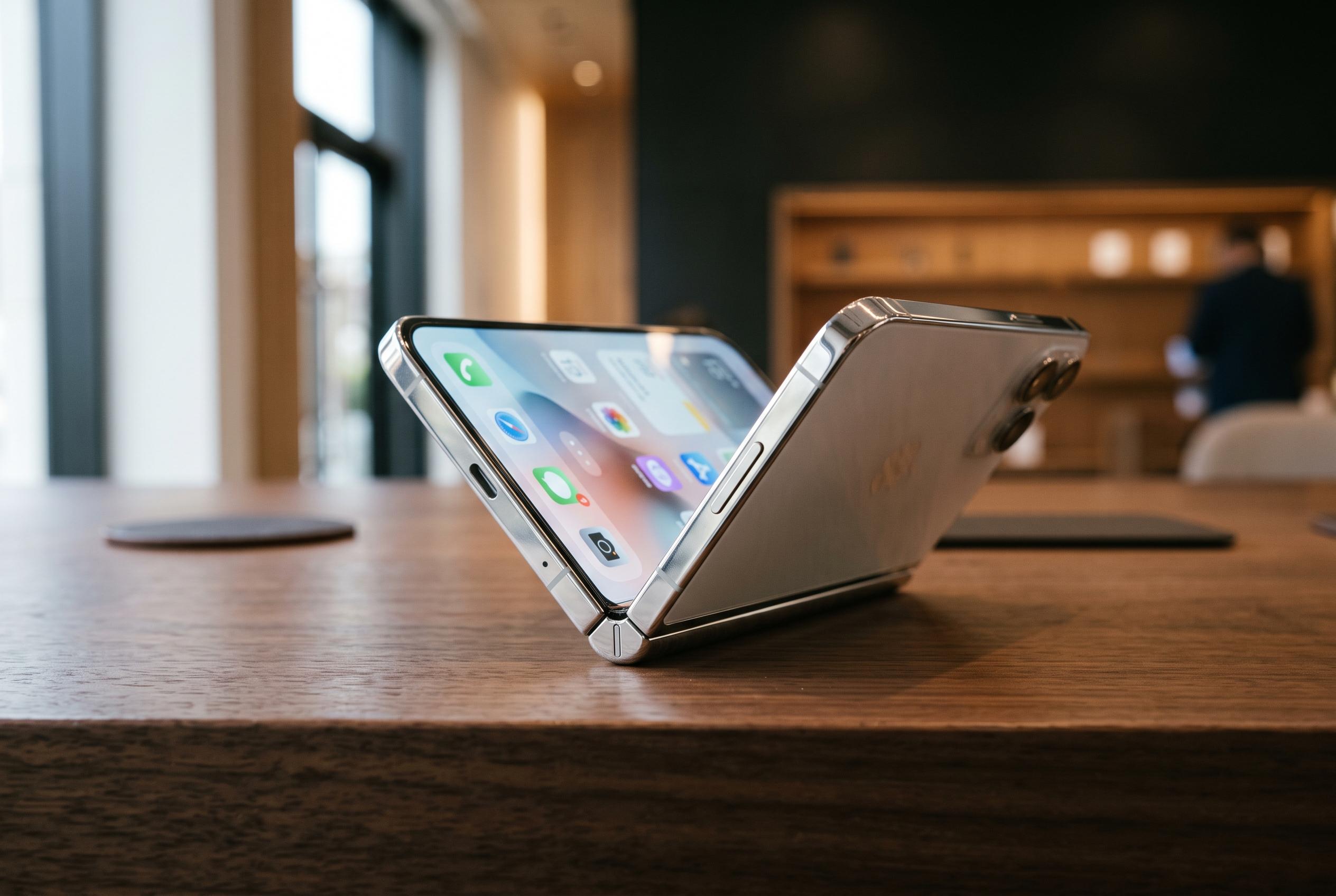

Apple enters the foldable smartphone market with the iPhone Duo, emphasising design polish and iOS optimisation over hardware ambition, positioning itself as a premium alternative to Samsung and Xiaomi.
Apple’s first foldable iPhone has finally arrived, and the company is pitching the iPhone Duo as a serious answer to a market it once seemed content to watch from the sidelines. According to Apple, the device uses a 7.6-inch inner display, a 5.4-inch outer screen and a hinge built from more than 100 components. It also supports Apple Pencil, runs on the A20 Pro chip and uses a dual-battery layout, with pre-orders due to open on 16 October and availability from 23 October in more than 70 countries.
That launch changes the tone of the comparison with Samsung’s Galaxy Z Fold8 and Xiaomi’s 18 Fold. Apple is entering the category late, but with a design that appears deliberately conservative in the best sense: a familiar iPhone-style outer screen, a tablet-like interior and a software experience built for the format rather than adapted to it. The company is also addressing one of the biggest foldable complaints in advance, saying the inner panel is meant to feel “wonderfully flat and smooth” and that a custom nano-texture finish reduces glare and reflections. Apple has not, however, published a fold-cycle rating.
Price remains a defining part of the story. MacRumors reported that US pricing starts at $1,999 for the 256GB model, with higher-capacity versions reaching $3,199. That puts the Duo firmly in the premium bracket, even by foldable standards, and reinforces that Apple is targeting existing high-end users rather than first-time buyers. The device is available in Star White and Night Sky, matching Apple’s usual preference for restrained colour choices over more experimental finishes.
Against Samsung, the Duo’s strongest advantage is likely to be polish rather than raw hardware ambition. Apple says the device supports the Pencil and leans on iOS features that are designed for the format, which should reduce the awkward app behaviour that has long dogged some Android foldables. By contrast, Samsung’s approach continues to prioritise portability, with the Fold8 positioned as the lighter, more travel-friendly option. The broader trade-off remains unchanged: buyers choosing a foldable still have to decide whether they value software maturity, weight or screen flexibility most.
Xiaomi still looks like the technical outlier. The 18 Fold, as described in the comparison, is the most aggressive camera option and the most ambitious for multitasking, but its advantage comes with a major practical caveat: availability. Without a clear international launch, buyers outside China may face grey-market imports, weaker network compatibility, software limitations and uncertain warranty support. That makes Xiaomi the most interesting device on paper, but also the hardest to recommend for most readers.
In the end, the iPhone Duo is less a novelty than a sign that Apple now considers foldables ready for its own mainstream customers. Reuters-style reporting on the launch suggested Apple has joined a segment long dominated by Samsung, while The Atlantic noted the move also comes as the company seeks momentum in a wider product cycle that included new Watches and AirPods. For iPhone users who want a foldable without leaving Apple’s ecosystem, the Duo is now the obvious starting point; for everyone else, the best choice still depends on whether they care more about cameras, weight or long-term support.
Disclaimer: This content is intended for informational purposes only. Readers are advised to exercise their own judgement, conduct due diligence, or consult a qualified expert before acting on any information provided.