

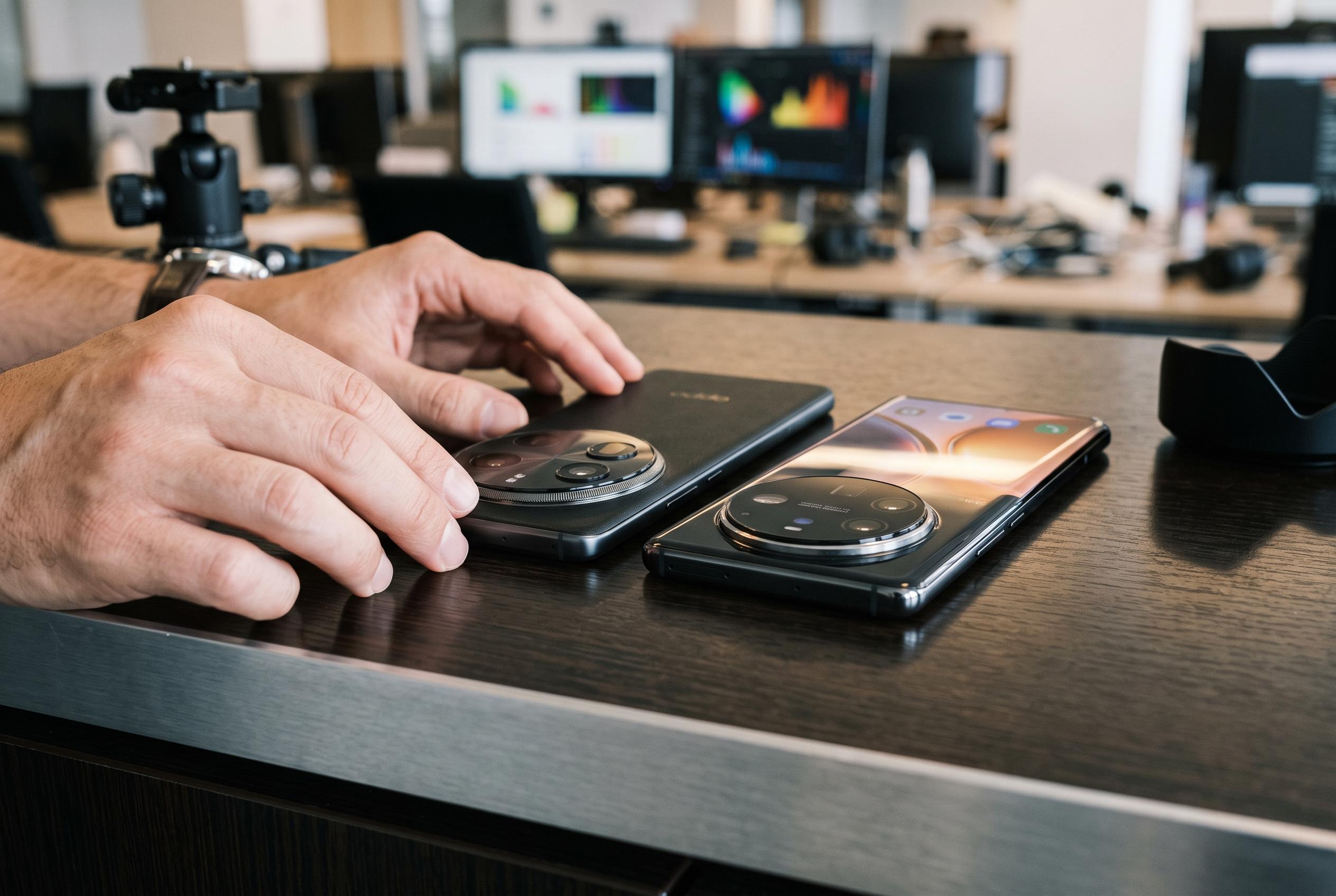

In 2026, the premium smartphone battle pivots on cutting-edge camera systems and display quality, with Oppo and vivo unveiling models that push technical boundaries and consumer expectations.
In 2026, the Android flagship race is increasingly being decided by two things: camera systems and display quality. That is the basis of the comparison between the Oppo Find X9 Ultra and the vivo X300 Ultra, two premium models that aim at the same audience but take slightly different routes. Oppo’s own specifications confirm that the Find X9 Ultra is built around a Snapdragon 8 Elite Gen 5 platform, a 6.82-inch QHD+ screen and a heavily specified camera array, while industry listings and review coverage describe it as one of the most ambitious camera phones of the year.
On paper, the displays are closely matched. Oppo lists a 6.82-inch AMOLED panel with a 3,168 x 1,440 resolution, adaptive refresh up to 144Hz and a claimed peak brightness of 3,600 nits outdoors. Third-party specifications and reviews broadly agree on the panel size and resolution, while also highlighting the 144Hz ceiling. Vivo’s X300 Ultra is presented in the comparison as using the same 6.82-inch class of AMOLED screen with the same resolution, but with a reported peak brightness figure of 4,500 nits and P3 colour support, which would give it an edge on paper for very bright outdoor use.
The sharper divide appears in imaging. Oppo says the Find X9 Ultra uses a quad-camera layout anchored by a 200MP main sensor, supported by a 50MP ultrawide lens and two telephoto modules, with optical zoom reaching 10x. Related coverage describes the system as unusually ambitious, with some reports calling out a Hasselblad co-developed setup, a 50MP 10x periscope unit and zoom behaviour that extends far beyond conventional mid-range telephoto systems. The VIVA comparison says Oppo is also pushing 20x optical-quality zoom, digital zoom to 120x and 8K video capture, which places the model firmly in the premium photography bracket.
Vivo is not positioned as a lesser device so much as a differently focused one. The comparison gives the X300 Ultra a 200MP plus 50MP plus 200MP plus 5MP rear camera configuration, a 50MP front camera and ZEISS branding, including a telephoto system with a 400mm-equivalent focal length when paired with a separate extender. That accessory-based approach suggests a more modular imaging strategy than Oppo’s all-in-one telephoto pitch. For buyers, the practical question is whether they prefer maximum built-in reach and a more self-contained camera package, or a system that depends partly on add-ons for its most extreme long-range shooting. Oppo’s official spec sheet also shows 12GB or 16GB memory options, 512GB or 1TB storage, a 7,050mAh battery and 100W wired charging with 50W wireless charging, underlining how aggressively both brands are treating the 2026 flagship category.
Disclaimer: This content is intended for informational purposes only. Readers are advised to exercise their own judgement, conduct due diligence, or consult a qualified expert before acting on any information provided.



