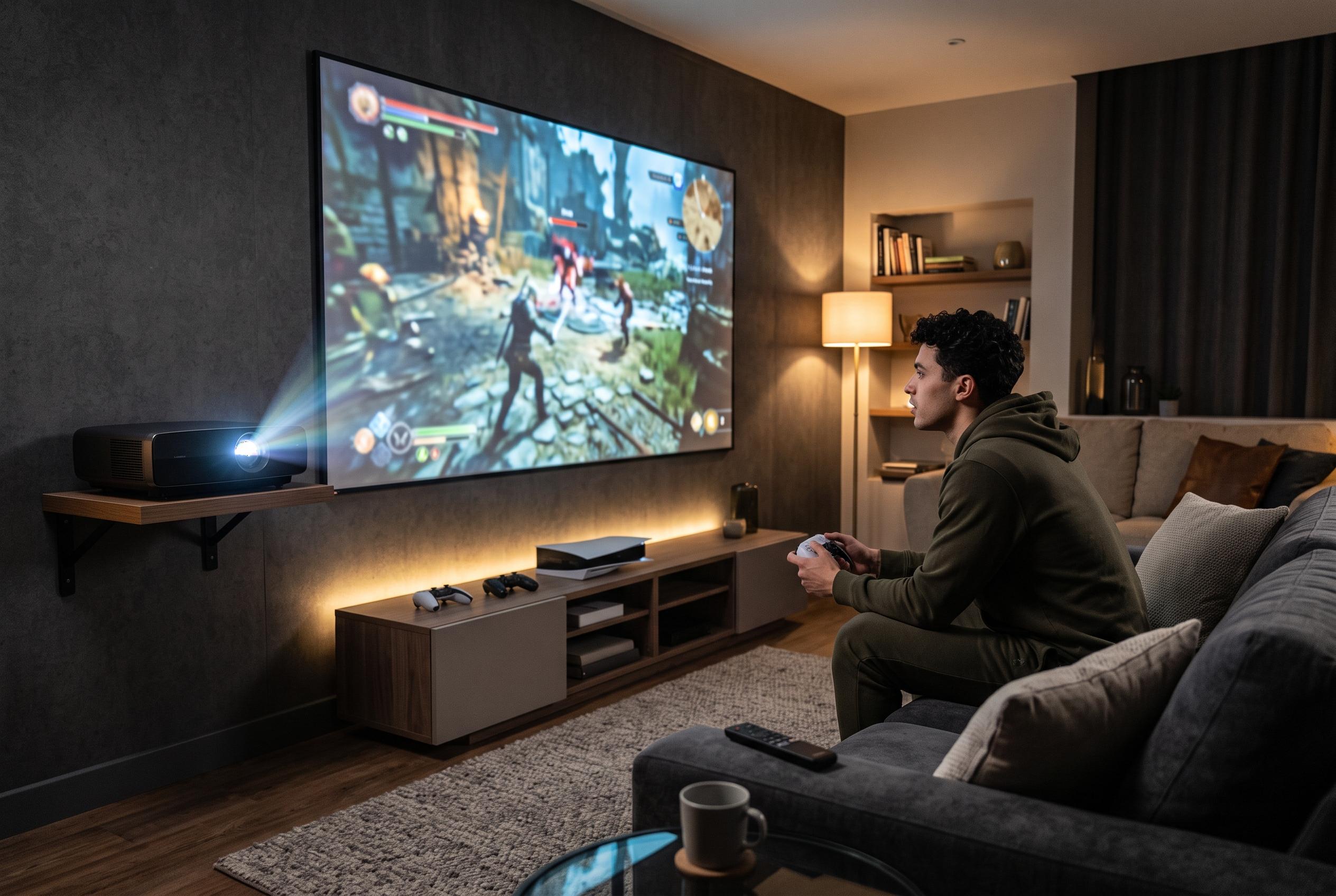

A new comparison highlights how brightness, low input lag and high refresh rates are pushing gaming projectors closer to television performance, while premium models widen the gap with compact rivals.
PC Games Hardware has turned its latest projector comparison towards the upper end of the market, where brightness, input lag and image quality matter more than portability or bargain pricing. The publication says only the TCL Playcube still fits squarely into mini-projector territory, while the other contenders sit in the mid-range to premium class and are expected to deliver stronger gaming performance. It has also brought the Dangbei DBOX02 Mars Pro 2 back into the table for direct comparison, converting its earlier star rating into the current grading system.
That shift matters because gaming projectors now have to justify themselves against both televisions and monitors. PC Games Hardware frames the usual buying criteria as image size, resolution, refresh rate, input lag and connections, but notes that projectors add further practical concerns, including placement, fan noise and the far greater importance of brightness. The latter is particularly decisive in rooms that are not fully dark, where weaker models can quickly lose contrast and wash out darker areas. Home cinema and gaming reviewers have long pointed out that the market has moved on from the era when many projectors were too dim or too slow for serious play; today, a capable 4K 120Hz model can approach the experience of a large-screen TV, provided the latency and HDR handling are good enough.
Several of the models now being discussed reflect that change. PC Gamer’s review of the Optoma UHZ55 praised its 240Hz support and very low 4ms input lag, while also noting the usual compromises in this category, such as noisy gaming operation and limited smart features. Forbes highlighted the Optoma UHD38 as another high-brightness option with 4K and 1080p gaming support, low latency and HDR10 and HLG compatibility, although it remains a standard-throw design that needs real space to work properly. TechRadar’s buying guide similarly places gaming-focused projectors among a wider field of well-tested models, with the BenQ X3100i singled out for its ultra-low input lag and 240Hz support, underlining how much weight buyers now place on responsiveness as well as picture quality.
Against that backdrop, the most expensive model in the comparison, the XGimi Titan Noir Max, serves as a reminder of how far projector pricing can go when manufacturers chase premium brightness and image performance. At the other end, the TCL Playcube anchors the compact segment, but PC Games Hardware’s framing suggests the more interesting question is which of the mid- to upper-range options offers the best compromise for PC gamers. That is increasingly the real market for gaming projectors: not the smallest or cheapest unit, but the one that can deliver enough light, sufficient speed and a convincing image without demanding too many trade-offs.
Disclaimer: This content is intended for informational purposes only. Readers are advised to exercise their own judgement, conduct due diligence, or consult a qualified expert before acting on any information provided.