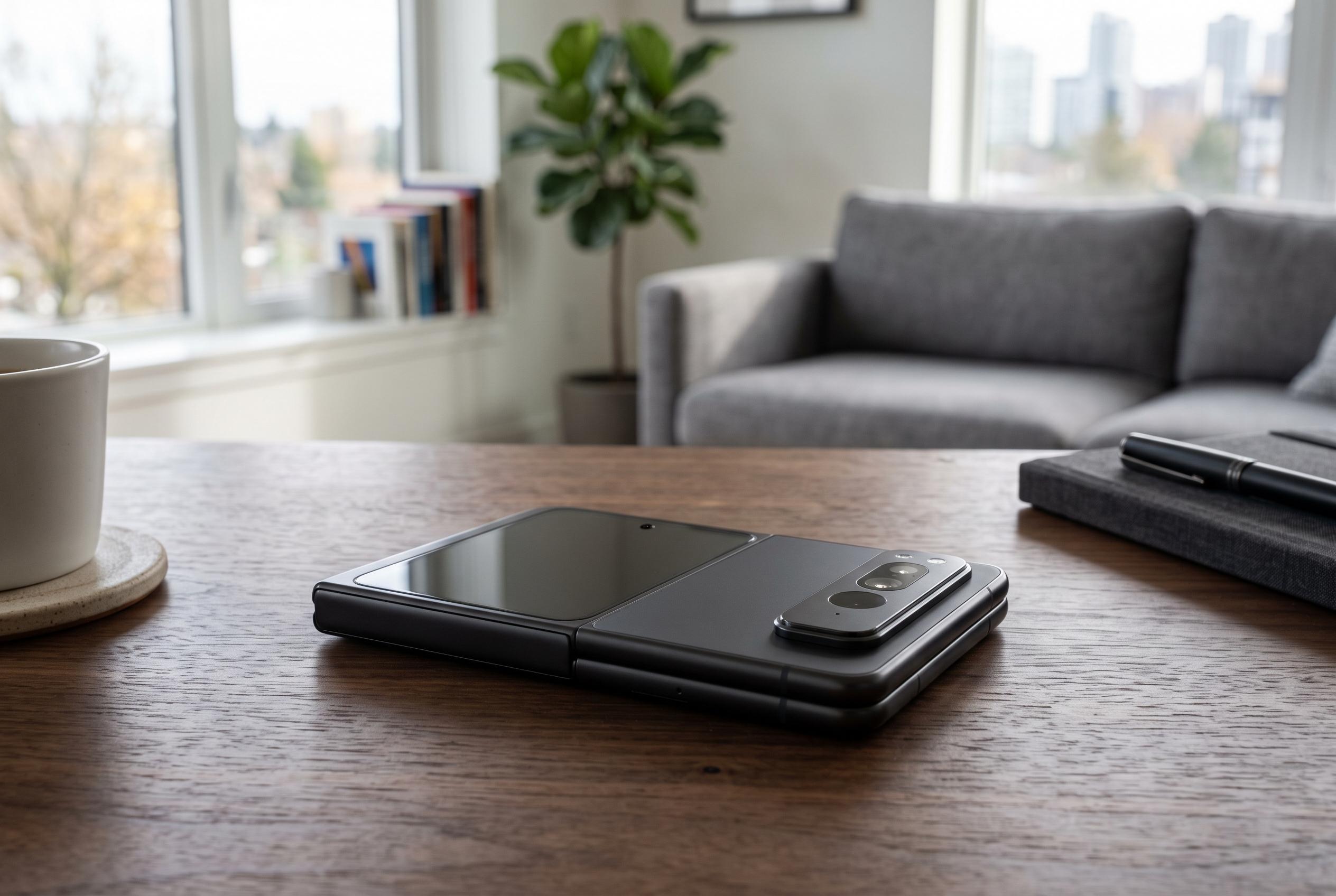

The Pixel 11 Pro Fold outperforms Samsung’s Galaxy Z Fold 8 in camera versatility, offering better contrast, zoom reach, and detail, according to recent hands-on comparisons from Germany, signalling a shift in foldable camera benchmarks for 2026.
Samsung’s Galaxy Z Fold 8 and Google’s Pixel 11 Pro Fold are shaping up as two of the most capable Android foldables of 2026, but their camera systems reflect different priorities. According to ZDNET’s hands-on comparison from Germany, Samsung leans towards brighter, more processed images, while Google aims for stronger contrast, deeper shadows and more natural texture. That split was visible across daytime and low-light shots taken in Düsseldorf and Cologne, where both phones produced strong results without either becoming an outright camera leader.
On paper, the Galaxy Z Fold 8 has a 50-megapixel wide camera and a 50-megapixel ultrawide, with no dedicated telephoto lens. SamMobile’s specification breakdown says the phone can record 8K video at 30fps and 4K at 60fps, with 10-megapixel front cameras on both displays. Google’s Pixel 11 Pro Fold takes a more traditional route for a premium camera phone, with a 48-megapixel main sensor, a 10.8-megapixel 5x telephoto and a 10.5-megapixel ultrawide, giving it more optical reach than Samsung’s foldable.
In ZDNET’s testing, the main cameras were close in quality, but they handled colour differently. Samsung’s images tended to arrive brighter and more ready to share, though sometimes at the cost of washed-out tones. The Pixel usually preserved more shadow detail and stronger contrast, which gave scenes more depth. In low light, both phones managed bright points well, but neither was especially good at freezing movement. The Pixel also handled the area around candlelight and other light sources with more visible texture, while Samsung’s stronger background blur masked some of the noise.
The ultrawide cameras were broadly competitive, although the Pixel showed some fisheye distortion at the edges. The bigger difference came with zoom. ZDNET found the Pixel’s telephoto camera the more versatile option, especially because it supports 5x optical zoom and extends much further at higher magnification. Samsung can crop from its 50-megapixel main sensor effectively, but that is not the same as having a dedicated zoom lens.
Selfies were a weaker area for both devices, but Google again had the edge, particularly at night. ZDNET said the Pixel produced more detail and better-controlled light sources, while Samsung’s front camera made scenes brighter but less detailed. The Pixel also handled the foldable form better for rear-camera selfies, because it disables touches on the inner display when framing shots. Samsung does not, which can lead to accidental taps that alter focus, zoom or close the camera app.
Android Central and TechRadar have both noted that Google still makes camera compromises in its foldable compared with its non-folding Pixel Pro phones, despite hardware improvements and added features. Even so, the Pixel 11 Pro Fold appears to deliver a more balanced camera package than its foldable rivals. ZDNET’s verdict was clear: if the choice is based on photography alone, the Pixel 11 Pro Fold has the stronger overall system, mainly because of its zoom flexibility and more consistent image quality.
Disclaimer: This content is intended for informational purposes only. Readers are advised to exercise their own judgement, conduct due diligence, or consult a qualified expert before acting on any information provided.