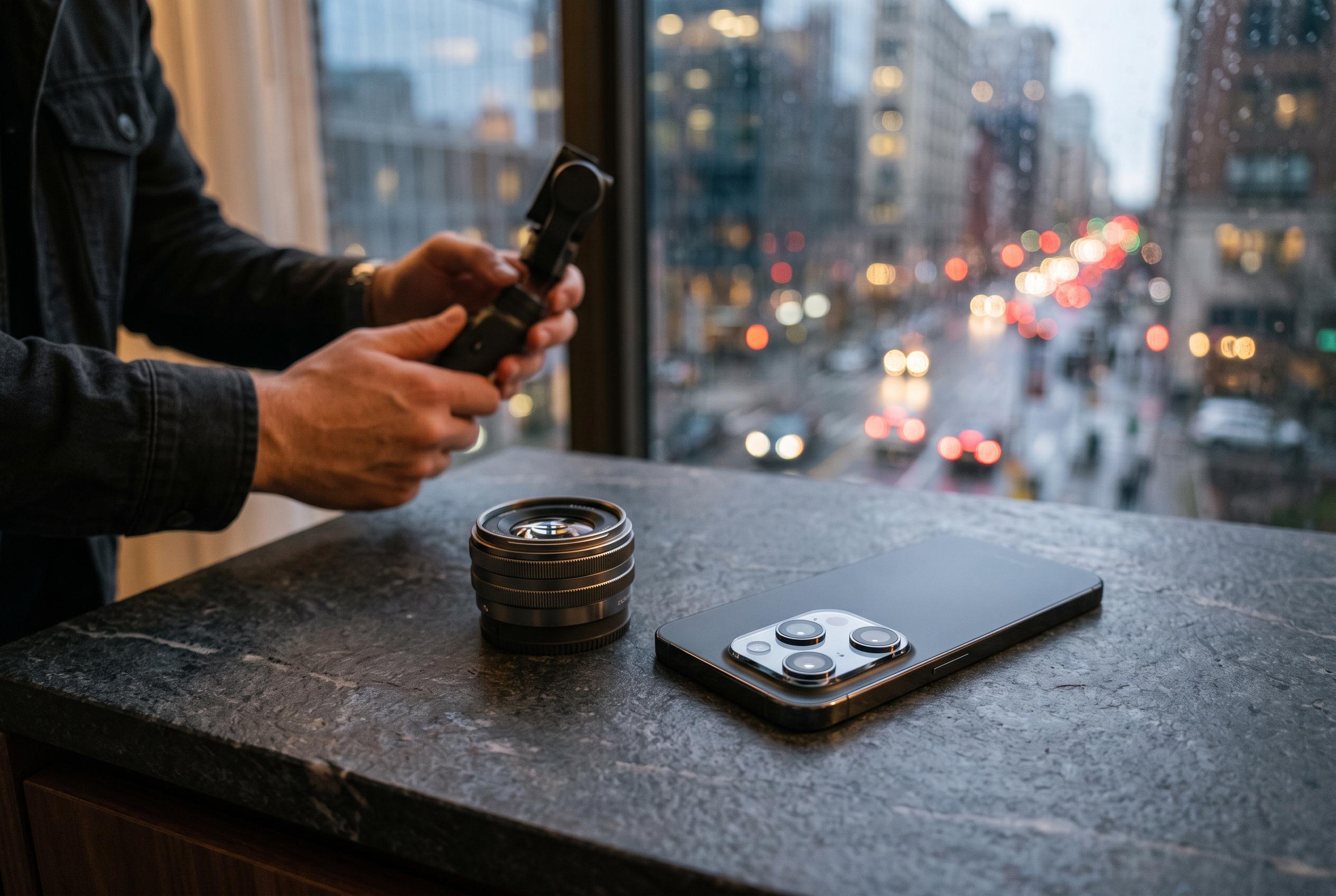

In 2026, mobile camera excellence hinges on larger sensors, advanced zoom systems, and real-time processing, setting new standards that rival dedicated cameras and redefining what consumers seek in flagship devices.
Mobile photography in 2026 no longer turns on raw megapixel counts alone. The centre of gravity has shifted towards larger 1-inch-type sensors, more capable periscope zoom systems and dedicated imaging silicon that processes scenes in real time. That change reflects a broader move away from simple pixel chasing and towards a more integrated camera pipeline, where optics, sensor size and computational processing work together to shape the final image. The result is that today’s top phones can deliver performance once associated with dedicated compact cameras and, in some situations, even mirrorless bodies. According to the benchmark guide, the most competitive flagships now span travel photography, portraits, indoor low light and high-zoom concert work with very different strengths.
The strongest stills performance in the guide belongs to Vivo’s X200 Pro and X200 Ultra, which the article argues have set the standard for low-light and portrait photography. Their appeal rests on a 1-inch Sony LYT-900 main sensor, Zeiss optical tuning and a 200-megapixel APO periscope system designed to reduce colour fringing and preserve detail at longer focal lengths. The guide says that combination produces cleaner night scenes, more natural subject separation and better control over flare and ghosting than most rivals. The inclusion of a dedicated imaging co-processor is presented as equally important, because it helps maintain usable exposure and colour accuracy in difficult lighting rather than relying on aggressive post-processing alone.
Samsung’s Galaxy S26 Ultra is positioned as the most versatile option for people who value reach and high-resolution cropping. The guide highlights its 200-megapixel main sensor, dual telephoto arrangement and software-enhanced zoom system, which together are meant to cover everything from close portraits to long-distance stadium shots. That emphasis on flexibility is not unique to Samsung, but it is reinforced by broader industry trends: Motorola’s Signature 27, for example, is also reported to be pushing a 200-megapixel telephoto lens in a bid to stand out in the flagship market. At the same time, the arrival of Oppo’s Find X10 series with three 200-megapixel rear cameras shows how quickly long-range imaging has become a competitive battleground.
For video, the guide still gives Apple the edge. The iPhone 17 Pro Max is described as the most complete tool for creators because it combines unified 48-megapixel rear sensors, high-frame-rate 4K capture, Log recording and external SSD support. That consistency across lenses matters in motion work, where abrupt shifts in colour, exposure or texture can be more distracting than a modest gap in still-image sharpness. Apple’s advantage is therefore less about having the largest sensor or the longest zoom and more about making the camera behave predictably through an entire shoot. In practical terms, that suits filmmakers, social media producers and anyone who wants a phone that can move smoothly from casual clips to more controlled production workflows.
Xiaomi’s 15 Ultra and Google’s Pixel 10 Pro represent two different ideas of photographic quality. Xiaomi leans on Leica-branded tuning, a variable aperture and a characterful colour profile that aims for a more organic, contrast-rich look. Google, by contrast, focuses on computational consistency, with the article crediting its Tensor-powered processing, HDR handling and AI editing tools for strong point-and-shoot reliability. The broader market is also moving in that direction: SmartSens has introduced a new 50-megapixel 1-inch sensor with HDR 3.0 and support for 4K 120fps video, underscoring how sensor makers are now building more headroom into mobile imaging hardware itself.
The most important technical lesson in the guide is that megapixels are only one part of the equation. A larger sensor gathers more light, which improves signal-to-noise ratio and dynamic range, while pixel binning and in-sensor cropping can provide practical gains in low light and moderate zoom without requiring a separate lens for every task. That is why a 50-megapixel camera on a 1-inch sensor can outperform a smaller 200-megapixel module in real-world use. The article’s argument is that sensor area, lens quality and optical stabilisation now matter more than headline resolution, particularly when scenes involve motion, backlight or darkness.
On that basis, the guide’s overall verdict is clear. Vivo is recommended for the best still photography, Apple for video and creator workflows, Samsung for zoom and versatility, Xiaomi for distinctive colour rendering and street work, and Google for dependable everyday point-and-shoot results. The larger trend behind those rankings is that mobile imaging has become a systems problem rather than a single-specification contest. As manufacturers add smarter sensors, more ambitious telephoto hardware and more advanced on-device image processing, the gap between premium smartphones and dedicated cameras continues to narrow, even if it has not disappeared entirely.
Disclaimer: This content is intended for informational purposes only. Readers are advised to exercise their own judgement, conduct due diligence, or consult a qualified expert before acting on any information provided.