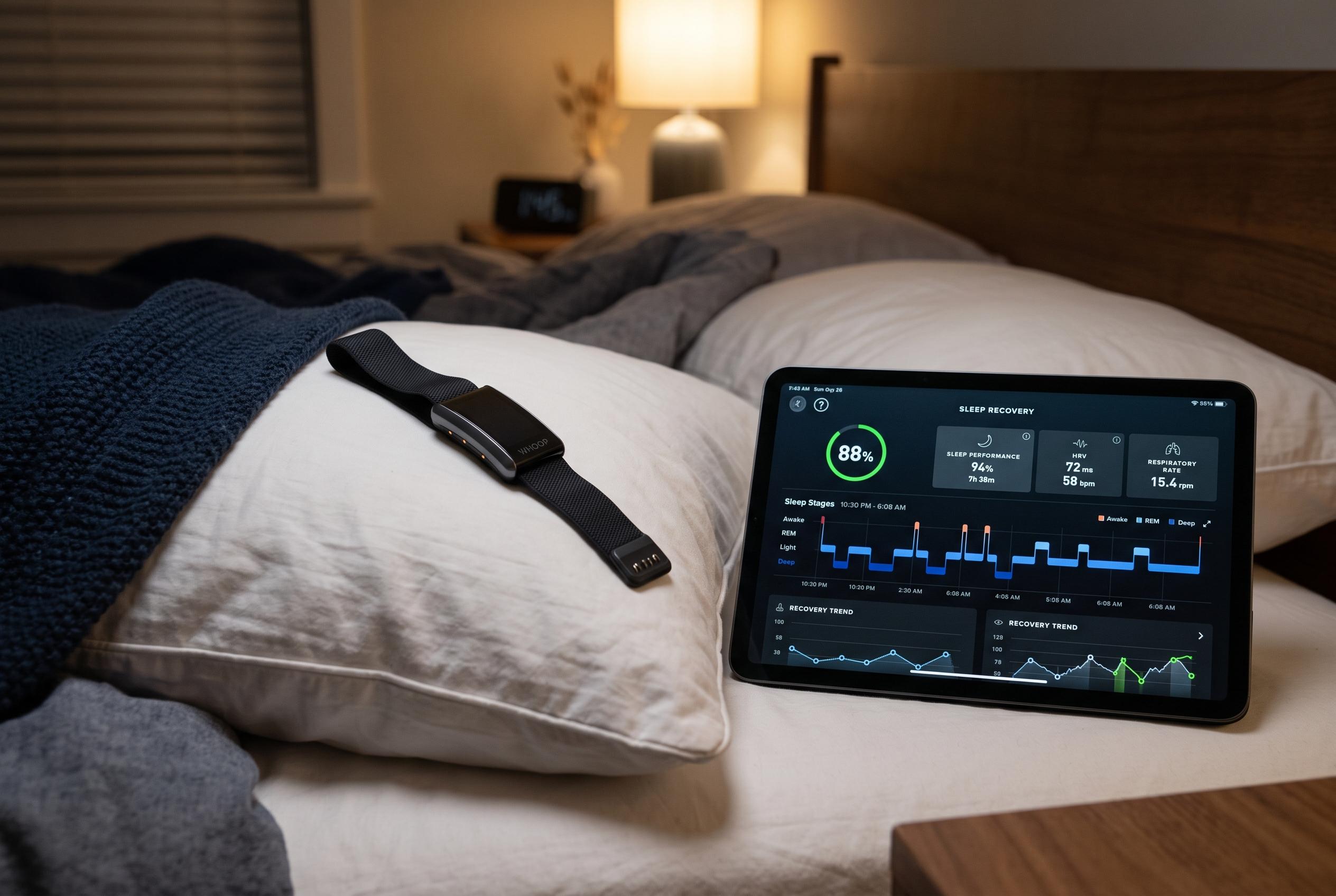

Advances in sleep tracking devices now offer detailed sleep stages, heart rate variability, and recovery metrics, with a focus on comfort and practicality, challenging the dominance of traditional smartwatches and fitness bands.
Sleep trackers have moved well beyond counting hours in bed. The strongest devices now estimate sleep stages, measure heart rate variability, monitor blood oxygen and translate all of that into a score or readiness measure that can guide the next day. Peggy Omara’s 2026 guide, based on 90 nights of testing across 10 wearables, argues that the best choices are the ones that combine comfort with useful recovery data rather than simply packing in features.
At the top of that list is the Oura Ring 4, which the guide describes as the best overall sleep tracker because of its comfort and consistently strong overnight sensing. The ring format matters here: it avoids the bulk of a watch and is less likely to interrupt side sleepers, while its titanium build and roughly 7-day battery life make it practical for daily wear. The companion app adds sleep score, stage breakdowns, heart rate variability status and temperature trends, which the guide says are especially useful for pregnancy and cycle tracking.
For users who care more about recovery coaching than a screen on the wrist, WHOOP 5.0 is positioned as the strongest alternative. According to the guide, it focuses on sleep debt, sleep efficiency, respiratory rate and strain-based recovery guidance, with the device worn continuously and recharged through a sliding PowerPack. That approach is aimed at athletes and data-heavy users who want personalised recommendations rather than a conventional watch interface.
The smart watch category is split by platform. The Apple Watch SE 3 is presented as the best option for iPhone users because it layers sleep score and sleep apnoea notifications on top of the broader Apple ecosystem, including calls, messages, payments and app support. Samsung’s Galaxy Watch 8 is the Android counterpart, with Advanced Sleep Coaching, AI-driven sleep insights and an Energy Score that combines sleep, activity and heart data. Both are more feature-rich than a dedicated ring, but both trade that for shorter battery life and, in the Apple Watch’s case, nightly charging.
Garmin’s vívoactive 5 stands out for endurance rather than raw sleep sophistication. The guide highlights its Body Battery system, which folds sleep, stress, heart rate variability and activity into a single recovery measure, alongside a sleep coach and nap detection. For people who dislike daily charging, its roughly 10-day battery life and strong sports feature set make it one of the most practical all-round watches in the category.
Oura also appears again with the Ring 5, which the guide calls its most advanced sleep ring. It is smaller than the Ring 4, uses redesigned sensors and adds AI guidance, with the trade-off being a premium price and less of a long-term track record than its predecessor. The report also singles out the Fitbit Versa 4, Fitbit Charge 6 and Fitbit Inspire 3 as value-focused choices, with the Charge 6 best suited to users who want a slim band and the Inspire 3 the most affordable entry point for reliable sleep trends.
At the budget end, the Amazfit Bip 6 is described as unusually strong value. The guide says it delivers a large AMOLED display, about 14 days of battery life and a wide feature set, including sleep staging, SpO2 monitoring, stress tracking and GPS, at a price well below most premium competitors. That makes it appealing for shoppers who want a full watch rather than a ring, but without the ongoing cost of a subscription-heavy ecosystem.
The wider conclusion is that no single tracker is best for everyone. The guide’s advice is simple: choose a ring if comfort is the priority, a watch if you want apps and notifications, and a band if you want something light and affordable. It also notes that the most meaningful sleep features are not cosmetic extras but practical ones: sleep stages, HRV, resting heart rate, SpO2, temperature trends and recovery guidance. Used consistently, those measures can reveal patterns that help users improve sleep habits, even if they are not medical devices.
Disclaimer: This content is intended for informational purposes only. Readers are advised to exercise their own judgement, conduct due diligence, or consult a qualified expert before acting on any information provided.