

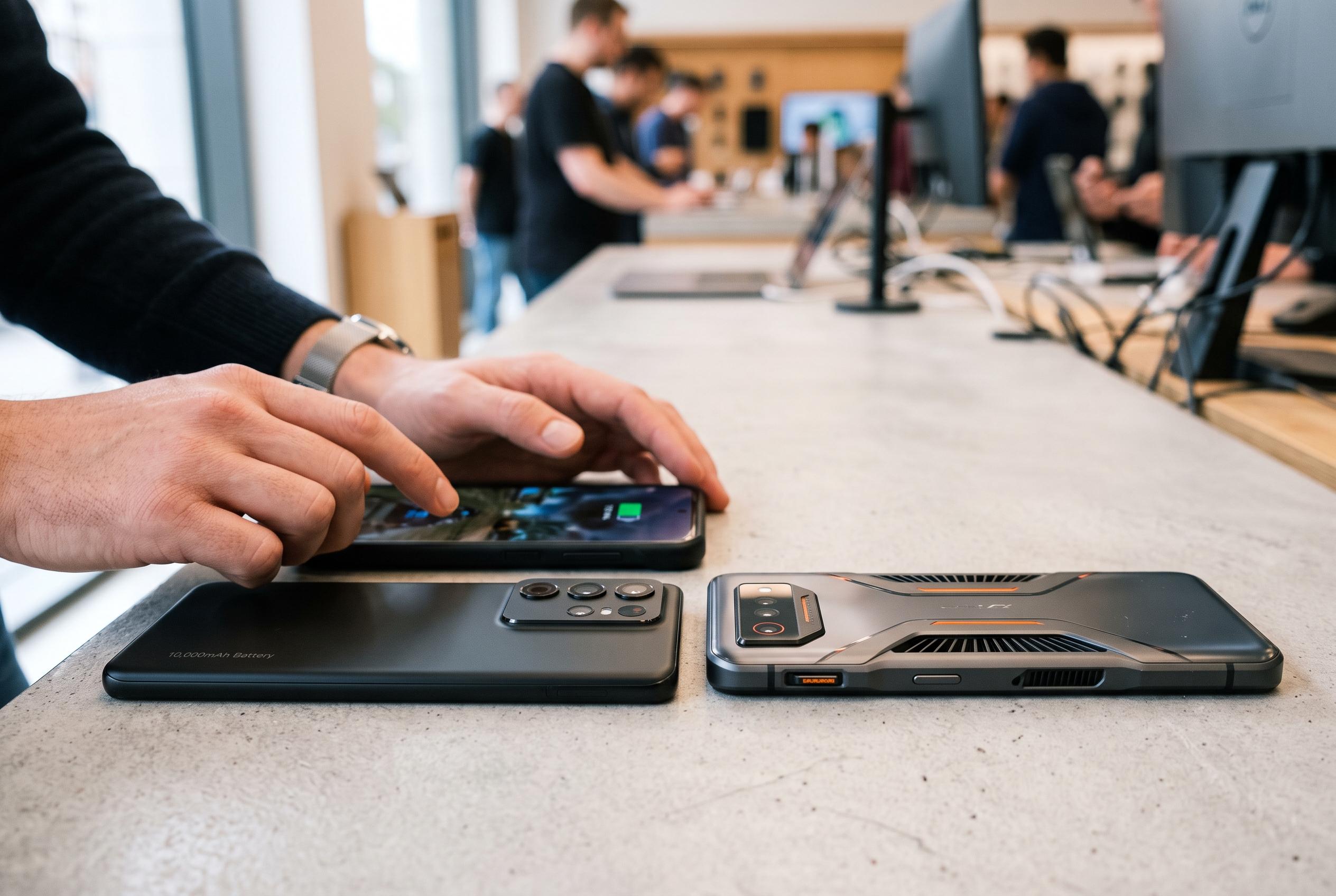

OnePlus targets buyers seeking a balanced flagship with a large battery and versatile cameras, while RedMagic charges more for active cooling and a gaming-first design.
The OnePlus 16 and RedMagic 12 Pro+ are shaping up as two different answers to the same problem: how far can a phone go when gaming is the priority? Both use Qualcomm’s Snapdragon 8 Elite Extreme Gen 6, so the real separation comes from cooling, battery design, camera hardware and where each device is actually sold. OnePlus has already put the 16 on sale in China, while RedMagic has now launched the 12 Pro+ there as well, setting up a direct comparison for buyers who care as much about sustained performance as raw specifications.
For most people, the choice is likely to come down to whether they want a gaming-first handset or a more rounded flagship. OnePlus positions the 16 as the broader all-rounder, with a 200-megapixel main camera, a 50-megapixel telephoto lens and a 9,000mAh battery. RedMagic, by contrast, is leaning hard into thermal management, with a liquid-cooling system, an active fan and shoulder triggers aimed at longer, more competitive gaming sessions, according to details from Gizmochina and RedMagic’s launch coverage.
On pricing, the gap is not yet especially large, but the exact numbers matter. OnePlus has set the base Chinese price of the 16 at CNY 5,699 for the first sale, rising to CNY 5,999 at the standard price, according to the company’s Chinese launch details. Gadgets360 reported that the OnePlus 16 starts at CNY 5,999 in China once normal pricing applies. RedMagic’s 12 Pro+ has now launched in China from CNY 6,999, according to Gizmochina, which places it at a noticeably higher entry point than the OnePlus model. That makes the RedMagic a more expensive proposition even before import costs, taxes and reseller margins are added outside China.
Specification differences are also becoming clearer. OnePlus has published a 6.78-inch flat LTPO OLED panel with a 1.5K resolution and up to 185Hz refresh in supported games, plus 100W wired charging and 50W wireless charging. Gizmochina says the RedMagic 12 Pro+ uses a 6.85-inch BOE X11 OLED panel with a 185Hz refresh rate, alongside an 8,400mAh battery and 120W wired charging, plus 80W wireless charging. Those figures suggest RedMagic is trying to offset a smaller battery with faster charging, while OnePlus is banking on capacity and camera versatility. Both phones also hide the selfie camera beneath the display, though RedMagic’s under-screen approach has a narrower 0.96mm border design, according to launch previews and launch reports.
For gaming, the cooling strategy may matter more than the chip itself. RedMagic’s combination of liquid cooling and an active fan is designed to keep performance steadier over long sessions, especially where heat usually forces throttling. That is the sort of detail benchmark charts can miss. OnePlus is taking a different route, using a large vapour chamber and additional chips for touch response, display management and network stability. The practical question is not which phone posts the biggest peak score, but which one can hold frame rates after 20 or 30 minutes without becoming hot or unstable.
Availability may be the deciding factor for African buyers. OnePlus has not announced a formal launch in Nigeria, Kenya, Ghana or South Africa, and TechCabal notes that the company is focusing its new-phone sales elsewhere. RedMagic’s direct shipping list is also limited, with Egypt included but several major African markets absent. That leaves most buyers dependent on resellers, which increases the need to confirm the exact model, the software region, supported network bands, warranty terms and whether any “global ROM” was installed at the factory or added later by the seller.
The early verdict is straightforward. According to the launch details now available, OnePlus offers the safer all-round package for users who want strong gaming performance without giving up on photography and battery life. RedMagic appears more specialised, and possibly better suited to players who value fan-assisted cooling above all else. But until long-session reviews are available, the more important difference is not the headline chip or refresh rate. It is whether you want a phone that is good at gaming, or a gaming phone that happens to be a smartphone.
Disclaimer: This content is intended for informational purposes only. Readers are advised to exercise their own judgement, conduct due diligence, or consult a qualified expert before acting on any information provided.



