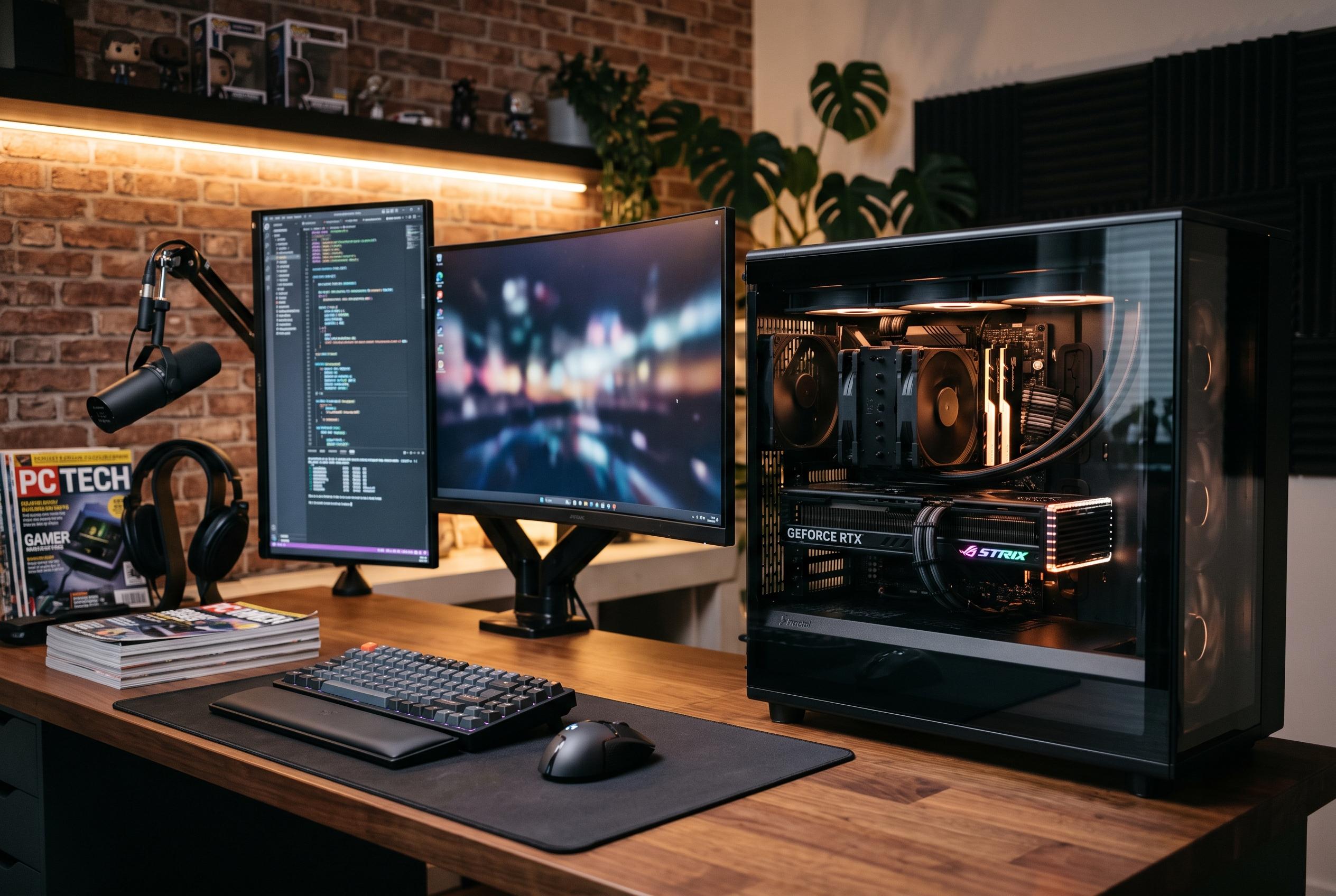

PC Games Hardware’s 33-card 2026 comparison finds Nvidia still leading ray-tracing performance, but rising prices are making high-memory GPUs harder to justify.
PC Games Hardware has refreshed its 2026 ray-tracing graphics card comparison, and the broad shape of the ranking is unchanged. The 33-card table still shows the same pecking order, but the buying landscape has worsened: prices have risen across the board in recent months, with the steepest increases affecting models fitted with 16GB of memory or more. For readers following the market closely, that matters as much as raw performance, because the article is framed not simply as a benchmark exercise but as a purchasing guide for anyone trying to get smooth ray tracing without overspending.
The German publication’s test bed is unusually broad. It compares current gaming GPUs across 15 titles that use ray tracing in different ways, then distils the results into an overall index while also allowing readers to examine separate scores for Full HD, WQHD, Ultrawide-QHD and Ultra HD. The methodology is deliberately practical: the site uses demanding settings, leans on upscaling in many tests and keeps frame generation, variable rate shading and low-latency options switched off so that the cards are judged under comparable conditions. The result is meant to mirror real-world play rather than idealised laboratory conditions.
The ranking also reinforces a familiar point in the GPU market: ray tracing remains a stronger area for Nvidia than for AMD. PC Games Hardware says that the company has prioritised the feature since 2018 and still holds a generational advantage, a view broadly echoed by Tom’s Hardware’s 2026 GPU hierarchy, which places Nvidia’s RTX 5090 at the top of ray-tracing performance. Tom’s Hardware also notes that AMD’s RX 9070 XT has closed some of the gap, even surpassing the RX 7900 XTX in certain ray-tracing tests, suggesting that the competition is more credible than it was in earlier generations.
The practical guidance is clear. At 1080p, the article says budget cards can still deliver acceptable ray tracing, with models such as the GeForce RTX 3060 12GB or Intel’s Arc B570 singled out as viable entry points. At 1440p, stronger hardware becomes advisable, though the publication says users can sometimes recover performance by moving from a balanced upscaling mode to a more aggressive one. At 4K, the bar rises sharply: PC Games Hardware recommends at least a GeForce RTX 5070 or Radeon RX 9070-class card. The article also stresses that ray tracing scales steeply with resolution, because the workload rises with the number of pixels being rendered.
That makes upscaling central to the discussion. The publication argues that temporal reconstruction systems such as DLSS, FSR and XeSS are not optional extras but essential tools for keeping ray tracing fluid, especially in the most demanding games. It also points out that lowering ray-tracing quality from “Ultra” to “High” can produce a sizeable frame-rate gain without a dramatic visual penalty, whereas going lower can quickly make the image look degraded. PC Games Hardware says readers who want to compare older cards or revisit prior results can use its 2025 benchmark archive, underlining that the article is intended as a living reference point rather than a one-off ranking.
Disclaimer: This content is intended for informational purposes only. Readers are advised to exercise their own judgement, conduct due diligence, or consult a qualified expert before acting on any information provided.