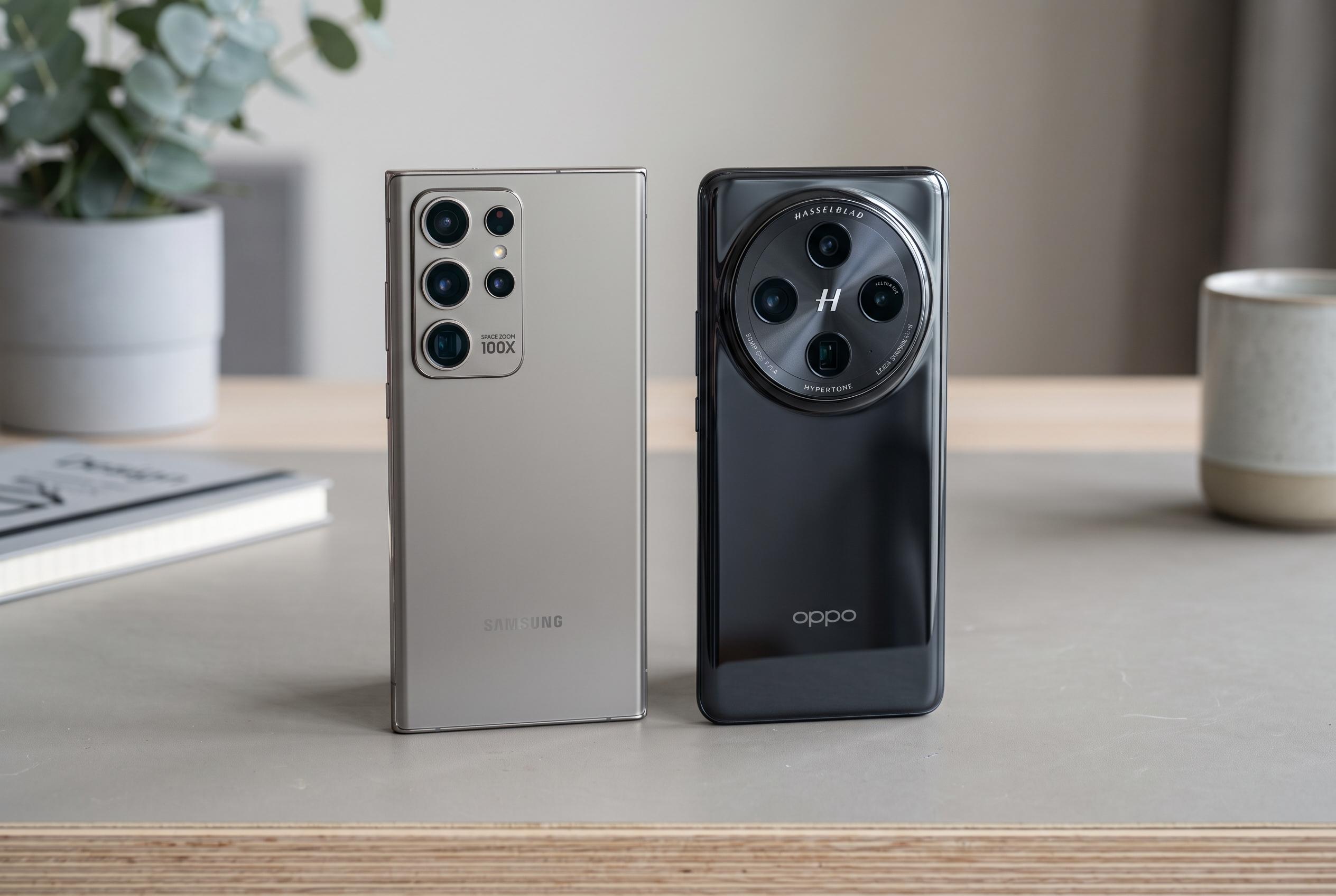

The Samsung Galaxy S26 Ultra and Oppo Find X9 Ultra go head-to-head with competing strengths in camera, design, and software updates, with Samsung securing a better all-round value proposition despite Oppo’s advanced zoom features and longer battery life.
Frandroid’s comparison of the Oppo Find X9 Ultra and Samsung Galaxy S26 Ultra sets up a rare flagship contest in which both phones aim squarely at users who want top-end cameras, fast silicon and long battery life. The Oppo enters at €1,699, while Samsung’s model starts at €1,469, putting the Chinese handset at the sharper end of an already expensive market. Both devices were awarded strong review scores, but the price gap means the final choice depends less on raw specification and more on which premium trade-offs matter most. Frandroid and later comparisons from Tom’s Guide and PhoneArena all frame this as a meeting between two very different interpretations of an Ultra-class Android phone.
Physically, the Oppo is the more extreme device. At 235 grams and 8.65mm thick, it is a large handset with an oversized rear camera assembly that dominates the back panel. Samsung’s phone is slimmer at 7.9mm and lighter at 214 grams, with a more restrained design that may suit users who prefer a less conspicuous device. Oppo does, however, carry an IP69 rating, which goes beyond Samsung’s IP68 certification, and it adds two custom buttons for shortcuts and camera control. Frandroid also highlights Samsung’s Privacy Display, a software feature that limits side viewing angles to help block prying eyes in public places.
On the screen and software side, the balance is closer. Frandroid found the Oppo panel to be more accurate in colour, while Samsung’s display was substantially brighter outdoors. Both phones run Android 16 with heavily customised interfaces, ColorOS on the Oppo and One UI on the Samsung. Each platform offers extensive personalisation and a broad set of AI tools, but Samsung still has the edge on support, promising seven years of updates compared with five on the Oppo. That longer software commitment remains a meaningful advantage for buyers who intend to keep the phone for years.
Performance is largely a draw, though Samsung’s tuned version of Qualcomm’s Snapdragon 8 Elite Gen 5 gives it a small lead in benchmark tests, according to Frandroid. In practical use, both are clearly in the upper tier of Android flagships and should handle demanding games and multitasking with ease. The difference comes under prolonged load: Samsung can run hotter and lose some performance, whereas the Oppo appears more consistent. Related coverage from Gizmochina and PhoneArena also points to near-identical core hardware, which reinforces the view that thermal management and software tuning are more important than headline chip names here.
Photography is where the rivalry becomes most interesting. Both phones use a 200-megapixel main camera and a 50-megapixel ultra-wide sensor, but the Oppo adds a 200-megapixel telephoto and a 50-megapixel 10x zoom lens, while Samsung relies on a 10-megapixel 3x lens and a 50-megapixel 5x lens. Frandroid judged the Oppo superior for long-range zoom and battery life, helped by its 7,050mAh cell, which lasted nearly four hours longer in GSMArena’s testing than Samsung’s 5,000mAh battery. Yet Tom’s Guide’s camera tests paint a more mixed picture, with Samsung winning in several everyday categories such as daylight shots, selfies and some telephoto use, while Oppo did better in low light, ultrawide shots and portrait work. The result is a close contest, but Samsung still looks like the safer all-round buy, especially given its lower starting price, stronger brightness and longer update policy.
Disclaimer: This content is intended for informational purposes only. Readers are advised to exercise their own judgement, conduct due diligence, or consult a qualified expert before acting on any information provided.