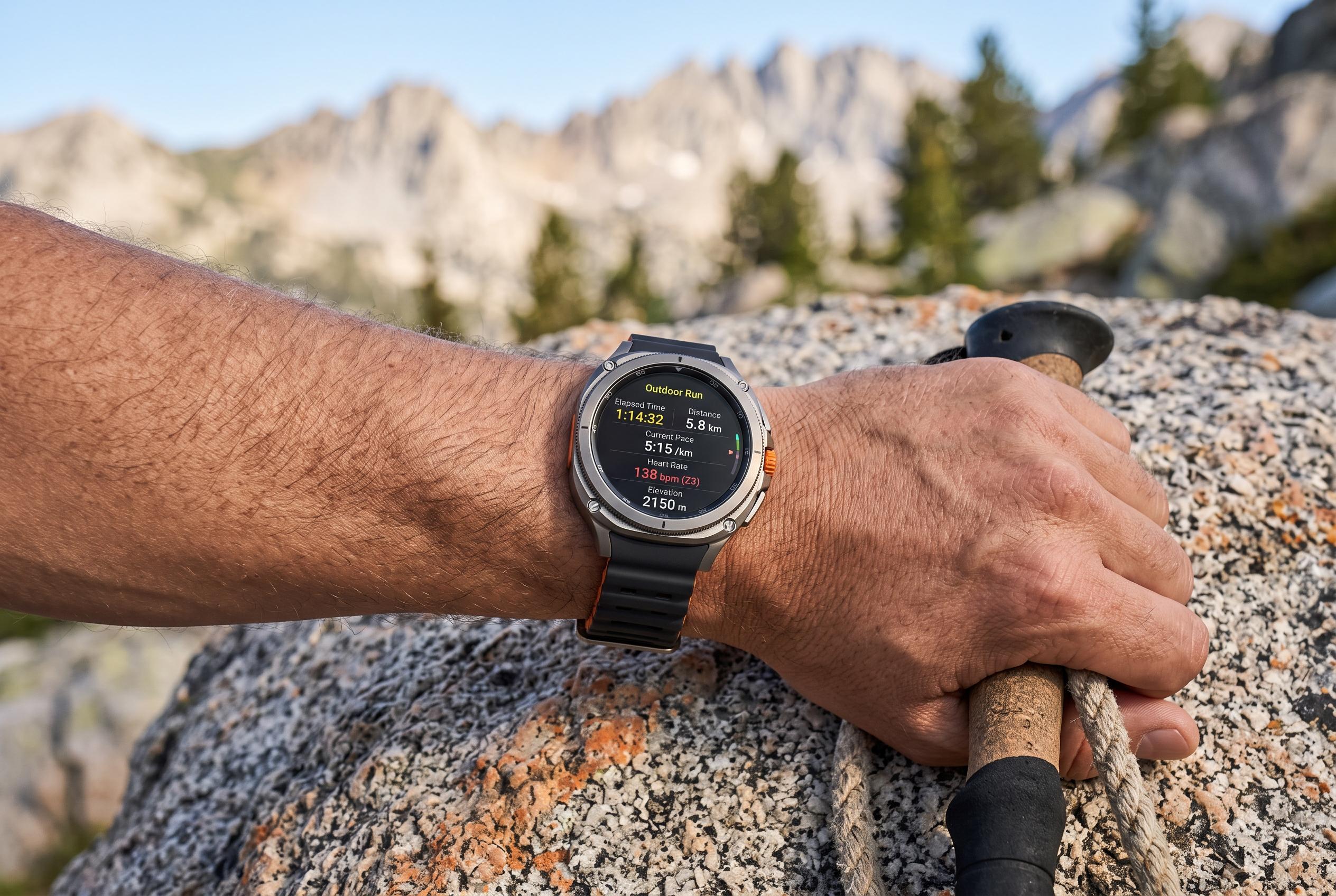

Samsung’s Galaxy Watch Ultra 2 refines its rugged design with a faster Snapdragon Wear Elite processor and enhanced health tracking, but its premium price raises questions about value and longevity.
Samsung’s Galaxy Watch Ultra 2 is a more convincing refinement than a radical redesign. According to Android Headlines, the new model keeps the same rugged, square-cornered identity as before, but trims the case, replaces Samsung’s Exynos silicon with Qualcomm’s Snapdragon Wear Elite and adds a 35% larger battery. The result is a watch that feels quicker in daily use and more polished on the wrist, even if it still sits firmly at the premium end of the market. Samsung says the watch uses an 800mAh battery, a titanium case and durability ratings that include 10ATM and IP69K resistance.
The most important change is the processor. SamMobile reports that the Snapdragon Wear Elite uses a five-core design with one Cortex-A78C core and four Cortex-A55 cores, alongside an Adreno 622 GPU, and delivers much stronger benchmark results than the Exynos W1000. In practice, that matches Android Headlines’ account of faster app launches, more responsive voice interaction with Gemini and quicker recognition of workouts. Samsung is also promising five years of software support, which gives the Ultra 2 a longer useful life than many older smartwatches.
Battery life, however, is less impressive than the capacity increase might suggest. Android Headlines says real-world endurance remains roughly three days with the always-on display enabled and four to five days with it switched off, which is broadly unchanged from the original Galaxy Watch Ultra. The bigger battery therefore does not translate into a major runtime gain, and charging remains slow by current standards. Even so, Samsung appears to have positioned the watch for heavy outdoor use rather than all-day, every-day top-ups.
Samsung has also broadened the health and fitness tools. Notebookcheck says the Ultra 2 adds pro-level dive tracking developed with Mares, while SamMobile reports extras such as AGEs, an Antioxidant Index, Blood Pressure Trend and trail-running features. Android Headlines notes that the new Vitals screen tracks heart rate, heart-rate variability, respiratory rate, skin temperature and blood oxygen during sleep, while a new Hydration Reminder is tied to longer outdoor workouts rather than ordinary daytime use. That makes the watch more useful for athletes than for users who simply want a general wellness tracker.
The broader question is value. At $699, according to Android Headlines, the Galaxy Watch Ultra 2 is best suited to people who will use its brighter display, rugged build, advanced GPS and deeper training features. For many other buyers, Samsung’s cheaper Galaxy Watch 9 covers much of the same software experience at a far lower price, with smaller sizes to suit more wrists. That leaves the Ultra 2 as a focused, capable but expensive Android smartwatch: stronger in performance and features than before, but not yet the clear all-rounder its price implies.
Disclaimer: This content is intended for informational purposes only. Readers are advised to exercise their own judgement, conduct due diligence, or consult a qualified expert before acting on any information provided.