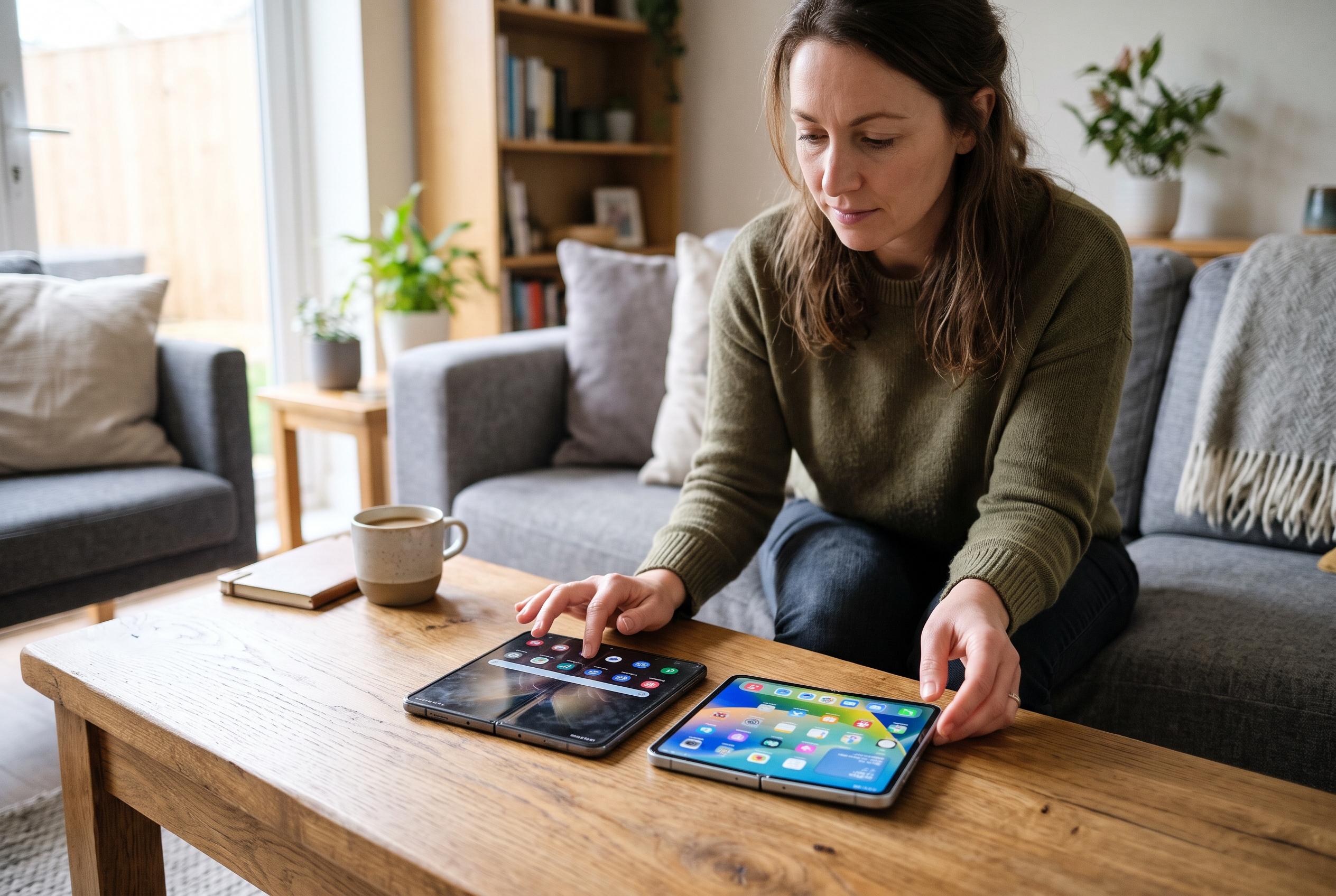

Apple’s first foldable brings stronger performance, battery life and cameras, but Samsung’s lighter design, mature software and lower repair risk make the Galaxy Z Fold8 the more convincing everyday choice.
Samsung’s Galaxy Z Fold8 and Apple’s iPhone Duo arrive in the same rarefied part of the market, where foldable phones are priced as luxury devices and judged on far more than specifications alone. On paper, the two handsets look strikingly close: each opens to a 7.6-inch inner display, each sits near the $2,000 mark, and each targets buyers who want a phone that can also serve as a compact productivity machine. Yet the stronger case is not made by the newer, flashier model. According to the source article, the Galaxy Z Fold8 remains the more convincing everyday choice because Samsung has spent eight generations refining the format, while Apple’s first foldable is already facing early durability concerns.
That difference starts with the hardware you carry all day. The Galaxy Z Fold8 is substantially lighter than the iPhone Duo and is also thinner when folded and unfolded, which makes it easier to use as a phone rather than merely as a novelty that opens into a small tablet. Samsung’s more compact outer shape also gives the cover screen more practical value for quick tasks, while the larger interior panel is better suited to reading, gaming and split-screen use. Apple’s titanium build gives the iPhone Duo a more substantial feel, and its matte inner display is designed to cut reflections and make the fold less noticeable, but Samsung still appears to offer the more usable form factor for most buyers.
Apple, however, seems to have the stronger case in raw performance and battery life. Independent sustained-performance testing cited in the source material found that the iPhone Duo’s A20 Pro held up better under prolonged graphics workloads than Samsung’s flagship chip. The same testing also suggested that Apple’s foldable has the edge in endurance, with roughly an hour more web-browsing life over 5G than the Fold8, though real-world results will vary with display use and workload. Camera performance also appears to tilt towards Apple, with the iPhone Duo delivering better detail, exposure balance and low-light results in side-by-side comparisons, even if Samsung remains impressive in macro work and extreme digital zoom.
Software is where Samsung’s long head start is most visible. One UI 9 is described as better adapted to large-screen use, with stronger multitasking, more flexible window management and Samsung DeX for a desktop-style workflow. Apple has added Split View and support for app pairs on the iPhone Duo, which are welcome steps, but early reviews suggest that some software still does not fully exploit the wider foldable display. For buyers who expect to move between multiple apps, documents and windows, Samsung’s approach remains the more mature one. Apple’s ecosystem may still matter more for users already invested in the iPhone, Apple Watch and Mac, but that is a matter of platform loyalty rather than foldable sophistication.
Durability is the area where Apple’s debut has caused the greatest concern. The source article says reports of cracked inner displays began appearing soon after the iPhone Duo reached customers, and durability testing showed debris entering the hinge and interfering with the phone’s ability to close properly. Samsung is not immune to wear or damage, and its IP48 rating is weaker on paper than Apple’s IP68 protection, but the Galaxy Z Fold8 benefits from years of hinge and display refinement. Repair costs also favour Samsung: according to the published pricing cited in the article, replacing the inner screen on the Fold8 is materially cheaper than repairing the iPhone Duo without AppleCare+. For buyers planning to keep a foldable for several years, that difference matters almost as much as performance or camera quality.
The result is a familiar but important conclusion. The iPhone Duo appears to be the more ambitious first effort, with impressive performance, strong battery life and a capable camera system. But the Galaxy Z Fold8 is still the more complete foldable, because it better balances weight, usability, software maturity and repair risk. For users firmly inside Apple’s ecosystem, the iPhone Duo may still make sense. For everyone else, Samsung’s experience gives it the edge where it counts most: in daily use.
Disclaimer: This content is intended for informational purposes only. Readers are advised to exercise their own judgement, conduct due diligence, or consult a qualified expert before acting on any information provided.