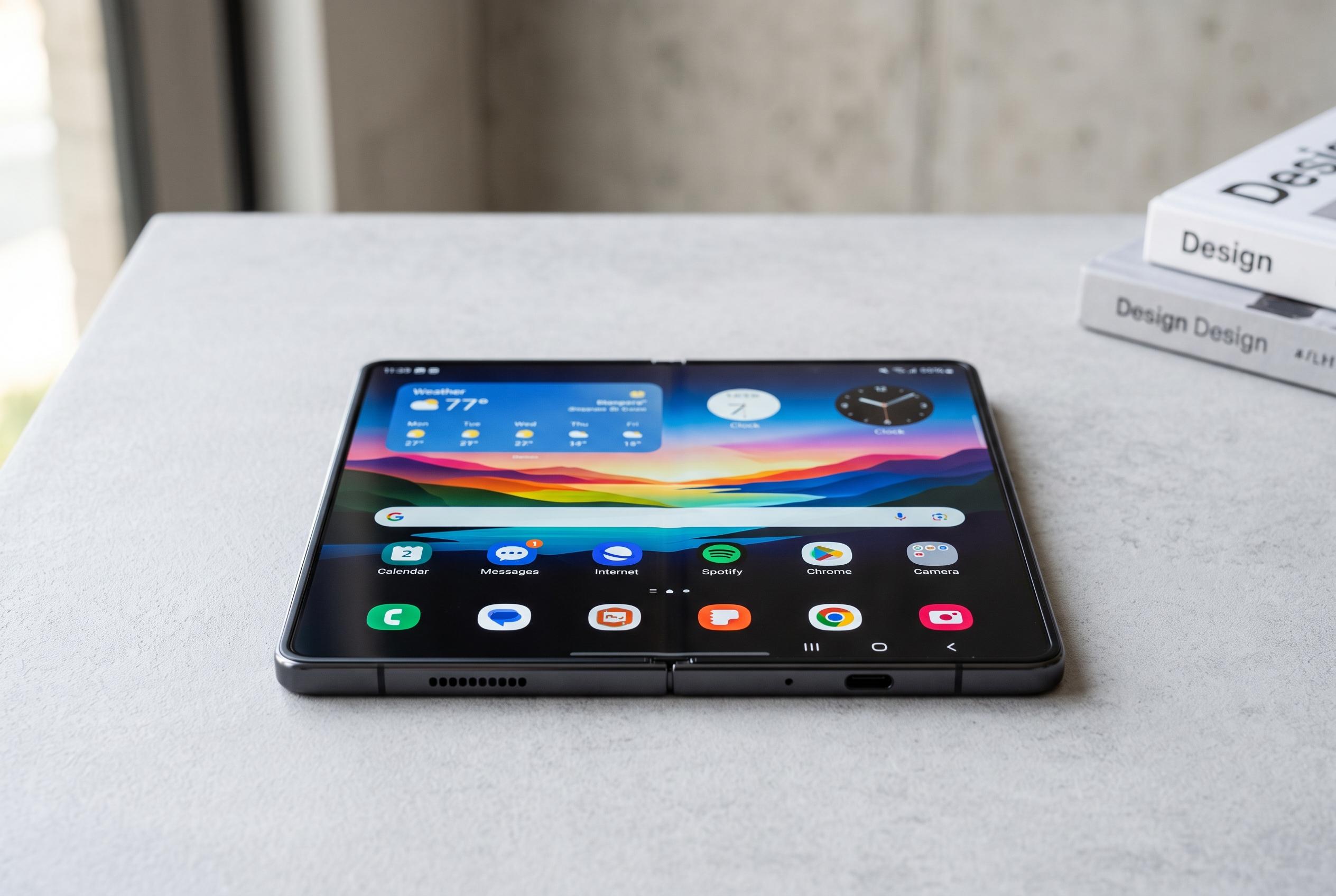

Samsung’s Galaxy Z Fold 8 emphasises software finesse and hardware durability, maintaining its edge over rumours of an upcoming Apple foldable, as industry experts highlight the challenges for Apple to match Samsung’s maturity in foldable technology.
Apple is unlikely to inherit the foldable market simply by entering it. That is the central argument from Android Authority, which says Samsung’s Galaxy Z Fold 8 already has real advantages that a rumoured iPhone Ultra would need time to match. The strongest case for Samsung is not novelty alone, but a platform built around the practical demands of a book-style foldable: software that can use a larger display properly, hardware that has already survived several generations of refinement and a price that, while high, still undercuts what Apple is widely expected to charge.
Multitasking remains one of Samsung’s clearest strengths. Android Authority says the Galaxy Z Fold 8 handles split-screen use, app pairs and flexible window layouts in a way that suits the foldable format. That matters because, as the site notes, a larger screen is only worthwhile if it improves productivity rather than serving as an expensive media viewer. Apple has no equivalent foldable iPhone software on public view, and its current iPhone software does not offer the same windowed multitasking found on iPadOS, making any future implementation harder to predict.
Hardware maturity also favours Samsung. Android Authority argues that hinges are among the hardest parts of a foldable to perfect, because they must withstand repeated folding while keeping out dust and debris. Tom’s Guide adds that the Fold 8 brings a thinner body and improved displays, but says foldables still face a persistent software problem: many apps do not scale cleanly across unfolded screens. Samsung has had more time than Apple to address those issues, even if it still has work to do.
Design and usability remain part of the equation. Digital Camera World says the Galaxy Z Fold 8 uses a more compact, passport-like shape with a 5.5-inch cover screen and a 7.6-inch internal display, both at 120Hz, while SamMobile reports that Samsung has moved to a wider outer display and lighter body. The same reports say the phone runs on Snapdragon 8 Elite Gen 5 power, uses 45W charging and includes One UI 9 features aimed at making the device feel more natural in daily use. SamMobile also says Samsung has removed Flex Mode from this model, though that is not seen as a major drawback.
Price may be the deciding factor for some buyers. Android Authority says the Galaxy Z Fold 8 starts at $1,899.99, while Tom’s Guide believes Apple’s foldable could cost about $2,400 to $2,500. That gap would matter most to customers outside Apple’s ecosystem, especially if the iPhone Ultra arrives without a clear software lead. Apple would still bring major advantages, including brand power, system integration and the possibility of stronger app optimisation. Tom’s Guide suggests a crease-free display and better scaling could help Apple redefine the category if those claims prove true. For now, though, the broader picture is less about a guaranteed Apple victory than a genuine contest.
Disclaimer: This content is intended for informational purposes only. Readers are advised to exercise their own judgement, conduct due diligence, or consult a qualified expert before acting on any information provided.