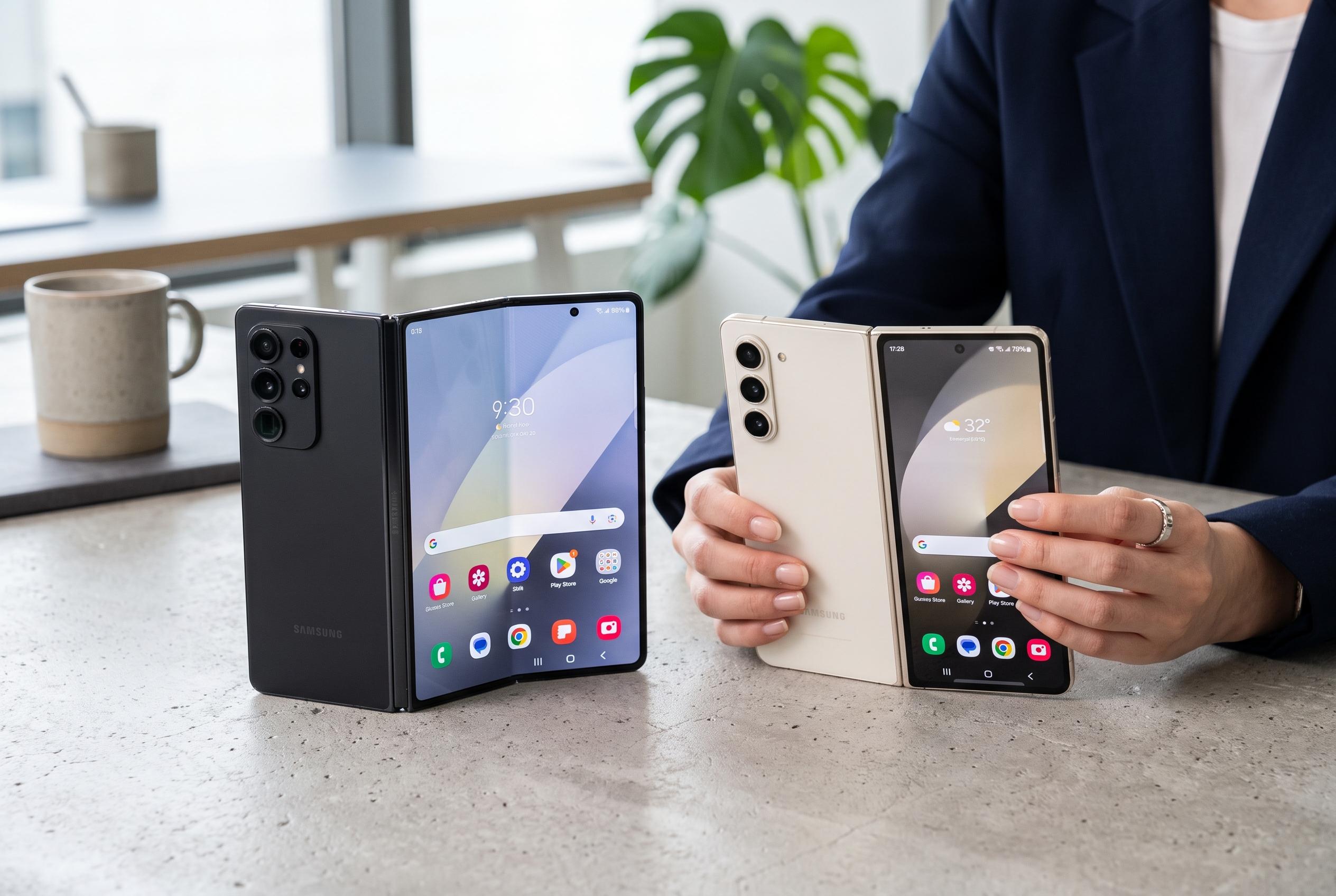

Despite its superior camera hardware, the Samsung Galaxy Z Fold 8 Ultra struggles with practicality compared to the more compact and user-friendly Galaxy Z Fold 8, highlighting that camera quality isn’t everything in foldable phones.
Samsung’s two newest folding phones arrive with an awkward but revealing split: the Galaxy Z Fold 8 Ultra is the clearer camera machine, yet the standard Galaxy Z Fold 8 is the one that feels easier to use as an everyday photography tool. In a hands-on account for TechRadar, Tom Bedford said he had spent two weeks taking hundreds of pictures on both devices and kept reaching for the smaller model when he wanted to capture a quick shot.
That preference has less to do with image quality than with how the phones behave in the hand and in a pocket. TechRadar says the Ultra is the larger and more awkward device to remove quickly, while the standard Fold is shorter and easier to draw, making it more practical for repeated use on trips and location shoots. The newer Ultra also carries a more ambitious camera system, with a 200MP main sensor, a 50MP ultra-wide lens and a 10MP 3x telephoto camera, while the regular Fold is built around dual 50MP rear cameras and lacks an optical zoom lens.
On paper, the Ultra should be the obvious choice for photographers. Tom’s Guide found that its 3x optical zoom gave it a meaningful advantage once scenes moved beyond basic wide shots, particularly at higher magnification where detail held up better than on the standard Fold. But the same comparison also suggested that the gap is not always dramatic at everyday zoom levels, which helps explain why the cheaper handset can still feel good enough for many users.
Bedford’s point is that camera choice on a foldable is not decided by sensors alone. The standard Fold’s more compact body means it is less of a chore to carry, pull out and use repeatedly. He also argues that the device’s taller, more practical internal display makes photo editing easier, because the image sits on screen with less wasted space and the controls are easier to reach. The Ultra’s squarer panel, by contrast, leaves more dead space around widescreen images.
That matters because the Fold series is not competing only on photography. TechRadar’s review of the Ultra describes it as a premium foldable with a flatter design, a near-creaseless 8-inch inner display, a titanium hinge and a 5,000mAh battery. The standard Fold, meanwhile, is the lighter, cheaper option at a starting price of $1,899, with a 7.6-inch inner display and a smaller 4,800mAh battery. Samsung’s camera hardware is stronger on the Ultra, but Tom’s Guide and TechRadar both suggest that the company’s best camera phone remains the slab-style Galaxy S26 Ultra for buyers who do not need a foldable.
The broader lesson is that foldable buyers should think beyond specifications. A phone can have the better camera module and still be the worse photography tool if it is cumbersome to carry, slower to extract and less comfortable to edit on. For users choosing a folding device with camera quality as a secondary concern, the standard Galaxy Z Fold 8 may be the more sensible long-term pick, even if the Ultra wins the hardware contest.
Disclaimer: This content is intended for informational purposes only. Readers are advised to exercise their own judgement, conduct due diligence, or consult a qualified expert before acting on any information provided.